Law firm introduction More》
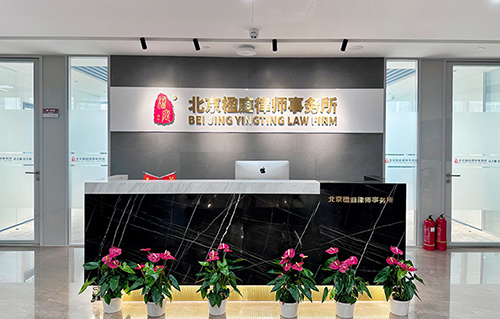
Beijing Yingtong Law Firm has focused on the protection of the rights and interests of private enterprises for many years. It has represented many corporate rights protection cases in the legal practice of rights protection in natural resources, mining, land, waters, territorial space, corporate equity, criminal defense, factory demolition, environmental protection shutdown, prohibition and vacation, etc., including large-scale real estate...
Law firm services
Law firm personnel More》








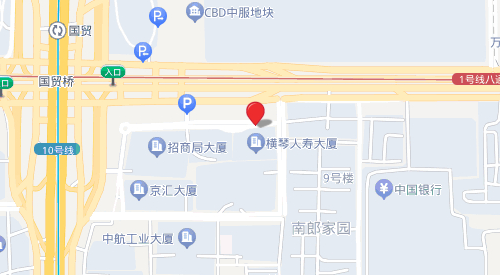
Visiting address More》
Regulations on the Protection of Rights and Interests of Enterprises and Business Operators of Hainan Province
Home page >> Ying Ting Information >> Legal information
Article author:Yingting Lawyers Group | Update time:2023-12-07 | Reading times:1419
Regulations on the Protection of Rights and Interests of Enterprises and Business Operators of Hainan Province
(Adopted at the 19th meeting of the Standing Committee of the Fourth People's Congress of Hainan Province on January 14, 2011 and revised in accordance with the "Decision on Amending the "Regulations on Setting Penalty Limits by Hainan Province Rules" and Other Two Regulations at the 37th Meeting of the Standing Committee of the Sixth People's Congress of Hainan Province on July 27, 2022)
Article 1 In order to protect the legitimate rights and interests of enterprises and business operators, further improve and optimize the business environment of enterprises, and promote the harmonious development of the economy and society, these Regulations are formulated in accordance with relevant laws and regulations and in conjunction with the actual conditions of this province.
Article 2 These regulations apply to all types of enterprises and business operators established in accordance with the law and engaged in production and business activities within the administrative region of this province.
The term "enterprise operator" as mentioned in these Regulations refers to the main person in charge of the enterprise who exercises the power of enterprise operation and management in accordance with the law and assumes the responsibility for operation and management, including the legal representative, chairman, manager, and director of a legal person enterprise, partners, factory directors, managers of unincorporated enterprises, and lessors, contractors, and trustees who have the right to operate the enterprise.
The rights and interests of enterprises and business operators referred to in these Regulations refer to the property rights and operating rights of enterprises, the business and management rights enjoyed by business operators in accordance with the law, and other rights and interests related thereto.
Article 3 People's governments at all levels shall establish and improve coordination mechanisms for the protection of the legitimate rights and interests of enterprises and business operators, be responsible for organizing, coordinating and supervising relevant departments to protect the rights and interests of enterprises and business operators in accordance with the law, and prevent and stop behaviors that damage the legitimate rights and interests of enterprises and business operators.
Relevant departments of people's governments at all levels shall, in accordance with the provisions of laws and regulations and within the scope of their respective responsibilities, take measures to protect the legitimate rights and interests of enterprises and business operators.
Article 4 When enterprises and business operators carry out production and business activities, they shall abide by laws, regulations, rules and enterprise articles of association formulated in accordance with the law, abide by social ethics and business ethics, be honest and trustworthy, pay taxes in accordance with the law, protect the ecological environment, rationally utilize natural and tourist resources, accept supervision from the government and society, and assume social responsibilities. Shall not harm national interests, social public interests, the legitimate rights and interests of employees and others.
Enterprises and business operators should establish and improve business management systems, sign labor contracts with employees in accordance with the law, conduct collective wage negotiations, apply for social insurance and pay social insurance premiums for their employees in accordance with the law, implement labor protection measures, and protect the legitimate rights and interests of employees.
Article 5 The human resources and social security department of the provincial people's government shall establish a provincial-level labor relations consultation mechanism in conjunction with the Provincial Federation of Trade Unions, the Provincial State-owned Assets Management Committee, the Provincial Federation of Industry and Commerce (Provincial General Chamber of Commerce), and the Provincial Enterprise Federation (Provincial Entrepreneurs Association); the human resources and social security departments of the municipal, county (district), and autonomous county people's governments shall establish a labor relations negotiation mechanism at the same level in conjunction with trade union organizations at the same level, the Federation of Industry and Commerce (General Chamber of Commerce), and other enterprise representatives.
Each representative party of the labor relations consultation mechanism should conduct research on major issues involving the prevention of labor disputes, collective labor disputes, and the handling of labor relations emergencies, put forward solutions, and promote harmony and cooperation between employees, enterprises, and enterprise operators.
When hearing labor dispute cases, labor dispute arbitration institutions and judicial organs should properly handle the relationship between maintaining the normal production and operation of enterprises and realizing the rights and interests of workers, promoting harmonious labor relations, and maintaining social stability.
Article 6 The Federation of Industry and Commerce (General Chamber of Commerce), Enterprise Federation (Entrepreneurs Association) and other industry associations shall protect the rights and interests of enterprises and business operators in accordance with the law, reflect the suggestions and requirements of enterprises and business operators, and provide services to enterprises and business operators; guide enterprises and business operators to operate with integrity and abide by the law, cultivate a culture of corporate integrity, and promote the establishment of a pro-clean government-business relationship.
The Federation of Industry and Commerce (General Chamber of Commerce), Enterprise Federation (Entrepreneur Association) and other industry associations may adopt the following methods in accordance with the law to safeguard the legitimate rights and interests of enterprises and business operators:
(1) Report the suggestions and requirements of enterprises and business operators to relevant state agencies, put forward suggestions and requirements for improving the business environment, communicate the relationship between members and state agencies, and provide services to enterprises and business operators;
(2) Participate in the labor relations coordination mechanism as an enterprise representative organization in accordance with national and provincial regulations, and assist enterprises in participating in consultation, mediation, arbitration and litigation of labor disputes;
(3) Under the guidance of the people's government at the same level and its relevant departments, establish emergency response plans and handling mechanisms for enterprises and business operators;
(4) Represent enterprises and business operators in the contact mechanisms established by provincial, municipal, county, and autonomous county people’s governments and their relevant departments;
(5) Accept the entrustment of enterprises and business operators, investigate relevant matters that infringe upon the legitimate rights and interests of enterprises and business operators, complain, report, appeal and accuse to relevant departments, assist enterprises and business operators to apply for hearings, administrative reconsideration, and initiate arbitration or litigation;
(6) Assist enterprises to participate in international market competition by using legal means such as anti-dumping, countervailing, or taking safeguard measures;
(7) Accept the entrustment of the people's government at the same level and its relevant departments in accordance with the law, and coordinate and cooperate with other work related to safeguarding the legitimate rights and interests of enterprises and business operations.
Article 7 When relevant state agencies formulate local regulations, government regulations and other normative documents that involve the major rights and interests of enterprises and business operators, they shall solicit opinions and suggestions from the Federation of Industry and Commerce (General Chamber of Commerce), Enterprise Federation (Entrepreneur Association) and other industry associations.
Article 8 If enterprises and business operators, or federations of industry and commerce (general chambers of commerce), enterprise federations (entrepreneur associations) and other industry associations, believe that normative documents formulated by relevant departments of the people's governments of cities, counties, and autonomous counties infringe upon the legitimate rights and interests of enterprises and business operators, they may recommend that the relevant departments of the people's government at the next higher level or the people's government at the same level review it; if they belong to vertical management departments below the provincial level, they may make suggestions to the administrative department at the higher level.
If enterprises and business operators, or the Federation of Industry and Commerce (General Chamber of Commerce), Enterprise Confederation (Entrepreneur Association) and other industry associations, believe that the provincial and municipal, county, and autonomous county people's governments, as well as the provincial and municipal, county and autonomous county people's governments, and the provincial, municipal, county, and autonomous county people's governments approved normative documents issued in the name of relevant government departments that infringe upon the legitimate rights and interests of enterprises and business operators, they may make review recommendations to the Standing Committee of the People's Congress, which has the power to review.
Article 9 The relevant government supervision and management departments shall carry out administrative supervision and management in accordance with the law; without the basis of laws and regulations, no provisions shall be made that detract from the rights of enterprises and business operators or increase their obligations.
Article 10 State agencies, federations of industry and commerce (General Chamber of Commerce), enterprise federations (entrepreneur associations) and other industry associations and their staff shall not interfere with the normal production and operation activities of enterprises or infringe upon the legitimate rights and interests of enterprises and enterprise operators.
Article 11 If the government and its relevant departments really need to expropriate or expropriate land for which the enterprise has obtained the right to use it in accordance with the law, or houses that have obtained the ownership and the right to use it in accordance with the law due to the needs of public interest construction, they shall provide appropriate resettlement and corresponding compensation in accordance with the relevant provisions of the state and this province.
If an enterprise's production and business activities are affected due to its cooperation with environmental protection, urban planning, road construction or other urban construction projects, the government and its relevant departments shall provide corresponding compensation in accordance with the law.
Article 12 The relevant government supervision and management departments shall complete the application for administrative licensing and other matters related to production and operation by enterprises in accordance with the law within the time limit specified by laws and regulations. If the application materials do not meet the regulations, the approval requirements and the materials that need to be supplemented shall be notified in writing at one time; if the application is not processed if the conditions are not met, the reasons shall be stated in writing.
If the relevant government supervision and management departments withdraw or change the administrative license that has taken effect in accordance with the law, causing property losses to the enterprise, corresponding compensation shall be provided in accordance with the law.
Article 13 People's governments at all levels shall do a good job in coordinating law enforcement supervision and inspections. If law enforcement supervision and inspections of enterprises can be carried out at the same time, they shall organize their relevant supervision and management departments to conduct mergers or joint inspections.
The relevant government supervision and management departments shall notify the relevant supervision and management departments of decisions on administrative licensing, administrative penalties, administrative compulsory measures, and the relevant situations of law enforcement supervision and inspection, and store them in files for inspection by the inspected enterprise.
Article 14 When the relevant government supervision and management departments implement law enforcement supervision and inspection on enterprises, enterprises shall actively cooperate with the inspection. The enterprise has the right to refuse under any of the following circumstances:
(1) There are less than two law enforcement officers;
(2) Failure to produce valid law enforcement documents;
(3) Failure to issue law enforcement supervision and inspection documents;
(4) There are no clear matters for law enforcement supervision and inspection;
(5) There is no clear legal or regulatory basis.
If law enforcement supervision and inspection documents cannot be issued due to emergency inspections, the relevant government supervision and management departments shall promptly provide them afterwards.
The law enforcement supervision and inspection documents stipulated in the first paragraph of this article shall list the inspection basis, inspection items, inspection time limit, inspection personnel and their responsible persons, and shall be affixed with the official seal of the department.
Article 15 The relevant government supervision and management departments shall conduct inspections, inspections, quarantines and tests on the products and services produced and operated by enterprises in accordance with the provisions of laws and regulations, and shall not charge fees. The number of samples taken shall not exceed the quantity required by technical standards and standard specifications.
Products that have been certified as qualified by inspection, quarantine, and testing shall be returned within five days after the end of the period; if they cannot be returned or cannot be returned in full or cannot be restored to their original condition, compensation shall be provided based on the original value. If samples must be purchased in accordance with relevant national regulations, such regulations shall apply. However, illegal products and other provisions of laws and regulations are excluded.
Article 16 The administrative penalties imposed by relevant government supervision and management departments on enterprises and business operators must have a legal basis and be carried out in accordance with legal procedures.
Before imposing administrative penalties on enterprises and business operators for illegal acts, the relevant government supervision and management departments shall inform the parties of the facts, reasons and basis for the administrative penalties as well as the rights enjoyed by the parties in accordance with the law, and listen to the parties' statements and defenses; before making decisions on administrative penalties such as ordering a company to suspend production and operations, revoking its license, or imposing a relatively large fine, it shall inform the company of its right to request a hearing. If the company requests a hearing, the administrative agency shall organize a hearing in accordance with the law.
If law enforcement officers collect fines on the spot in accordance with the law, they must issue a fine receipt uniformly issued by the provincial financial department; if they fail to issue a fine receipt uniformly issued by the provincial financial department, the party concerned has the right to refuse to pay the fine.
Article 17 The relevant government supervision and management departments shall strictly comply with the following provisions when collecting administrative fees from enterprises:
(1) Administrative charging items and charging standards involving enterprises shall be based on laws, regulations, and regulations of the national finance and price authorities and the provincial people's government;
(2) Charging items, charging standards, charging subjects, charging basis, charging scope, charging objects, etc. shall be announced in a conspicuous location of the charging place;
(3) When charging an enterprise, the staff of the relevant government supervision and management department should present the administrative law enforcement certificate and a copy of the charging license, inform the basis of the charging, use the administrative charging notes uniformly printed by the financial department of the people's government at or above the provincial level according to the financial affiliation, and truthfully fill in the charging items, charging amount, charging unit and name of the charging person;
(4) Charges shall not exceed the charging items, charging standards and charging range specified in the standard catalog of charging items;
(5) No other fees may be charged except for items that require fees according to laws and regulations.
If a fee is charged in violation of the provisions of the preceding paragraph, the enterprise shall have the right to refuse.
Article 18 Enterprises and business operators may report, complain, appeal or accuse to relevant departments on their own or through the Federation of Industry and Commerce (General Chamber of Commerce), Enterprise Federation (Entrepreneurs Association) and other industry associations for acts that infringe upon their legitimate rights and interests.
Any unit or individual has the right to report and complain about behaviors that infringe on the rights and interests of enterprises and business operators.
Relevant departments shall make handling opinions within ten working days from the date of receipt of reports or complaints, or transfer them to relevant competent departments for processing, and protect real-name informants and complainants in accordance with the law.
Article 19 Administrative law enforcement departments and judicial organs shall promptly investigate the facts and handle reported cases involving enterprises and business operators in accordance with the law.
If enterprises and business operators are mishandled due to fabrication of facts, false accusations and frame-ups, the administrative law enforcement departments and judicial organs that made the mishandling should make corrections in a timely manner to eliminate the impact.
Article 20: Encourage and support social supervision of behaviors that infringe upon the legitimate rights and interests of enterprises and business operators.
News media should abide by laws, regulations, relevant provisions and professional ethics, do a good job in publicity work to safeguard the legitimate rights and interests of enterprises and business operators, and conduct objective and fair reports on behaviors that infringe the rights and interests of enterprises and business operators.
Article 21 If state agencies and their staff violate the provisions of these Regulations and infringe upon the legitimate rights and interests of enterprises and business operators, the competent authority shall order them to make corrections and return the illegally collected property; the directly responsible person in charge and other directly responsible persons shall be punished in accordance with the law; if losses are caused, they shall be liable for compensation in accordance with the law; if a crime is constituted, criminal liability shall be pursued in accordance with the law.
Article 22 If state agencies and their staff fail to perform or conscientiously perform their statutory duties, shirk, delay, suppress and refuse to investigate complaints, accusations, or reports that infringe upon the legitimate rights and interests of enterprises and business operators, or retaliate against units or individuals who file complaints, accusations, or reports, they shall be ordered to make corrections by the competent authority; the directly responsible person in charge and other directly responsible personnel shall be punished in accordance with the law; if a crime is constituted, criminal responsibility shall be pursued in accordance with the law.
Article 23 If any staff member of a state agency solicits or accepts corporate property, withholds, misappropriates or privately distributes relevant expenses, or seeks other benefits, he or she shall be punished in accordance with the law; if a crime is constituted, criminal liability shall be pursued in accordance with the law.
Article 24 Organizations authorized by laws and regulations with the function of managing public affairs shall be subject to the provisions of these Regulations on administrative supervision and management departments.
Article 25 The protection of the legitimate rights and interests of farmers' professional cooperatives, public institutions and operators that implement enterprise management, and individual industrial and commercial households shall be implemented with reference to these Regulations.
Article 26 These Regulations shall come into effect on April 1, 2011.
Recommended reading
- Mineral rights mortgage financing: a new financing path for private mining companies
- Should the government’s investment promotion agreement be scrapped at the drop of a hat? The law has your back!
- Mining in the name of land leveling? The Central Inspection Team is exposed! Mine bosses, please don’t step into this trap.
- Mining license renewal delayed? The new regulations stipulate that a reply must be made within 15 days
- New opportunities for administrative reconsideration: increased litigation winning rate, smoother rights protection channels
- Mineral rights mortgage financing: a new financing path for private mining companies
- Should the government’s investment promotion agreement be scrapped at the drop of a hat? The law has your back!
- Mining in the name of land leveling? The Central Inspection Team is exposed! Mine bosses, please don’t step into this trap.
- Are companies being fined too much for small things? Court: The punishment is inappropriate and must be corrected!
- New opportunities for administrative reconsideration: increased litigation winning rate, smoother rights protection channels