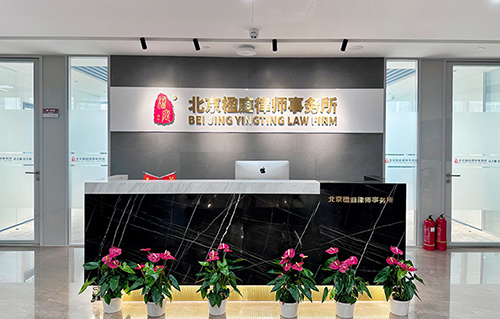
Beijing Yingtong Law Firm has focused on the protection of the rights and interests of private enterprises for many years. It has represented many corporate rights protection cases in the legal practice of rights protection in natural resources, mining, land, waters, territorial space, corporate equity, criminal defense, factory demolition, environmental protection shutdown, prohibition and vacation, etc., including large-scale real estate...








Ten highlights of the new "Regulations on the Implementation of the Administrative Reconsideration Law": 08 The organization and functions of the Administrative Reconsideration Committee - allowing "e
Home page >> Ying Ting Information >> Legal information
Article author:Yingting Lawyers Group | Update time:2026-05-21 | Reading times:206
What is the Administrative Review Committee?
The Administrative Review Committee, simply put, is an expert advisory body located within the administrative review agency. Its members usually include two parts: one is the legal staff within the administrative review agency, and the other is legal experts, scholars, senior lawyers, etc. hired from outside. The main function of the committee is to provide professional advisory opinions for reference by administrative review agencies when hearing major, complex, and difficult administrative review cases. It is not an independent adjudication agency, and the final decision-making power lies with the administrative review agency, but its opinions often have a very important influence.
What new requirements do the new regulations impose?
The new regulations put forward several important requirements for administrative review committees: first, administrative review agencies at or above the county level are required to set up administrative review committees in principle; second, the committee is required to have a certain proportion of external members in its composition, and cannot all be people within the system; third, cases involving major public interests, large social impact, and particularly complex cases must be discussed by the committee; fourth, the committee's opinions are required to be recorded in writing and included in the case files. These requirements have changed the committee system from "optional" to "must have", and from "just a formality" to "substantial operation".
What role do committee opinions play in review decisions?
This is the question that everyone is most concerned about: Do the review agencies have to comply with the opinions of the review committee? The answer is: not mandatory. The opinions of the review committee are advisory in nature, and the final review decision is made by the administrative review agency. The review authority may adopt the committee's opinion or not, but must explain the reasons. The original intention of designing this system is to allow professionals to participate and provide professional opinions, but the opinions of the committee cannot replace the independent judgment of the administrative review agency. This not only brings into play the wisdom of experts, but also maintains the independent status of the administrative review agency, without any delay on either side.
Impact on the parties
What does this system mean for companies applying for administrative reconsideration? This means that when encountering major and complex cases, more professional forces will be involved to help you speak. Especially for cases involving professional and technical issues, such as environmental assessment, construction quality, medical accidents and other professional fields, experts in relevant fields in the committee can provide more accurate judgments. However, it should also be noted that the opinion of the committee is not decisive. The parties still need to fully express their claims and evidence, and cannot rely entirely on the committee to advocate for your rights.
[Lawyer Yingting’s conclusion]
The improvement of the administrative review committee system is an important measure in this new regulation to promote the fairness of review. Its core idea is to use external professional forces to make administrative review decisions more professional and fair. Although the final decision-making power is still in the hands of the review authority, having an extra layer of expert control provides an extra layer of protection.
Recommended reading
- Mineral rights mortgage financing: a new financing path for private mining companies
- Should the government’s investment promotion agreement be scrapped at the drop of a hat? The law has your back!
- Mining in the name of land leveling? The Central Inspection Team is exposed! Mine bosses, please don’t step into this trap.
- Mining license renewal delayed? The new regulations stipulate that a reply must be made within 15 days
- New opportunities for administrative reconsideration: increased litigation winning rate, smoother rights protection channels
- Mineral rights mortgage financing: a new financing path for private mining companies
- Should the government’s investment promotion agreement be scrapped at the drop of a hat? The law has your back!
- Mining in the name of land leveling? The Central Inspection Team is exposed! Mine bosses, please don’t step into this trap.
- Are companies being fined too much for small things? Court: The punishment is inappropriate and must be corrected!
- New opportunities for administrative reconsideration: increased litigation winning rate, smoother rights protection channels