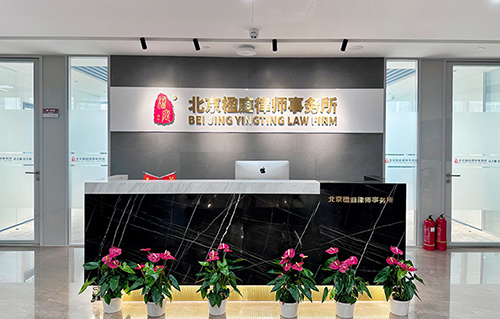
Beijing Yingtong Law Firm has focused on the protection of the rights and interests of private enterprises for many years. It has represented many corporate rights protection cases in the legal practice of rights protection in natural resources, mining, land, waters, territorial space, corporate equity, criminal defense, factory demolition, environmental protection shutdown, prohibition and vacation, etc., including large-scale real estate...








A large company defaults on the final payment and uses "not receiving upstream money" as an excuse? The court ruled: invalid!
Home page >> Ying Ting Information >> Legal information
Article author:Yingting Lawyers Group | Update time:2026-05-29 | Reading times:154
[Key points of the case]
A large software company subcontracts sub-projects to small and medium-sized enterprises, and the contract stipulates a "back-to-back" clause, which means that the final payment will be made to the small and medium-sized enterprises only after the upstream company has paid and the overall project has been accepted. As a result, after five years of completion of the project by the small and medium-sized enterprises, the large company delayed it for various reasons and only paid 25% of the advance payment. This put pressure on the capital chain of the small and medium-sized enterprises, and they were forced to go to court to recover more than 5 million yuan in arrears.
The Chongqing High Court’s second instance clearly determined that the “back-to-back” clause was invalid. The court pointed out that large companies take advantage of their dominant market position to transfer their business risks to small and medium-sized enterprises, violating the principle of fairness and good faith. Moreover, the acceptance and settlement of the overall project are beyond the control of the subcontractor. Failure to settle for a long time is considered a malicious delay. The law does not support this kind of overbearing clause of "using the big to bully the small", and the big company is ordered to pay the balance and liquidated damages immediately.
Lawyer Ying Ting reminded that contracts that say “I will pay you after receiving the money from the employer” are often untenable in law, especially when dealing with small and medium-sized enterprises. The state is vigorously cracking down on delinquent accounts and protecting the private economy. As a subcontractor, don’t be afraid when encountering such terms. As long as the work is completed and accepted, you should confidently ask for money; as a contractor, don’t always think about passing on risks. Compliance with payment is the long-term solution.
【Key words】
Dominant market position “Back-to-back” clauses Debt arrears Small and medium-sized enterprises
【Case summary】
After a large listed company contracted a software development project, it subcontracted it to a small and medium-sized enterprise. The agreed payment terms were "receipt of payment from the upstream company" and "the overall project passed acceptance, settlement, and auditing." On the grounds that the above agreed payment conditions were not met, the company has long been in arrears with payments to the downstream small and medium-sized enterprise. The People's Court adhered to the principle of safeguarding the legitimate rights and interests of small and medium-sized enterprises and determined that the above-mentioned "back-to-back" clauses were invalid as payment conditions in accordance with the law. The case follows Article 68 of the Private Economy Promotion Law of the People's Republic of China, which stipulates that large enterprises shall not use the receipt of third-party payments as a condition for payment of accounts to small and medium-sized private enterprises. It strictly regulates enterprises' "bullying of small ones" by large enterprises, effectively protects the legitimate rights and interests of small and medium-sized enterprises, and provides a strong legal guarantee for optimizing the business environment.
【Details】
A cloud computing company, a non-party outside the case, subcontracted part of the computer software development project it contracted to a software company. In January 2020, a software company subcontracted a sub-project of the project it undertook to a technology company and signed a software development contract with it. Among them, a software company is a large listed company, while a technology company is a small and medium-sized enterprise. A technology company completed the development of the sub-project and passed the acceptance in December 2022. However, a software company only paid an advance payment of 25% of the contract amount to a technology company on the grounds that the payment terms agreed in the software development contract involved, "a cloud computing company paid software-related payments to a software company" and "the overall project passed acceptance, settlement, and auditing," were not met. A technology company then filed a lawsuit, requesting an order to order a software company to pay the remaining contract payment and liquidated damages for late payment. The court of first instance ruled that a software company should pay more than 5 million yuan in contract balance and corresponding liquidated damages to a technology company. A software company was dissatisfied and appealed.
The second instance of the Chongqing Higher People's Court held that the agreement in the software development contract involved that a certain cloud computing company should pay relevant amounts to a certain software company, and that the overall project must pass acceptance, settlement, and audit as additional payment conditions, were both "back-to-back" clauses between large enterprises and small and medium-sized enterprises, which violated the principles of fairness, good faith, and contract privity, restricted the fair participation of small and medium-sized enterprises in market competition, and harmed public interests, and should be given a negative evaluation. In this case, the agreement that a cloud computing company pays a software company in advance as a prerequisite for payment cannot be considered a valid payment condition. The acceptance, settlement, and audit terms of the overall project are not specifically related to the project involved. The acceptance, settlement, and audit of the overall project are beyond the control of a single project contractor, a technology company. Five years after the completion of a project that a technology company was responsible for, the entire project failed to pass acceptance, settlement, and auditing, which obviously exceeded the reasonable time limit. In this case, a software company should make corresponding payments based on the completion of the contract by a technology company, rather than delaying payment indefinitely. The second instance judgment dismissed the appeal and upheld the original judgment.
【Typical meaning】
This case is a typical case of regulating "the big bullying the small" and promoting the healthy development of the private economy. The People's Court made a negative evaluation of the "back-to-back" clause in accordance with the law, effectively regulating the inappropriate behavior of large enterprises using their dominant market position to transfer payment risks, effectively easing the survival pressure of small and medium-sized software enterprises to withdraw funds, and building a solid legal barrier for the realization of high-quality development of the private economy.
Previous article:Ying Ting Interpretation | Chapter 7 Protection of Rights and Interests (Article 58 - Article 70) of the Private Economy Promotion Law Article by Article
Next article:The court awarded 26 million yuan in compensation for defaulting on payment because the audit was not completed!
Recommended reading
- Mineral rights mortgage financing: a new financing path for private mining companies
- Should the government’s investment promotion agreement be scrapped at the drop of a hat? The law has your back!
- Mining in the name of land leveling? The Central Inspection Team is exposed! Mine bosses, please don’t step into this trap.
- Mining license renewal delayed? The new regulations stipulate that a reply must be made within 15 days
- New opportunities for administrative reconsideration: increased litigation winning rate, smoother rights protection channels
- Mineral rights mortgage financing: a new financing path for private mining companies
- Should the government’s investment promotion agreement be scrapped at the drop of a hat? The law has your back!
- Mining in the name of land leveling? The Central Inspection Team is exposed! Mine bosses, please don’t step into this trap.
- Are companies being fined too much for small things? Court: The punishment is inappropriate and must be corrected!
- New opportunities for administrative reconsideration: increased litigation winning rate, smoother rights protection channels