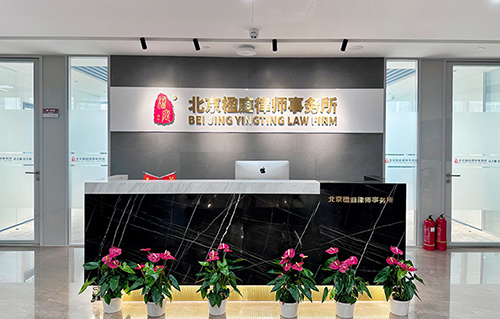
Beijing Yingtong Law Firm has focused on the protection of the rights and interests of private enterprises for many years. It has represented many corporate rights protection cases in the legal practice of rights protection in natural resources, mining, land, waters, territorial space, corporate equity, criminal defense, factory demolition, environmental protection shutdown, prohibition and vacation, etc., including large-scale real estate...








Interpreting Article 49 of the Administrative Litigation Law, what happens when a case filed will be dismissed?
Home page >> Ying Ting Information >> Legal information
Article author:Yingting Lawyers Group | Update time:2019-04-22 | Reading times:618
Article introduction: Interpretation of Article 49 of the Administrative Litigation Law. Under what circumstances will a case that has been filed be dismissed?
Part One: Original text of the law
Article 49 of the Administrative Litigation Law stipulates that the following conditions must be met for filing a lawsuit: (1) The plaintiff is a citizen, legal person or other organization that complies with the provisions of Article 25 of this Law; (2) There is a clear defendant; (3) There are specific litigation claims and factual basis; (4) It falls within the scope of the People's Court and the jurisdiction of the People's Court subject to the lawsuit.
Article 50 of the Administrative Litigation Law stipulates that a complaint shall be submitted to the People's Court and copies shall be submitted according to the number of defendants.
If it is really difficult to write a complaint, you can file a complaint orally, and the people's court will record it, issue a written voucher with a date, and notify the other party.

Part 2: If a case has been filed under any of the following circumstances, a ruling shall be made to dismiss the prosecution.
(1) Failure to comply with the provisions of Article 49 of the Administrative Litigation Law;
Interpretation: Failure to comply with the provisions of Item 49-1 means that the complainant or plaintiff has no interest in the administrative act being sued. The "factual basis" stipulated in item 49-3 mainly refers to the evidence proving the existence of the accused administrative act. It is sufficient for the lawsuit to be accepted. The Yingting Demolition Group suggested that the plaintiff should be concise and to the point when filing a lawsuit, and use the technique of taking advantage of the situation later, instead of demonstrating in detail the illegality or invalidity of the administrative act complained of in the "facts and reasons" section.
(2) The statutory prosecution time limit is exceeded and there is no justifiable reason;
(3) The defendant is listed incorrectly and refuses to change;
(4) Failure to have a legal agent, designated agent, or representative conduct litigation in accordance with legal provisions;
Interpretation: "Failure to litigate by a representative in accordance with legal provisions" is basically a defense clause for the third party who is the defendant's teammate.

(5) Failure to first apply to the administrative agency for reconsideration in accordance with laws and regulations;
(6) Repeated prosecution;
(7) File a lawsuit again without justifiable reasons after withdrawing the lawsuit;
(8) Administrative actions obviously have no actual impact on their legitimate rights and interests;
Interpretation: This provision evolved from the provisions of Item 1-2-6 of the old interpretation of “behaviors that do not have an actual impact on the rights and obligations of citizens, legal persons or other organizations” and is more precise.
(9) The subject matter of the lawsuit has been governed by an effective judgment;
(10) Failure to meet other statutory prosecution conditions.
If the People's Court deems that a trial is not necessary after reviewing the files, investigating and questioning the parties, it may make an immediate ruling to dismiss the prosecution.
Interpretation: The provisions of this paragraph are consistent with the actual trial and reduce the burden of litigation for all parties.

Yingting reminds you:
Article 44 of the Administrative Litigation Law stipulates that for administrative cases that fall within the scope of the People's Court, citizens, legal persons or other organizations may first apply to the administrative agency for reconsideration. If they are dissatisfied with the reconsideration decision, they may then file a lawsuit with the People's Court; they may also file a lawsuit directly with the People's Court. Laws and regulations stipulate that one must first apply to the administrative agency for reconsideration. If one is dissatisfied with the reconsideration decision and then files a lawsuit in the People's Court, the provisions of laws and regulations shall apply. Article 45 stipulates that citizens, legal persons or other organizations that are dissatisfied with the review decision may file a lawsuit with the People's Court within 15 days from the date of receipt of the review decision. If the review authority fails to make a decision within the time limit, the applicant may file a lawsuit with the People's Court within fifteen days from the expiration of the review period. Except as otherwise provided by law. Article 46 stipulates that if a citizen, legal person or other organization directly files a lawsuit with the People's Court, it shall do so within six months from the date when it knows or should know that the administrative action has been taken. Except as otherwise provided by law. Except for cases filed over real estate, the People's Court will not accept cases filed more than five years from the date of administrative action.
Previous article:Analyzing the Administrative Litigation Law, why should state compensation be required for forced demolition instead of demolition compensation?
Recommended reading
- Mineral rights mortgage financing: a new financing path for private mining companies
- Should the government’s investment promotion agreement be scrapped at the drop of a hat? The law has your back!
- Mining in the name of land leveling? The Central Inspection Team is exposed! Mine bosses, please don’t step into this trap.
- Mining license renewal delayed? The new regulations stipulate that a reply must be made within 15 days
- New opportunities for administrative reconsideration: increased litigation winning rate, smoother rights protection channels
- Mineral rights mortgage financing: a new financing path for private mining companies
- Should the government’s investment promotion agreement be scrapped at the drop of a hat? The law has your back!
- Mining in the name of land leveling? The Central Inspection Team is exposed! Mine bosses, please don’t step into this trap.
- Are companies being fined too much for small things? Court: The punishment is inappropriate and must be corrected!
- New opportunities for administrative reconsideration: increased litigation winning rate, smoother rights protection channels