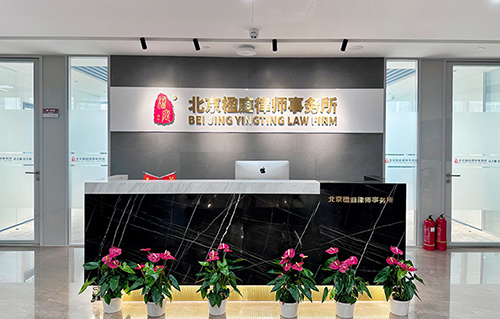
Beijing Yingtong Law Firm has focused on the protection of the rights and interests of private enterprises for many years. It has represented many corporate rights protection cases in the legal practice of rights protection in natural resources, mining, land, waters, territorial space, corporate equity, criminal defense, factory demolition, environmental protection shutdown, prohibition and vacation, etc., including large-scale real estate...








Analyzing the "Administrative Penalty Law", if you are not satisfied with the demolition compensation, how can you exercise your right to make a statement and defend yourself?
Home page >> Ying Ting Information >> Legal information
Article author:Yingting Lawyers Group | Update time:2019-04-24 | Reading times:634
Article introduction: Analysis of the "Administrative Penalty Law", if you are not satisfied with the demolition compensation, how to exercise the right to state and defend? Article 6 of the Administrative Punishment Law stipulates the rights of persons subject to administrative punishment.
Part One: Original text of the law
Article 6 of the "Administrative Penalty Law" stipulates that citizens, legal persons or other organizations have the right to state and defend against administrative penalties imposed by administrative agencies; if they are dissatisfied with the administrative penalties, they have the right to apply for administrative reconsideration or initiate administrative litigation in accordance with the law. Citizens, legal persons or other organizations that are harmed due to illegal administrative penalties imposed by administrative agencies have the right to request compensation in accordance with the law.

Part 2: Legal Analysis
In order to protect the legitimate rights and interests of the parties concerned, the law stipulates various rights of persons subject to administrative penalties, including during and after the administrative penalties are exercised, including:
1. Right of statement and defense. Statement refers to a behavior in which the actor objectively explains and introduces his behavior; defense refers to the party's justification for his behavior.representationReasoning and justifying behavior. This is a right enjoyed by the parties involved in administrative punishment. In order to protect the rights and interests of the parties involved in administrative law enforcement procedures, the law stipulates that when an administrative agency imposes an administrative penalty, citizens, legal persons or other organizations have the right, in accordance with the provisions of this law, to state and defend the administrative agency's proposed punishment and their own behavior, and to prove that they have no illegal facts. The administrative agency must strictly abide by the provisions of the law and ensure the exercise of the parties' right to make statements and defense. Not only that, before imposing administrative penalties, administrative agencies must clearly inform the parties of the facts of the violation of the law and the reasons and basis for the punishment to be imposed, so that the parties have the conditions and possibility to state and defend their actions.
2. The right to apply for administrative reconsideration or initiate administrative litigation. This is a right that the parties enjoy in accordance with the law after receiving administrative penalties. Administrative reconsideration refers to the administrative agency’s decision to review the situation after the parties or relevant units submit an application or request.makeAn act of re-examining an administrative penalty decision; administrative litigation refers to an act in which a party who is punished by a state administrative agency is dissatisfied and directly files a lawsuit with the People's Court, or after submitting a reconsideration to the directly superior authority of the original sanctioning authority, if he is still dissatisfied with the decision, he files a lawsuit with the People's Court to request the cancellation or change of the original sanction or decision. Administrative review is a top-down legal supervision within administrative agencies. Mandatory and authoritative. The Yingting Demolition Team learned that for cases submitted for review, the review agency must review whether the specific administrative actions are legal and appropriate. If the specific administrative actions are obviously inappropriate, they can be changed. The law gives the parties the right to choose the judicial supervision procedure, that is, if they are not satisfied with the punishment imposed by the administrative agency, they can directly file an administrative lawsuit with the People's Court, or after administrative review, if they are not satisfied with the review decision, they can also file a lawsuit with the People's Court.
3. The right to demand administrative compensation. This is a measure to provide administrative relief to the parties concerned after the administrative penalty is determined to be a mistake. Administrative compensation refers to the state's act of providing certain compensation to the victim when an administrative agency violates the law and infringes upon the legitimate rights of citizens when performing administrative duties and imposing administrative penalties.

Administrative compensation includes the followingmeaning:
1. The form of administrative compensation liability is compensation, that is, restoration to the original status quo or monetary compensation. Administrative compensation liability is a type of administrative tort liability.
2. Administrative compensation is a type of state responsibility; state responsibility refers to the legal consequences that a state should bear for its actions in accordance with international law or domestic law. Ying Ting believes that state responsibility can be divided into two types: international responsibility and domestic responsibility. Domestic responsibility is the responsibility that the state should bear to its citizens, which can be divided into four types: national legislative damage liability, national administrative tort liability, national judicial damage liability, and national civil liability. Liability for compensation for administrative infringement is only one form of state responsibility and is the state's liability for administrative infringement.
3. The reason for administrative compensation is administrative infringement. The subject of the infringement may be an administrative agency and its staff, or it may be an organization or individual authorized to perform certain administrative acts.
4. Administrative compensation is different from administrative compensation. Administrative compensation is usually caused by the illegal or improper behavior of administrative agencies and their staff (including administrative agency staff and personnel entrusted to perform official duties), while administrative compensation is caused by the legal behavior of administrative agencies and their staff. If citizens, legal persons or other organizations believe that they have been harmed by illegal administrative penalties imposed by administrative agencies, they have the right to obtain compensation in accordance with the law.

However, when exercising this right, please note:
(1) This kind of request for compensation arises from the execution of administrative penalties by the administrative agency. It cannot be filed if the administrative agency does not execute the punishment.
(2) This kind of punishment is an act of the state administrative agency performing official duties on behalf of the country (it cannot be a private act).
(3) This kind of enforcement of administrative penalties has indeed caused damage to the parties concerned.
(4) This kind of compensation is provided by the state to the victim.
Whether compensation can be granted to the parties concerned must be made through legal procedures, and the superior administrative agency or the people's court shall make a ruling on the basis of ascertaining the facts.
Yingting reminds you:
According to the relevant laws and regulations of our country, the expropriated and demolished persons can file an administrative review within 60 days of receiving the expropriation decision, expropriation compensation decision and other specific administrative actions, and file an administrative lawsuit within 6 months. If your house is forcibly demolished, you must file a lawsuit to defend your rights within 6 months of knowing the date of demolition. If you have not negotiated compensation terms with the government, you can consult a lawyer specializing in land acquisition and demolition, or ask a lawyer to intervene and negotiate with the government using professional legal knowledge to strive for fair and satisfactory compensation.
Next article:Under what circumstances is a signed demolition and resettlement compensation agreement invalid?
Recommended reading
- Mineral rights mortgage financing: a new financing path for private mining companies
- Should the government’s investment promotion agreement be scrapped at the drop of a hat? The law has your back!
- Mining in the name of land leveling? The Central Inspection Team is exposed! Mine bosses, please don’t step into this trap.
- Mining license renewal delayed? The new regulations stipulate that a reply must be made within 15 days
- New opportunities for administrative reconsideration: increased litigation winning rate, smoother rights protection channels
- Mineral rights mortgage financing: a new financing path for private mining companies
- Should the government’s investment promotion agreement be scrapped at the drop of a hat? The law has your back!
- Mining in the name of land leveling? The Central Inspection Team is exposed! Mine bosses, please don’t step into this trap.
- Are companies being fined too much for small things? Court: The punishment is inappropriate and must be corrected!
- New opportunities for administrative reconsideration: increased litigation winning rate, smoother rights protection channels