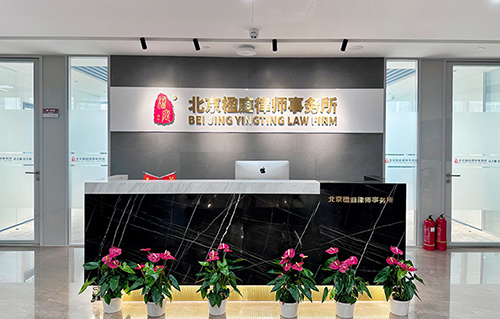
Beijing Yingtong Law Firm has focused on the protection of the rights and interests of private enterprises for many years. It has represented many corporate rights protection cases in the legal practice of rights protection in natural resources, mining, land, waters, territorial space, corporate equity, criminal defense, factory demolition, environmental protection shutdown, prohibition and vacation, etc., including large-scale real estate...








Analysis: Will the Administrative Punishment Law punish four categories of behavior? Which agencies have the power to impose penalties?
Home page >> Ying Ting Information >> Legal information
Article author:Yingting Lawyers Group | Update time:2019-04-24 | Reading times:473
Article Introduction: Analysis: Will the Administrative Punishment Law punish four types of behavior? Which agencies have the power to impose penalties?
Part 1, original text of the law
Article 2 of the Administrative Penalty Law stipulates that this Law shall apply to the establishment and implementation of administrative penalties. This article stipulates the statutory principles for the establishment and implementation of administrative penalties.

Part 2, legal analysis
1. The right to set administrative penalties is an important part of national legislative power. Adopt a strict and prudent legal principle, that is, if there is no express provision in the law, there will be no punishment.
1. Administrative penalties are divided according to their nature and can be roughly divided into four categories: first, personal freedom penalties involving personal rights; second, behavioral penalties such as revocation of licenses or business licenses, orders to suspend production and business, etc.; third, property penalties such as fines and confiscation of illegal property; fourth, admonishment penalties such as warnings and notifications of criticism.
2. Our country’s legislative principles for setting administrative penalty powers: The Yingting Demolition Group learned that, first, it must comply with our country’s legislative system; second, it must distinguish between different situations of various types of administrative penalties and treat them differently; third, it must be regulated according to legal principles, and some current non-standard practices must be appropriately changed, and the actual situation of our country’s legal system construction must be considered. Based on the above principles, this law clearly stipulates the power to set administrative penalties, and emphasizes in this article that the power to set administrative penalties is uniformly adjusted by this law and adopts the statutory principle.
3. The power to set penalties stipulated in this law can be summarized as follows: the law can set various types of administrative penalties; administrative regulations can set various administrative penalties other than restricting personal freedom; local regulations can set administrative penalties other than restricting personal freedom and revoking business licenses.

2. Administrative penalties shall be implemented in accordance with the provisions of this Law.
The implementation of penalties involves two issues: one is the subject of implementation, and the other is the behavior or principles and procedures for implementation.
1. Not all administrative agencies have the power to impose administrative penalties. Which administrative agencies have the power to impose administrative penalties is stipulated by laws and administrative regulations. The Yingting Demolition Group suggested that one thing should be noted in this regard. The main body of law enforcement should be national administrative agencies, but not all administrative agencies. The law has opened a small opening and stipulates authorization and delegation, but there are restrictive provisions;
2. Administrative agencies can only impose administrative penalties on violations of administrative order within the scope of their own business;
3. What types of administrative penalties each administrative agency has the power to impose shall be in accordance with laws and regulations. The law also provides specific provisions for this.

Yingting reminds you:
1. If you run a restaurant, hotel or other catering company, you will be punished by relevant departments because the oil fume or sewage discharge exceeds the standard. Or your factory is forced to suspend production or be closed due to environmental issues. It is also possible that your breeding farm has been ordered to ban, dismantle, or close. You may even be fined for one of the above reasons. If you think the handling by the relevant departments is inappropriate, you can safeguard your legitimate rights and interests in accordance with Article 35 of the Administrative Penalty Law. That is, Article 35 of the Administrative Penalty Law stipulates that if the party concerned is dissatisfied with the administrative penalty decision made on the spot, he may apply for administrative reconsideration or file an administrative lawsuit in accordance with the law. If you encounter unclear legal issues, you can consult a professional lawyer to find a solution.

2. At the same time, please pay attention to the following legal deadlines to avoid missing the opportunity to protect your rights.
(1) Article 9 of the Administrative Reconsideration Law stipulates that if citizens, legal persons or other organizations believe that a specific administrative act infringes upon their legitimate rights and interests, they may file an application for administrative review within 60 days from the date of becoming aware of the specific administrative act; however, exceptions are made where the application period prescribed by law exceeds 60 days. If the statutory application deadline is delayed due to force majeure or other legitimate reasons, the application deadline will continue to be calculated from the date the obstacle is removed.
(2) Article 44 of the Administrative Litigation Law stipulates that for administrative cases within the scope of the People's Court, citizens, legal persons or other organizations may first apply to the administrative agency for reconsideration. If they are not satisfied with the reconsideration decision, they may then file a lawsuit with the People's Court; they may also file a lawsuit directly with the People's Court. Laws and regulations stipulate that one must first apply to the administrative agency for reconsideration. If one is dissatisfied with the reconsideration decision and then files a lawsuit in the People's Court, the provisions of laws and regulations shall apply. Article 45 stipulates that citizens, legal persons or other organizations that are dissatisfied with the review decision may file a lawsuit with the People's Court within 15 days from the date of receipt of the review decision. If the review authority fails to make a decision within the time limit, the applicant may file a lawsuit with the People's Court within fifteen days from the expiration of the review period. Except as otherwise provided by law. Article 46 stipulates that if a citizen, legal person or other organization directly files a lawsuit with the People's Court, it shall do so within six months from the date when it knows or should know that the administrative action has been taken. Except as otherwise provided by law. Except for cases filed over real estate, the People's Court will not accept cases filed more than five years from the date of administrative action.
Previous article:After signing a resettlement compensation agreement, can the signed agreement be revoked? Will the court file a case?
Next article:Six common compensation items for enterprise (factory) demolition
Recommended reading
- Mineral rights mortgage financing: a new financing path for private mining companies
- Should the government’s investment promotion agreement be scrapped at the drop of a hat? The law has your back!
- Mining in the name of land leveling? The Central Inspection Team is exposed! Mine bosses, please don’t step into this trap.
- Mining license renewal delayed? The new regulations stipulate that a reply must be made within 15 days
- New opportunities for administrative reconsideration: increased litigation winning rate, smoother rights protection channels
- Mineral rights mortgage financing: a new financing path for private mining companies
- Should the government’s investment promotion agreement be scrapped at the drop of a hat? The law has your back!
- Mining in the name of land leveling? The Central Inspection Team is exposed! Mine bosses, please don’t step into this trap.
- Are companies being fined too much for small things? Court: The punishment is inappropriate and must be corrected!
- New opportunities for administrative reconsideration: increased litigation winning rate, smoother rights protection channels