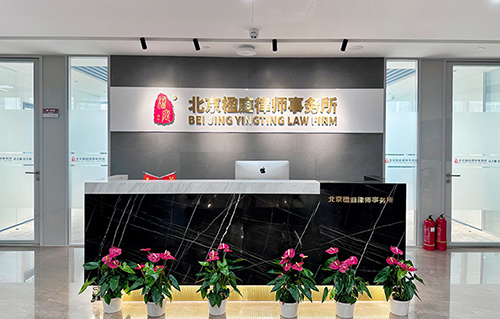
Beijing Yingtong Law Firm has focused on the protection of the rights and interests of private enterprises for many years. It has represented many corporate rights protection cases in the legal practice of rights protection in natural resources, mining, land, waters, territorial space, corporate equity, criminal defense, factory demolition, environmental protection shutdown, prohibition and vacation, etc., including large-scale real estate...








The relationship between farmers’ land acquisition compensation rights and village committees, governments, and credit cooperatives
Home page >> Ying Ting Information >> Legal information
Article author:Yingting Lawyers Group | Update time:2019-04-26 | Reading times:395
In June 2009, part of the plowed land of a farmer's village group in Changwu County, Xianyang, Shaanxi Province waslevy, obtained according to lawcompensationmoney.levyThe competent authorities willcompensationThe money was handed over to the village committee for distribution to the villagers. According to the resolution of the village committee, the farmer should receive 10,126 yuan. However, when the village committee entrusted the Changwu County Rural Promise Cooperative to distribute the funds to the Dizhang Township Promise Branch, the Promise branch unreasonably detained the farmer's head for a disputed and long-stalled loan in 1986. As a result, the farmer is still unable to enjoy the loan.compensationfees. The farmer started negotiating with the village, township, county government, people's congress and other parties in June 2009, but to no avail. At the time of desperation, he prepared to sue the village committee and Nuoyan Society to the court. However, the county court gave an oral reply based on the following reasons: ① It is necessary to provide the passbook for distribution; ② Regarding the relevant landcompensationThe court will not accept the issue of payment. Of these two reasons, the first should be said to have a certain legal level, but can the masses get it? If they can get it, why go to the court for help? Why can’t they get it? If they can’t get it, can’t they go to the court for help? Does whether they get it have anything to do with the acceptance? "Relevant landcompensation"The court will not accept the issue of payment." What is the legal basis? This is the beginning and end of the entire case. As of this writing, the property rights of the farmer have not been protected by the law. We can’t help but ask: For whom is the “traffic light” at the gate of the law turned on?
1. Farmers’ rights are subject to discrimination
Article 33 of the Constitution of the People’s Republic of my country stipulates, “Everyone who holds the nationality of the People’s Republic of my country is a citizen of the People’s Republic of China. Citizens of the People’s Republic of China are equal before the law. Any citizen enjoys the rights stipulated in the Constitution and laws, and must also perform the duties stipulated in the Constitution and laws.” This is a perfect expression of the right to equality in the Constitution of our country. Although there is no specific and accurate discussion of the plan and content of "person" in this article, according to my current legal system and explanation, "person" should be explained as including natural persons with Chinese nationality within the territory of the People's Republic of China. Legal persons and other organizations are not included. So in the field of civil law, is there an issue of equal protection between the private rights of citizens and the private rights of legal persons and other organizations? The answer is yes. This is recognized by the relationship between the foundation and fundamentality of the Constitution and civil law, and when there is a conflict between their rights, there is also a "minimum guarantee of basic human rights". This is also the basic principle reflected in the entire legal system of our country. The basic concept of civil law is "autonomy of will and safety of transactions", but its basic condition is the existence of equal rights. Therefore, Article 3 of the "General Principles of Civil Law" stipulates that "the parties have equal status in civil activities." Therefore, the principle of equality has also become an important basic principle of civil law. However, in this case, "Changwu County Promise Society and Branch", as a legal entity and other organizations, also has private rights. Why do its private rights (debts) actually lie on or override the private rights of citizens, so that the citizens' right to rescue is even deprived, and the people have nowhere to turn for help. Why did such a situation and results occur? In short, it is our public rights and quasi-public rights that are working against us. First, as a legal organization of public opinion, the village committee self-restrains its quasi-public rights and does not serve the people, but serves others. This is exactly "whose food is eaten, whose fault is blamed"! Thirdly, the government not only wants tocompensationThe funds are allocated to the village committee, and the village committee also has the duties and responsibilities of supervising the village committee. As the representative of the villagers, the village committee has unimplemented payment responsibilities to the villagers. Question: Why should the governmentcompensationWhat about paying money to the village committee? The answer is self-evident. The government, as a major public opinion, trusts the village committee as a small public opinion. The village committee can fully and faithfully represent and express the perseverance and interests of the villagers. In this case, the government believed that it had "fulfilled its duties", but the villagers could not get the money. The village committee also entrusted Noyan Society to distribute cash to the villagers. The village committee believed that it had "performed its duties", but the villagers did not receive the money. In this way, the country’scompensationWhen the money arrived at Nuoyan Society, Nuoyan Society seemed to have become a "debtor" and the masses became "debtors". Really? Who is the "official of the feudal territory"! According to my country's Administrative Law and Administrative Procedure Law, villagers have the right to request the public debtor government to implement or sue the court for rescue untilcompensationGet the money. But neither the government nor the courts had any excuse. In essence, Promise Society is under the protection of public rights and quasi-public rights. The question should be asked: Is Promise Society "public" or "private"? Why are there so many "protective umbrellas"? At this moment, even the National People's Congress is staying out of the matter, showing a helpless attitude. I would like to ask: Is this okay? The fundamental reason for the emergence of these phenomena is that organizations like Promise Society are planning and doing "private" things under the guise of "public". Under the market economy, although the law stipulates that they are private entities, "public" has become an umbrella for nondescript people. Assuming that they are private subjects, they should also be advised according to the rights relief channels of civil subjects. On the contrary, it is discriminatory treatment based on equal rights. In fact, it is giving a green light to organizations like "Promise Society" and a red light to the masses. Is this in line with the basic concept and spirit of the law? Thirdly, final judicial settlement is the basic concept of the law. According to the basic principles of procedural law, if citizens’ rights are harmed, the court’s final rescue is not only necessary but also possible and necessary. And as mentioned before, the reply was given verbally: it will not be accepted. Does the procedural law have such "adjudication" rules? We can imagine how many people's rights and assistance are simply "unnecessary" and are easily excluded from the protection of the law. We not only need to ask, who is the public power protecting?
Previous article:Farmers must be informed and satisfied with land acquisition, and no forced land acquisition is allowed.
Next article:After the household contract is expropriated, can I ask for land compensation if the standard is too low?
Recommended reading
- Mineral rights mortgage financing: a new financing path for private mining companies
- Should the government’s investment promotion agreement be scrapped at the drop of a hat? The law has your back!
- Mining in the name of land leveling? The Central Inspection Team is exposed! Mine bosses, please don’t step into this trap.
- Mining license renewal delayed? The new regulations stipulate that a reply must be made within 15 days
- New opportunities for administrative reconsideration: increased litigation winning rate, smoother rights protection channels
- Mineral rights mortgage financing: a new financing path for private mining companies
- Should the government’s investment promotion agreement be scrapped at the drop of a hat? The law has your back!
- Mining in the name of land leveling? The Central Inspection Team is exposed! Mine bosses, please don’t step into this trap.
- Are companies being fined too much for small things? Court: The punishment is inappropriate and must be corrected!
- New opportunities for administrative reconsideration: increased litigation winning rate, smoother rights protection channels