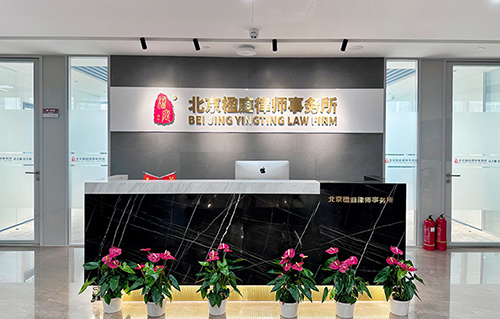
Beijing Yingtong Law Firm has focused on the protection of the rights and interests of private enterprises for many years. It has represented many corporate rights protection cases in the legal practice of rights protection in natural resources, mining, land, waters, territorial space, corporate equity, criminal defense, factory demolition, environmental protection shutdown, prohibition and vacation, etc., including large-scale real estate...








Will the courts no longer intervene in "demolishing violations"? What's going on?
Home page >> Ying Ting Information >> Legal information
Article author:Yingting Lawyers Group | Update time:2019-06-24 | Reading times:486
Article introduction: According to the "Reply of the Supreme People's Court on the Compulsory Demolition of Illegal Buildings, Structures, Facilities, etc.", the court will no longer intervene in "illegal demolition"? What's going on?
1. The court will no longer intervene in non-litigation "violation demolitions"
The "Reply of the Supreme People's Court on the Issue of Forced Demolition of Illegal Buildings, Structures, Facilities, etc." declares that the court will no longer intervene in non-litigation "illegal demolition". The reason is: in accordance with the spirit of the relevant provisions of the Administrative Enforcement Law and the Urban and Rural Planning Law, the law has granted administrative agencies the right to enforce enforcement of the forced demolition of illegal buildings, structures, facilities, etc. that violate the Urban and Rural Planning Law, and the People's Court will not accept non-litigation administrative enforcement applications submitted by administrative agencies.
2. What is a “non-litigation administrative enforcement application”?
The so-called "non-litigation administrative enforcement application" refers to an application for enforcement that the party does not apply for administrative review or file an administrative lawsuit within the statutory time limit, and does not implement the administrative decision. The Ying Demolition Group learned that its direct basis comes from Article 53 of the Administrative Enforcement Law, Article 66 of the Administrative Litigation Law and the relevant judicial interpretations of the Supreme People's Court. The subject of application is an administrative agency, and the basis for applying for execution is the effective administrative decision made by it. From the perspective of the accuracy of the "Reply", it is emphasized that the People's Court will not accept non-litigation administrative enforcement applications regarding time-limited demolition decisions submitted by administrative agencies.

3. It is essentially different from enforcement in litigation.
To emphasize the significance of "non-litigation", first of all, it is necessary to strictly distinguish whether it is a compulsory execution in litigation. In litigation cases, according to Article 65 of the Administrative Litigation Law and Article 83 of the "Interpretations of the Supreme People's Court on Several Issues Concerning the Implementation of the Administrative Litigation Law of the People's Republic of China", if a party with obligations refuses to perform legally effective administrative judgments, administrative rulings, administrative compensation judgments and administrative compensation mediation documents, the other party may apply to the People's Court for compulsory execution in accordance with the law. This is the case of "applying to the people's court for compulsory execution" in litigation. As for some local administrative agencies that apply to the people's court for "preemptive execution" of the administrative act being sued during litigation, in principle they shall not be allowed to do so. The prerequisite for non-litigation administrative enforcement is "non-litigation".

4. Authorizing provisions on forced demolition in the Urban and Rural Planning Law
(1) If a rural construction planning permit is not obtained in accordance with the law or construction is not carried out in accordance with the provisions of the rural construction planning permit within the township or village planning area, the township or town people's government shall order it to stop construction and make corrections within a time limit; if corrections are not made within the time limit, it may be demolished. The gist of understanding this provision is that the township and town people's governments are not only the subject of administrative decisions such as ordering to stop construction and making corrections within a time limit, but also the subject of directly implementing forced demolition activities.
(2) After the urban and rural planning department makes a decision to order the construction to stop or to demolish within a time limit, if the party concerned does not stop the construction or does not demolish within the time limit, the local people's government at or above the county level where the construction project is located may instruct the relevant departments to take measures such as sealing off the construction site and forcing demolition. The Yingting Demolition Group believes that this provision is intended to mean that the urban and rural planning authorities are only the subject of administrative decisions such as ordering to stop construction and demolition within a time limit, but for those who directly implement forced demolition activities, the local people's government at or above the county level must "instruct relevant departments" to organize and implement them.

Yingting reminds you:
(1) If your house is identified as an illegal construction, please first find out whether your house is an illegal construction. After encountering forced demolition, or within 60 days of receiving specific administrative actions such as expropriation decisions and expropriation compensation decisions, administrative reconsideration is filed, and administrative litigation is filed within 6 months. Don’t miss the statute of limitations through petitions, reports, etc.
(2) For legal houses that have been forcibly demolished, the statute of limitations is 6 months. After being identified as an illegal building, if you are dissatisfied with the decision to order demolition within a time limit, you must file a lawsuit with the People's Court within 15 days from the date of receipt of the demolition decision.
(3) Before the demolition of illegal construction is carried out, a final announcement still needs to be made. If the person being demolished files an administrative review or administrative lawsuit, the house involved in the case cannot be forcibly demolished before the judicial review is completed.
(4) If you have any questions, please consult a professional land acquisition and demolition lawyer for professional legal advice. Whether it involves illegal construction or land acquisition and demolition, it is best not to demolish the house involved yourself. If you dismantle it yourself, it will be difficult to get compensation later.
Each case has a story. If you encounter similar problems, you can send a private message for one-on-one consultation.
Previous article:Using infringement methods to illegally demolish illegal buildings, individuals or companies use these three methods to fight back
Next article:A company with legal procedures is forcibly closed without any compensation. What should the company do?
Recommended reading
- Mineral rights mortgage financing: a new financing path for private mining companies
- Should the government’s investment promotion agreement be scrapped at the drop of a hat? The law has your back!
- Mining in the name of land leveling? The Central Inspection Team is exposed! Mine bosses, please don’t step into this trap.
- Mining license renewal delayed? The new regulations stipulate that a reply must be made within 15 days
- New opportunities for administrative reconsideration: increased litigation winning rate, smoother rights protection channels
- Mineral rights mortgage financing: a new financing path for private mining companies
- Should the government’s investment promotion agreement be scrapped at the drop of a hat? The law has your back!
- Mining in the name of land leveling? The Central Inspection Team is exposed! Mine bosses, please don’t step into this trap.
- Are companies being fined too much for small things? Court: The punishment is inappropriate and must be corrected!
- New opportunities for administrative reconsideration: increased litigation winning rate, smoother rights protection channels