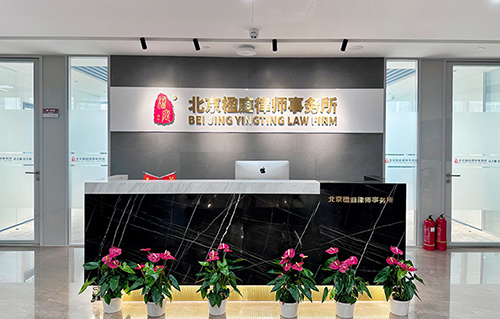
Beijing Yingtong Law Firm has focused on the protection of the rights and interests of private enterprises for many years. It has represented many corporate rights protection cases in the legal practice of rights protection in natural resources, mining, land, waters, territorial space, corporate equity, criminal defense, factory demolition, environmental protection shutdown, prohibition and vacation, etc., including large-scale real estate...








If the house is demolished without signing a resettlement compensation agreement, who will the demolition households sue? The judge gave the answer
Home page >> Ying Ting Information >> Legal information
Article author:Yingting Lawyers Group | Update time:2019-06-24 | Reading times:501
It is said to provide a reference for judgment in such cases. If similar cases occur in the future, some courts may use this judgment as a basis.
1. If a house is demolished, who should be sued?
(1) Plaintiff and defendant
Appellant: Zhengzhou Airport Economic Comprehensive Experimental Zone Management Committee
Legal representative: Ma Jian, director.
Appellee (plaintiff in first instance): Liu
Authorized agents: Wang Qingfeng, Lu Jianan (Beijing Yingtinglaw firmlawyer)
(2) The first-instance ruling rejected Liu’s claim and the Zhengzhou Municipal People’s Government cannot be named as the defendant.
When Liu failed to negotiate compensation terms with the demolition party, Liu's house was demolished. Later it was learned that the demolition was carried out by the Longwang Office. However, the Longwang Office was not a qualified defendant. Who should be sued? Initially, Liu filed an administrative lawsuit with the Zhengzhou Municipal People's Government as the defendant, requesting confirmation that the Longwang Office's demolition of his house was illegal. After hearing the case, the Xinxiang Intermediate People's Court held that the defendant was not qualified. The ruling was made to dismiss Liu’s prosecution. Liu refused to accept the decision and appealed to the Henan Provincial Higher People's Court.

(3) The court of second instance held that the Airport Management Committee was a qualified defendant in this case.
The court of second instance held that the airport management committee should be the defendant in an administrative lawsuit. The reasons are as follows. According to Article 46 of the "Land Management Law of the People's Republic of China", when the state expropriates land, it shall be announced and organized by the local people's government at or above the county level after approval in accordance with legal procedures. In this case, Liu's house was demolished because of the land expropriation involved in the construction of the Garden Expo project, and the demolition was carried out by the Longwang Office. The Longwang Office is an agency of the Airport Management Committee, which has the economic and social management authority of the provincial and municipal governments. It is responsible for the social management functions in the region and is an administrative agency that performs some government functions. The main body that organizes and implements land expropriation within its jurisdiction.
(4) The airport management committee is responsible for the demolition of the Dragon King Office, and the airport management committee is a qualified defendant in this case.
In this case, the Longwang Office does not have the legal authority to force demolition, so the legal consequences arising from its demolition of Liu’s house should be borne by the Airport Management Committee, which is a qualified defendant in this case.
(5) Court judgment results
A. The first instance held that: Regarding the issue of whether the Airport Area Management Committee is a qualified defendant in this case. According to Article 46 of the Land Management Law of the People's Republic of China, the legal consequences arising from the demolition of the house involved in the case shall be borne by the Airport Area Management Committee, and the Airport Area Management Committee is a qualified defendant in this case. According to the provisions of Article 46, Paragraph 2 and Article 47 of the Land Management Law of the People's Republic of China, the owners and users of the expropriated land have the right to enjoy compensation and resettlement. The Airport Area Management Committee's argument that collective land is expropriated to village collectives is incomplete and cannot be established. According to Article 34 of the "Administrative Procedure Law of the People's Republic of China", the Airport Area Management Committee forcibly demolished the house without reaching a demolition compensation agreement with the demolished person, and did not provide corresponding evidence to prove that its forced demolition behavior complied with the provisions of the "Administrative Enforcement Law of the People's Republic of China". It should be deemed that its demolition behavior was illegal. To sum up, the first-instance verdict: the act of demolishing houses by the Airport Area Management Committee is illegal. The first-instance case acceptance fee shall be borne by the Airport Area Management Committee.
B. The Airport Area Management Committee was dissatisfied with the first-instance judgment and appealed to the Henan Provincial Higher People’s Court. The facts found by the second-instance court were consistent with those found at first-instance, and in accordance with the provisions of Article 89, Paragraph 1, of the Administrative Litigation Law of the People's Republic of China, the appeal was dismissed and the first-instance judgment was upheld.

2. The illegal points of the demolition party in this case
1. Demolish the house involved without signing an agreement
The demolishing party and the people being demolished did not reach an agreement on compensation matters and did not sign a demolition and resettlement compensation agreement. The people being demolished did not receive any compensation. Their legal houses were forcibly demolished by the demolishing party, which violated relevant national laws and regulations. According to the provisions of Article 27, Paragraph 1, of the Regulations on the Expropriation and Compensation of Houses on State-Owned Land, when implementing house expropriation, compensation shall be given first and then relocation shall be carried out.
2. Demolition or demolition by force
The demolition party secretly demolished and forcibly demolished the legal buildings of the demolished persons. Ying Ting believed that according to Article 43 of the "Administrative Enforcement Law": "Administrative agencies shall not implement administrative enforcement at night or on statutory holidays. Articles 13 and 39 of the Constitution of the People's Republic of China stipulate that the lawful private property of citizens is inviolable. The residences of citizens of the People's Republic of China are inviolable. Illegal searches or illegal intrusions into citizens' residences are prohibited."
3. The forced demolition procedure is illegal
Article 28 of the Regulations on the Expropriation and Compensation of Houses on State-owned Land stipulates that the enforcement power of house expropriation shall be exercised by the court. Forced demolitions are divided into legal demolitions and illegal demolitions according to their nature. Since the country abolished administrative forced demolitions, the only legal forced demolitions currently are judicial demolitions, that is, forced demolitions that have been adjudicated by the court through statutory procedures. The sign is that the court issues a notice of forced demolition and determines the process of forced demolition.

3. Judicial significance of case adjudication-presuming the defendant based on “facts and law”
1. The forced demolition of houses has a serious impact on the major property rights of citizens. Regardless of the law, policy or legal spirit, it should be implemented by at least the government at the county level or above.
2. Judging from the implementation situation, collective land expropriation, house expropriation on state-owned land, urban village reconstruction, new rural construction, etc. are all organized and carried out by governments at or above the county level in terms of law and policy. The actions of offices and village committees in the organization and implementation process are all carried out under the unified organization and command of the county-level government. These actions should be regarded as entrustment in law, and the county-level government shall bear the responsibility.
3. Failure to do so will encourage illegal coercive behavior, make it difficult for citizens to claim compensation, and affect social management order and social stability. Therefore, it is not only a legal requirement, but also a social requirement to let at least county-level governments assume responsibility. It is also a trend in the development of human rights and social rights.
Previous article:The same piece of land was expropriated twice. The Shanxi court ruled that the district government had illegally expropriated land.
Next article:How big is the difference in compensation between demolishing illegal buildings and demolishing legal buildings?
Recommended reading
- Mineral rights mortgage financing: a new financing path for private mining companies
- Should the government’s investment promotion agreement be scrapped at the drop of a hat? The law has your back!
- Mining in the name of land leveling? The Central Inspection Team is exposed! Mine bosses, please don’t step into this trap.
- Mining license renewal delayed? The new regulations stipulate that a reply must be made within 15 days
- New opportunities for administrative reconsideration: increased litigation winning rate, smoother rights protection channels
- Mineral rights mortgage financing: a new financing path for private mining companies
- Should the government’s investment promotion agreement be scrapped at the drop of a hat? The law has your back!
- Mining in the name of land leveling? The Central Inspection Team is exposed! Mine bosses, please don’t step into this trap.
- Are companies being fined too much for small things? Court: The punishment is inappropriate and must be corrected!
- New opportunities for administrative reconsideration: increased litigation winning rate, smoother rights protection channels