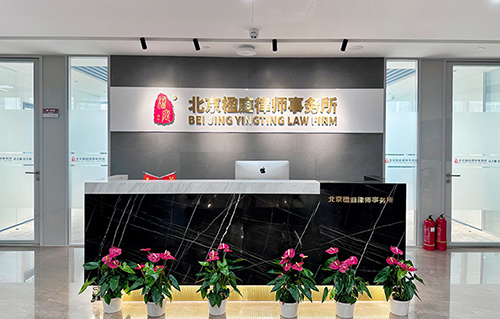
Beijing Yingtong Law Firm has focused on the protection of the rights and interests of private enterprises for many years. It has represented many corporate rights protection cases in the legal practice of rights protection in natural resources, mining, land, waters, territorial space, corporate equity, criminal defense, factory demolition, environmental protection shutdown, prohibition and vacation, etc., including large-scale real estate...








What should I do if the legitimate rights and interests of the demolished households are infringed and the administrative agencies fail to perform their duties?
Home page >> Ying Ting Information >> Legal information
Article author:Yingting Lawyers Group | Update time:2019-07-09 | Reading times:386
Introduction to the article: In practice, we often encounter situations where relevant administrative agencies fail to perform their duties. What should I do if the legitimate rights and interests of the demolished households are infringed and the administrative agencies fail to perform their duties?
The first point: 5 conditions for filing a "duty performance lawsuit"
1. He made an application to the administrative agency, and the administrative agency clearly rejected it or failed to respond within the time limit.
2. The matter he applied for has a basis for claim in substantive law. The basis of this claim can arise from or be based on a certain law, a guarantee from an administrative agency, and an administrative contract. In short, requiring an administrative agency to make a specific administrative action in accordance with its application must have a legal basis for rights.
3. He submitted it to an administrative agency with jurisdiction. Jurisdiction is the basis and scope of the activities of administrative agencies. Administrative agencies should abide by the boundaries of jurisdiction while performing legal tasks. The Yingting Demolition Team learned that this kind of jurisdiction includes not only whether the administrative agency is in charge of the professional affairs applied for by the applicant, but also the specific division of jurisdiction between administrative agencies in different regions and different levels in the same professional affairs. If an application is made arbitrarily to an administrative agency without jurisdiction, even if the administrative agency rejects it, the applicant will not automatically acquire the right to sue.
4. The act he applies to the administrative agency should be a specific and specific administrative act. Requiring administrative agencies to implement internal adjustments that have no external effect or general adjustments that are not targeted at individuals must be based on clear provisions of the law.
5. The administrative agency’s rejection of the plaintiff’s application must infringe upon the plaintiff’s own subjective rights. In the case where the plaintiff does not have subjective rights, even if the inaction of the administrative agency may infringe the public interest, the individual may not have the right to file an administrative lawsuit.

Second point: Several issues that should be paid attention to when filing a "duty performance lawsuit"
1. Article 72 of the Administrative Litigation Law stipulates that if the People's Court finds that the defendant has failed to perform its statutory duties after trial, it shall order the defendant to perform within a certain period of time. Therefore, we can call such lawsuits filed on the grounds of requiring administrative agencies to perform statutory duties "duty performance lawsuits." Responsibility litigation can not only confirm the subject of administrative actions, but also conduct investigation and evidence collection.
2. The so-called "request to perform statutory duties" means that the request for the administrative agency to perform must be the administrative responsibilities that laws and regulations clearly entrust the administrative agency to perform externally, while the "request should be for administrative sanctions" emphasizes that the requested administrative agency can only perform its responsibilities to the outside world with an adjustment behavior.
3. Administrative inaction not only includes failure to respond and delay in performance, but also includes the clear refusal of administrative agencies to perform their responsibilities. For the most common cases of application for government information disclosure in practice.

4. There are two main sources of statutory responsibilities of administrative agencies. One is the responsibilities arising from the active exercise of power by the administrative agency; the other is the responsibilities arising from the application of the counterparty. Due to the different sources of responsibility between the two, attention should be paid to distinguishing the content of evidence that should be produced when filing a lawsuit. Ying Ting held that when filing a lawsuit for performance of duties arising from ex officio circumstances, it should be proved that the administrative agency was aware of the matters to be performed and did not perform corresponding actions. For situations arising on the basis of application, when filing a lawsuit, it must be proved that the right holder has applied to the administrative agency, because filing an application is a necessary condition for administrative inaction.
5. The provisions on the statute of limitations are as follows. According to Article 47 of my country's Administrative Litigation Law, the effective litigation period for filing a lawsuit in the People's Court shall be within six months from the date when the administrative act was known or should have been known. In practice, there are mainly the following situations: (1) The law stipulates a time limit for the administrative agency to perform its duties, and if the administrative agency fails to perform its duties within this time limit, the right holder should file a lawsuit within six months after the expiration of the time limit; (2) If the law does not stipulate a time limit for the administrative agency to perform its duties, and the administrative agency still fails to perform its duties within two months after receiving the application, it may file a lawsuit in court; (3) In an emergency, the administrative agency is requested to perform its legal duties to protect its personal rights and property rights, and if the administrative agency fails to perform, it can be sued immediately.
6. The inaction of an administrative agency can be regarded as giving up its administrative power. After entering the litigation process, its authority has been transferred to the judicial agency. The court determines the content of its obligations, which is also a legitimate act of judicial power against administrative power. Therefore, when the court deems that the facts of the case are clear after review, it can specify the specific duties of the administrative agency in the judgment. However, if the facts of the case are unclear or the administrative body still has discretion, the court can only provide guidance on the performance of its responsibilities by stating its own legal opinions.

Yingting reminds you:
If you encounter illegal forced demolition, the person being expropriated and demolished can file an administrative review within 60 days of receiving the expropriation decision, expropriation compensation decision and other specific administrative actions, and file an administrative lawsuit within 6 months. You must file a lawsuit to defend your rights within 6 months of knowing the date of forced demolition. Don’t miss the statute of limitations through petitions, reports, etc.
Previous article:If you were forced to put your fingerprint on the "Demolition Pre-Signing Agreement", would you sign this agreement?
Recommended reading
- Mineral rights mortgage financing: a new financing path for private mining companies
- Should the government’s investment promotion agreement be scrapped at the drop of a hat? The law has your back!
- Mining in the name of land leveling? The Central Inspection Team is exposed! Mine bosses, please don’t step into this trap.
- Mining license renewal delayed? The new regulations stipulate that a reply must be made within 15 days
- New opportunities for administrative reconsideration: increased litigation winning rate, smoother rights protection channels
- Mineral rights mortgage financing: a new financing path for private mining companies
- Should the government’s investment promotion agreement be scrapped at the drop of a hat? The law has your back!
- Mining in the name of land leveling? The Central Inspection Team is exposed! Mine bosses, please don’t step into this trap.
- Are companies being fined too much for small things? Court: The punishment is inappropriate and must be corrected!
- New opportunities for administrative reconsideration: increased litigation winning rate, smoother rights protection channels