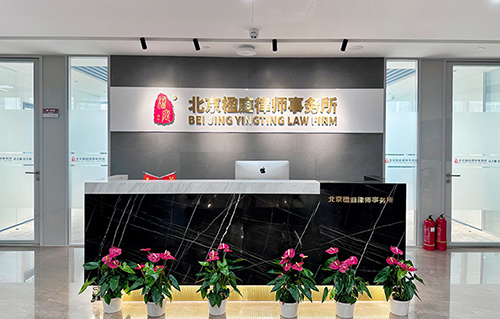
Beijing Yingtong Law Firm has focused on the protection of the rights and interests of private enterprises for many years. It has represented many corporate rights protection cases in the legal practice of rights protection in natural resources, mining, land, waters, territorial space, corporate equity, criminal defense, factory demolition, environmental protection shutdown, prohibition and vacation, etc., including large-scale real estate...








Forward Weibo Qzone WeChat These 8 types of houses are not illegal construction and must not be demolished
Home page >> Ying Ting Information >> Legal information
Article author:Yingting Lawyers Group | Update time:2019-07-15 | Reading times:544
Article introduction: These 8 types of houses are not illegal constructions. Some houses were mistakenly regarded as illegal constructions and were demolished.
1. Houses built, renovated, or expanded before 2008 must have complete land use rights and complete land use rights certificates. Or the right to use housing determined by the corresponding functional authority department, or the right to use collective construction land purchased by a township enterprise at one time, or the right to use state-owned industrial land obtained through bidding, auction, and listing, and the building was first constructed or renovated before 2008.
2. Buildings built by investment promotion enterprises with the approval of the government or functional departments with the authority to approve construction legality cannot be deemed as illegal buildings.
3. my country's "Land Management Law" was implemented on June 25, 1986. The 1982 "Regulations on the Management of Land for Village and Town Housing Construction" was abolished after the implementation of the "Land Management Law". Houses on rural land built before the implementation of the Land Management Law in 1986 cannot be considered illegal buildings.

4. Before the overall land planning adjustment, the house complied with the then land use plan and obtained relevant certificates and licenses that complied with the then legal provisions.
The Yingting demolition team learned that rural land that met the conditions at the time but did not meet the current conditions cannot be arbitrarily identified as illegal buildings. According to Article 73 of the Land Management Law, it can only be confiscated but cannot be demolished within a time limit.
5. In accordance with the relevant provisions of my country's Urban and Rural Planning Law, if you have obtained the "Building Land Planning Permit", "Site Selection Opinion" and preliminary land-related procedures, and can obtain the final "House Construction Permit" or real estate certificate by correcting or completing certain procedures, you can apply for additional procedures. You cannot casually identify it as an illegal construction, and you should be given the opportunity to make corrections or make corrections within a time limit.

6. Some governments sell the remaining land use rights of former township enterprises (including old residential areas) through bidding, auction, etc., but there may be no corresponding procedures for the buildings on the ground when selling. This situation cannot be casually regarded as illegal construction. Therefore, directly buying out land use rights and above-ground buildings from the government cannot be considered illegal construction.
7. If you obtain a land use right certificate but do not have a real estate certificate or relevant planning procedures for the construction project, it cannot be considered an illegal construction. Because certain procedures have been obtained but the license is incomplete, it can be reissued and extended.
8. Ying Ting believes that rural land contracted land used for agricultural production, or land used for free reclamation of barren hills and wastelands or for basic farmland production and construction. Nor can it be arbitrarily regarded as illegal construction.

Yingting reminds you:
1. If your house is identified as an illegal construction, please first find out whether your house is an illegal construction. If you have any questions, please consult a professional land acquisition and demolition lawyer for professional legal advice.
2. Because illegal construction refers to houses and facilities constructed outside the planning area without obtaining the planning permit for the proposed project (original site, site selection and construction opinions), and in violation of the provisions of the Land Management Law, the Urban and Rural Planning Law, the Regulations on the Planning and Construction Management of Villages and Towns and other relevant laws and regulations. Due to historical reasons, there may be some houses suspected of illegal construction. Whether it needs to be demolished and whether compensation can be given after demolition should be treated differently according to different situations. In practice, illegal buildings may not necessarily be demolished, but may also be converted into legal buildings and remain there permanently. There are many reasons for illegal construction, including the parties involved and the administrative agencies. The legal consequences for illegal buildings are not the only ones. There are confiscation and demolition within a time limit, as well as fines and reissue procedures. Moreover, confiscation and demolition within a time limit are limited to serious violations of urban planning.
Recommended reading
- Mineral rights mortgage financing: a new financing path for private mining companies
- Should the government’s investment promotion agreement be scrapped at the drop of a hat? The law has your back!
- Mining in the name of land leveling? The Central Inspection Team is exposed! Mine bosses, please don’t step into this trap.
- Mining license renewal delayed? The new regulations stipulate that a reply must be made within 15 days
- New opportunities for administrative reconsideration: increased litigation winning rate, smoother rights protection channels
- Mineral rights mortgage financing: a new financing path for private mining companies
- Should the government’s investment promotion agreement be scrapped at the drop of a hat? The law has your back!
- Mining in the name of land leveling? The Central Inspection Team is exposed! Mine bosses, please don’t step into this trap.
- Are companies being fined too much for small things? Court: The punishment is inappropriate and must be corrected!
- New opportunities for administrative reconsideration: increased litigation winning rate, smoother rights protection channels