Beijing Yingtong Law Firm has focused on the protection of the rights and interests of private enterprises for many years. It has represented many corporate rights protection cases in the legal practice of rights protection in natural resources, mining, land, waters, territorial space, corporate equity, criminal defense, factory demolition, environmental protection shutdown, prohibition and vacation, etc., including large-scale real estate...








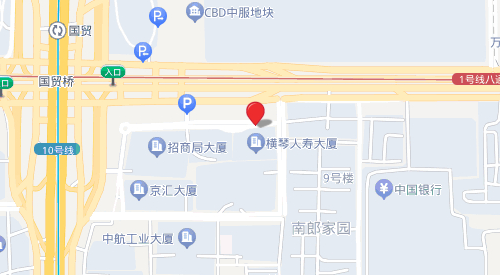
In case of these 9 illegal forced demolitions, the expropriating party was sued by the state for compensation, and 99% of the courts ruled that the evicted households won the case.
Home page >> Ying Ting Information >> Legal information
Article author:Yingting Lawyers Group | Update time:2019-08-12 | Reading times:448
Introduction to the article: Illegal demolitions include measures such as water cutoffs, power outages, and circuit breakers. Illegal demolition also includes substantive and procedural violations of demolition. According to court trial examples, for these nine types of illegal forced demolitions, more than 90% of the courts ruled that the demolished households won the case, and the expropriating party compensated the losses.
The first type is failure to listen to the statements and defense of the demolished persons, which is a procedural violation.
An Intermediate People's Court "vs. City Management and Administrative Law Enforcement Bureau City Management Administrative Case".
Failure to listen to statements and defense: The house involved in the case is an illegal building, but the administrative agency did not listen to the counterparty’s statement and defense before making the decision to demolish the illegal building, which is an illegal procedure.
The second type is that the content of the time limit demolition notice is unclear.
"Case of the Urban Management and Administrative Law Enforcement Bureau ordering the demolition of illegal buildings within a time limit" from an intermediate court.
Ying Ting believed that the decision to demolish within a time limit did not contain basic information such as illegal buildings and the area of the buildings required to be demolished within a time limit, and should be revoked in accordance with the law.

The third type, demolition beyond the scope
A court " sued the sub-district office for confirmation that it was illegal to clean up the trees it planted."
The content of the demolition notice is not comprehensive, and the demolition exceeds the scope: when the administrative agency urges the counterparty to make rectifications or demolitions on its own, it must clearly define the scope of the cleanup, and it must not exceed this scope when taking compulsory measures.
Fourth, the enforcement decision has not yet taken effect and the demolition procedures are illegal.
"Administrative confirmation case against the Urban Management and Administrative Law Enforcement Bureau of the High-tech Industrial Development Zone" in a certain court.
Only when the counterparty neither applies for administrative reconsideration nor files an administrative lawsuit against the compulsory execution decision within the statutory period, nor performs the administrative decision, can the administrative agency implement compulsory demolition. On the contrary, if the demolition is carried out before the enforcement decision has taken legal effect, the procedure is illegal.
Fifth, the dismantling agency failed to fulfill its burden of proof, which constitutes improper punishment.
"Urban Construction Administrative Enforcement Case of the Housing and Urban-Rural Planning and Construction Bureau" of an intermediate court.
Failure to comprehensively consider the formation factors of the building: The Yingting Demolition Team learned that when the formation of the building involved met certain conditions, the demolition did not take into account factors such as historical causes, legislative status, and the source of the house, which infringed on trust interests. The demolition agency failed to fulfill its burden of proof, and the penalty decision was obviously inappropriate and should be revoked.

Sixth, illegal buildings cannot be demolished in illegal ways.
An Intermediate People's Court "Town People's Government and Urban District Comprehensive Administrative Law Enforcement Bureau Demolition Administrative Enforcement Case".
Even if the target of demolition is an illegal building, it cannot be demolished by illegal means. It is against the principle of lawful administration for administrative agencies to sanction the counterparty for breaking the law by using this method. In view of the certain historical conditions and particularity of the building involved, the administrative agency illegally carried out forced demolition and should make appropriate compensation or compensation.
Category 7: Substituting approval for statutory demolition procedures.
A high court "sued the People's Government for administrative approval and administrative reconsideration."
Replacing legal demolition procedures with approval: The administrative agency replaced the enforcement decision with internal approval during the demolition process, ignoring the statutory demolition procedures. The procedure is seriously illegal and should be revoked.

The eighth type is that there is a corresponding commitment but the demolition is unreasonable within a time limit.
"Comprehensive Administrative Law Enforcement Bureau, District People's Government Administrative Enforcement and Administrative Review" of an intermediate court.
Infringement of trust interests: In order to cooperate with the construction of major projects, the demolition compensation agreement stipulates that the counterparty can temporarily build houses. After the administrative agency has made corresponding commitments, the decision to demolish within a time limit does not take into account the facts, nature, and circumstances of the illegal construction behavior, which lacks rationality.
Type 9: The actual demolition is carried out in the name of illegal demolition
A court “ sued the Municipal People’s Government, the Economic Development Zone Management Committee, and the Sub-district Office for demolition administrative enforcement cases.”
If the administrative agency has no evidence to prove that the house involved in the case is an illegal construction and uses the name of illegal demolition to carry out demolition and avoid expropriation procedures, it should be confirmed that it is illegal.

Yingting reminds you:
If you encounter illegal forced demolition, the person being expropriated and demolished can file an administrative review within 60 days of receiving the expropriation decision, expropriation compensation decision and other specific administrative actions, and file an administrative lawsuit within 6 months. You must file a lawsuit to defend your rights within 6 months of knowing the date of forced demolition. Don’t miss the statute of limitations through petitions, reports, etc.
Previous article:Yingting demolition lawyer-Does the assessment result determine the amount of compensation?
Recommended reading
- Mineral rights mortgage financing: a new financing path for private mining companies
- Should the government’s investment promotion agreement be scrapped at the drop of a hat? The law has your back!
- Mining in the name of land leveling? The Central Inspection Team is exposed! Mine bosses, please don’t step into this trap.
- Mining license renewal delayed? The new regulations stipulate that a reply must be made within 15 days
- New opportunities for administrative reconsideration: increased litigation winning rate, smoother rights protection channels
- Mineral rights mortgage financing: a new financing path for private mining companies
- Should the government’s investment promotion agreement be scrapped at the drop of a hat? The law has your back!
- Mining in the name of land leveling? The Central Inspection Team is exposed! Mine bosses, please don’t step into this trap.
- Are companies being fined too much for small things? Court: The punishment is inappropriate and must be corrected!
- New opportunities for administrative reconsideration: increased litigation winning rate, smoother rights protection channels