Law firm introduction More》

Beijing Yingtong Law Firm has focused on the protection of the rights and interests of private enterprises for many years. It has represented many corporate rights protection cases in the legal practice of rights protection in natural resources, mining, land, waters, territorial space, corporate equity, criminal defense, factory demolition, environmental protection shutdown, prohibition and vacation, etc., including large-scale real estate...
Law firm services
Law firm personnel More》








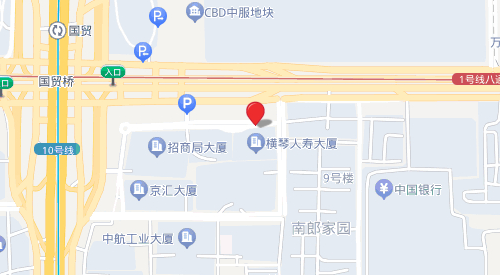
Visiting address More》
Full text of the State Council’s Demolition Compensation Regulations
Home page >> Ying Ting Information >> Legal information
Article author:Yingting Lawyers Group | Update time:2022-11-10 | Reading times:372
When public utilities such as energy, transportation, education, social welfare, and municipal utilities implemented by the government need to occupy citizens' houses or land, the relevant state departments will compensate the expropriated land accordingly. Next, let's take a look at the full text of the State Council's Demolition Compensation Regulations. I hope it will be helpful to everyone!
Regulations on expropriation and compensation of houses on state-owned land
Hualv.com
Chapter 1 General Provisions
Article 1 These regulations are formulated in order to regulate the expropriation and compensation activities of houses on state-owned land, safeguard public interests, and protect the legitimate rights and interests of owners of expropriated houses.
Article 2 For the purpose of public interest, if the houses of entities or individuals on state-owned land are expropriated, fair compensation shall be given to the owners of the expropriated houses (hereinafter referred to as the expropriated persons).
Article 3 House expropriation and compensation shall follow the principles of democratic decision-making, proper procedures, and open results.
Article 4 The people's governments at the municipal and county levels are responsible for the housing expropriation and compensation work in their respective administrative regions.
The house expropriation department (hereinafter referred to as the house expropriation department) determined by the people's government at the municipal and county levels shall organize and implement the house expropriation and compensation work in its own administrative region.
Relevant departments of the people's governments at the municipal and county levels shall cooperate with each other in accordance with the provisions of these regulations and the division of responsibilities specified by the people's governments at the same level to ensure the smooth progress of house expropriation and compensation work.
Article 5 The house expropriation department may entrust the house expropriation implementation unit to undertake the specific work of house expropriation and compensation. The housing expropriation implementation unit shall not be for profit.
The house expropriation department is responsible for supervising the house expropriation and compensation actions carried out by the house expropriation implementation unit within the scope of entrustment, and shall bear legal responsibility for the consequences of its actions.
Article 6 The people's government at the higher level shall strengthen the supervision of the house expropriation and compensation work of the people's government at the lower level.
The housing and urban-rural development department of the State Council and the housing and urban-rural development department of the people's governments of provinces, autonomous regions, and municipalities directly under the Central Government should work with the finance, land and resources, development and reform and other relevant departments at the same level to strengthen guidance on the implementation of house expropriation and compensation.
Article 7 Any organization or individual has the right to report any violation of the provisions of these regulations to the relevant people's government, the housing expropriation department and other relevant departments. The relevant people's governments, housing expropriation departments and other relevant departments that receive the report shall verify and handle the report in a timely manner.
Supervisory agencies should strengthen supervision of governments and relevant departments or units involved in house expropriation and compensation and their staff.
Chapter 2 Expropriation Decision
Article 8 In order to protect national security, promote national economic and social development and other public interests, if there is any of the following circumstances and it is really necessary to expropriate houses, the people's government at the city or county level shall make a decision on house expropriation:
(1) National defense and diplomatic needs;
(2) The needs of energy, transportation, water conservancy and other infrastructure construction organized and implemented by the government;
(3) The needs of public undertakings such as science and technology, education, culture, health, sports, environment and resource protection, disaster prevention and reduction, cultural relics protection, social welfare, and municipal public utilities organized and implemented by the government;
(4) The need for the construction of affordable housing projects organized and implemented by the government;
(5) The need for the reconstruction of old urban areas in areas with concentrated dilapidated buildings and backward infrastructure organized and implemented by the government in accordance with the relevant provisions of the Urban and Rural Planning Law;
(6) Other public interest needs stipulated in laws and administrative regulations.
Article 9 In accordance with the provisions of Article 8 of these Regulations, all construction activities that really require house expropriation shall comply with the national economic and social development plan, overall land use plan, urban and rural planning and special planning. The construction of affordable housing projects and the reconstruction of old urban areas should be included in the annual national economic and social development plans at the municipal and county levels.
When formulating national economic and social development plans, overall land use plans, urban and rural plans, and special plans, public opinions must be extensively solicited and scientifically demonstrated.
Article 10 The housing expropriation department shall formulate an expropriation compensation plan and submit it to the municipal and county-level people's governments.
People's governments at the municipal and county levels shall organize relevant departments to conduct demonstrations on expropriation and compensation plans and publish them to solicit public opinions. The period for soliciting opinions shall not be less than 30 days.
Article 11 The people's governments at the municipal and county levels shall promptly announce the solicitation of opinions and modifications based on public opinions.
If houses need to be expropriated due to the reconstruction of old urban areas, and most of the expropriated persons believe that the expropriation compensation plan does not comply with the provisions of these Regulations, the people's government at the city or county level shall organize a hearing attended by the expropriated persons and public representatives, and modify the plan based on the results of the hearing.
Article 12 Before making a decision on house expropriation, the people's government at the municipal or county level shall conduct a social stability risk assessment in accordance with relevant regulations; if the house expropriation decision involves a large number of expropriated persons, it shall be discussed and decided at a government executive meeting.
Before making a decision on house expropriation, the compensation fees for expropriation should be paid in full, stored in a special account, and earmarked for special use.
Article 13 The people's governments at the municipal and county levels shall make a timely announcement after making a decision on house expropriation. The announcement shall specify expropriation compensation plans, administrative reconsideration, administrative litigation rights and other matters.
Municipal and county-level people's governments and house expropriation departments should do a good job in publicity and explanation of house expropriation and compensation.
If a house is expropriated in accordance with the law, the state-owned land use rights will be recovered at the same time.
Article 14 If the expropriated person is dissatisfied with the house expropriation decision made by the people's government at the city or county level, he may apply for administrative reconsideration in accordance with the law, or he may file an administrative lawsuit in accordance with the law.
Article 15 The house expropriation department shall organize an investigation and registration of the ownership, location, use, construction area, etc. of the houses within the scope of house expropriation, and the expropriated persons shall cooperate. The investigation results shall be announced to the expropriated persons within the scope of house expropriation.
Article 16 After the scope of house expropriation is determined, no new construction, expansion, reconstruction of houses, change of house use, etc. shall be carried out within the scope of house expropriation to improperly increase the compensation fees; if it is carried out in violation of regulations, no compensation will be given.
The housing expropriation department shall notify the relevant departments in writing of the matters listed in the preceding paragraph to suspend the relevant procedures. The written notice of suspending relevant procedures shall specify the period of suspension. The maximum suspension period shall not exceed 1 year.
Chapter 3 Compensation
Article 17 The compensation provided by the people's government at the city or county level that makes the decision to expropriate houses to the expropriated persons includes:
(1) Compensation for the value of the expropriated house;
(2) Compensation for relocation and temporary resettlement caused by house expropriation;
(3) Compensation for losses caused by suspension of production and business due to house expropriation.
The people's governments at the city and county levels shall formulate subsidies and reward measures to provide subsidies and rewards to the expropriated persons.
Article 18 If a personal residence is expropriated and the person being expropriated meets the conditions for housing security, the municipal or county-level people's government that made the decision to expropriate the house shall give priority to housing security. Specific measures shall be formulated by provinces, autonomous regions, and municipalities directly under the Central Government.
Article 19 The compensation for the value of the expropriated houses shall not be lower than the market price of similar real estate of the expropriated houses on the date of announcement of the house expropriation decision. The value of the expropriated house shall be assessed and determined by a real estate price appraisal agency with corresponding qualifications in accordance with the house expropriation assessment method.
If you have any objection to the value of the expropriated house determined by the assessment, you may apply to the real estate price assessment agency for a review of the assessment. If you have any objection to the review result, you may apply to the Real Estate Price Appraisal Expert Committee for appraisal.
The housing expropriation and assessment methods shall be formulated by the housing and urban-rural development department of the State Council. During the formulation process, opinions shall be openly solicited from the public.
Article 20 The real estate price assessment agency shall be selected by the expropriated persons through negotiation; if the negotiation fails, it shall be determined by majority decision, random selection, etc. The specific measures shall be formulated by the provinces, autonomous regions and municipalities directly under the Central Government.
Real estate price assessment agencies should carry out house expropriation assessment work independently, objectively and impartially, and no unit or individual may interfere.
Article 21 The expropriated person can choose monetary compensation or exchange of house property rights.
If the expropriated person chooses to exchange the property rights of the house, the people's government at the city or county level shall provide the house for the property rights exchange, and calculate and settle the difference between the value of the expropriated house and the value of the house used for the property rights exchange with the expropriated person.
If personal residences are expropriated due to the reconstruction of old urban areas, and the expropriated person chooses to exchange the property rights of the house in the reconstruction area, the people's government at the city or county level that made the decision to expropriate the house shall provide houses in the reconstruction area or the nearby area.
Article 22 If relocation occurs due to house expropriation, the house expropriation department shall pay relocation fees to the expropriated person; if the property rights of the house are exchanged, before the property rights exchange house is delivered, the house expropriation department shall pay temporary resettlement fees to the expropriated person or provide turnover housing.
Article 23 Compensation for losses due to production and business suspension due to house expropriation shall be determined based on factors such as the benefits before the house was expropriated, the period of production and business suspension, and other factors. Specific measures shall be formulated by provinces, autonomous regions, and municipalities directly under the Central Government.
Article 24 People's governments at the municipal and county levels and their relevant departments shall strengthen the supervision and management of construction activities in accordance with the law, and those who carry out construction in violation of urban and rural planning shall be dealt with in accordance with the law.
Before making a decision on house expropriation, the people's governments at the city and county levels shall organize relevant departments to investigate, identify and deal with unregistered buildings within the scope of expropriation in accordance with the law. Compensation shall be given to temporary buildings that are deemed to be legal construction and have not exceeded the approved period; compensation shall not be given to temporary buildings that are deemed to be illegal construction and have exceeded the approved period.
Article 25 The house expropriation department and the expropriated person shall, in accordance with the provisions of these regulations, enter into a compensation agreement regarding the compensation method, compensation amount and payment period, the location and area of the house used for property rights exchange, relocation fees, temporary resettlement fees or turnover housing, losses from production and business suspension, relocation period, transition method and transition period, etc.
After a compensation agreement is concluded, if one party fails to perform its obligations under the compensation agreement, the other party may file a lawsuit in accordance with the law.
Article 26 If the house expropriation department and the expropriated person cannot reach a compensation agreement within the contract period specified in the expropriation compensation plan, or the owner of the expropriated house is unclear, the house expropriation department shall report to the municipal or county-level people's government that made the house expropriation decision in accordance with the provisions of these Regulations, make a compensation decision in accordance with the expropriation compensation plan, and make an announcement within the scope of the house expropriation.
The compensation decision shall be fair, including matters related to the compensation agreement as stipulated in Paragraph 1 of Article 25 of these Regulations.
If the expropriated person is dissatisfied with the compensation decision, he or she may apply for administrative reconsideration or file an administrative lawsuit in accordance with the law.
Article 27 When implementing house expropriation, compensation should be paid first and then relocated.
After the people's government at the city or county level that made the house expropriation decision provides compensation to the expropriated person, the expropriated person shall complete the relocation within the relocation period specified in the compensation agreement or the compensation decision.
No unit or individual may use violence, threats, or violate regulations to interrupt water supply, heat supply, gas supply, power supply, road access, or other illegal means to force the expropriated persons to relocate. Construction units are prohibited from participating in relocation activities.
Article 28 If the expropriated person does not apply for administrative reconsideration or file an administrative lawsuit within the statutory time limit, and does not move within the time limit specified in the compensation decision, the city or county-level people's government that made the house expropriation decision shall apply to the people's court for compulsory execution in accordance with the law.
The application for compulsory execution shall be accompanied by materials such as the amount of compensation, the account number of the special account, the location and area of the property rights exchange house and the turnover house.
Article 29 The house expropriation department shall establish house expropriation compensation files in accordance with the law, and announce the household compensation information to the expropriated persons within the scope of house expropriation.
Audit agencies should strengthen supervision over the management and use of compensation fees and publish audit results.
Chapter 4 Legal Responsibilities
Article 30 If any staff member of the municipal or county-level people's government or the housing expropriation department fails to perform their duties stipulated in these Regulations during the housing expropriation and compensation work, or abuses their power, neglects their duties, or engages in malpractice for personal gain, the superior people's government or the people's government at the same level shall order corrections and notify them of criticism; if losses are caused, they shall be liable for compensation in accordance with the law; the directly responsible person in charge and other directly responsible personnel shall be punished in accordance with the law; if a crime is constituted, criminal liability shall be pursued in accordance with the law.
Article 31 If violence, threats, or illegal means such as interrupting water supply, heat supply, gas supply, power supply, and road traffic are used to force the expropriated person to relocate, causing losses, he shall be liable for compensation in accordance with the law; if the person in charge and other directly responsible persons constitute a crime, they shall be investigated for criminal responsibility in accordance with the law; if it does not constitute a crime, they shall be punished in accordance with the law; if it constitutes a violation of public security management, they shall be given public security management penalties in accordance with the law.
Article 32 If violence, threats or other methods are used to hinder the house expropriation and compensation work carried out in accordance with the law, and a crime is constituted, criminal responsibility shall be investigated in accordance with the law; if a violation of public security management is constituted, public security management penalties shall be imposed in accordance with the law.
Article 33 Anyone who embezzles, misappropriates, privately divides, withholds or defaults on expropriation compensation fees shall be ordered to make corrections, the relevant funds shall be recovered, the illegal gains shall be returned within a time limit, and the relevant responsible units shall be notified of criticism and given warnings; if losses are caused, they shall be liable for compensation in accordance with the law; if the directly responsible person in charge and other directly responsible persons constitute a crime, they shall be investigated for criminal liability in accordance with the law; if it does not constitute a crime, they shall be punished in accordance with the law.
Article 34 If a real estate price assessment agency or a real estate appraiser issues a false or major error assessment report, the issuing authority shall order it to make corrections within a time limit and give a warning. The real estate price assessment agency shall be fined not less than 50,000 yuan but not more than 200,000 yuan, and the real estate appraiser shall be fined not less than 10,000 yuan but not more than 30,000 yuan, and shall be recorded in the credit file. If the circumstances are serious, the qualification certificate and registration certificate shall be revoked. If losses are caused, compensation shall be borne in accordance with the law. If a crime is constituted, criminal liability shall be pursued in accordance with the law.
Chapter 5 Supplementary Provisions
Article 35 These Regulations shall come into effect from the date of promulgation. The "Urban House Demolition Management Regulations" promulgated by the State Council on June 13, 2001 were abolished at the same time. Projects that have obtained house demolition permits in accordance with the law before the implementation of these regulations will continue to follow the original regulations, but the government shall not instruct relevant departments to force demolition.
Notice on Issuing the "Measures for Expropriation and Assessment of Houses on State-Owned Land"
Departments of Housing and Urban-Rural Development of all provinces and autonomous regions, Municipal Housing and Urban-Rural Development Committees (Housing and Land Bureaus), Xinjiang Production and Construction Corps Construction Bureau: According to the "Regulations on Expropriation and Compensation of Houses on State-Owned Land", our Ministry has formulated the "Measures for the Expropriation and Assessment of Houses on State-owned Land". It is now issued to you, please comply with it.
Attachment: Measures for expropriation and assessment of houses on state-owned land
Ministry of Housing and Urban-Rural Development of the People's Republic of China
June 3, 2011
Measures for expropriation and assessment of houses on state-owned land
Article 1 In order to regulate house expropriation and evaluation activities on state-owned land and ensure that the results of house expropriation and evaluation are objective and fair, these Measures are formulated in accordance with the "Regulations on House Expropriation and Compensation on State-owned Land".
Article 2 These Measures shall apply to the evaluation of the value of expropriated houses on state-owned land and houses used for property rights exchange, the calculation of the market price of similar real estate of the expropriated houses, and the review and appraisal of relevant evaluation results.
Article 3 Real estate price appraisal agencies, real estate appraisers, and members of the Real Estate Price Appraisal Expert Committee (hereinafter referred to as the Appraisal Expert Committee) shall independently, objectively and impartially carry out house expropriation appraisal and appraisal work, and be responsible for the appraisal and appraisal opinions issued.
No unit or individual may interfere with house expropriation assessment and appraisal activities. Those who have an interest in the parties involved in house expropriation shall recuse themselves.
Article 4 The real estate price evaluation agency shall be selected by the expropriated persons through negotiation within the specified time; if the negotiation fails within the specified time, the housing expropriation department shall organize the expropriated persons to vote in accordance with the principle of majority submission, or shall adopt random methods such as lottery or drawing. Specific measures shall be formulated by provinces, autonomous regions, and municipalities directly under the Central Government.
Real estate price assessment agencies are not allowed to undertake housing expropriation and assessment business by improper means such as catering to the improper demands of expropriation parties, false propaganda, maliciously low fees, etc.
Article 5 The house expropriation and assessment work for the same expropriation project shall, in principle, be undertaken by a real estate price assessment agency. If the scope of house expropriation is large, it can be jointly borne by two or more real estate price assessment agencies.
If two or more real estate price evaluation agencies are responsible, they should jointly negotiate and determine one real estate price evaluation agency as the leading unit; the leading unit should organize relevant real estate price evaluation agencies to communicate and unify standards on the evaluation objects, evaluation time points, value connotations, evaluation basis, evaluation assumptions, evaluation principles, evaluation technical routes, evaluation methods, important parameter selection, evaluation results determination methods, etc.
Article 6 After the real estate price assessment agency is selected or determined, the housing expropriation department will generally serve as the client, issue a house expropriation assessment entrustment letter to the real estate price assessment agency, and sign a house expropriation assessment entrustment contract with it.
The letter of entrustment for house expropriation and assessment shall state the name of the client, the name of the entrusted real estate price assessment agency, the purpose of assessment, the scope of assessment objects, assessment requirements, and the date of entrustment.
The house expropriation and assessment entrustment contract shall specify the following matters:
(1) Basic information about the client and the real estate price assessment agency;
(2) The registered real estate appraiser responsible for this appraisal project;
(3) Basic evaluation matters such as evaluation purpose, evaluation object, evaluation time point, etc.;
(4) Information required for evaluation that the client should provide;
(5) The rights and obligations of both parties during the evaluation process;
(6) Assessment fees and collection methods;
(7) Evaluation report delivery time and method;
(8) Liability for breach of contract;
(9) Methods to resolve disputes;
(10) Other matters that need to be stated.
Article 7 The real estate price assessment agency shall assign a sufficient number of registered real estate appraisers commensurate with the workload of the housing expropriation assessment project to carry out the assessment work.
Real estate price evaluation agencies shall not transfer or transfer in disguise the entrusted house expropriation and evaluation business.
Article 8 The purpose of the value assessment of expropriated houses should be stated as “to provide a basis for the house expropriation department and the expropriated person to determine the compensation for the value of the expropriated houses, and to assess the value of the expropriated houses.”
The purpose of value assessment of houses used for property rights exchange should be stated as “to provide a basis for the house expropriation department and the expropriated person to calculate the difference between the value of the expropriated house and the value of the house used for property rights exchange, and to evaluate the value of the house used for property rights exchange.”
Article 9 Before house expropriation and evaluation, the house expropriation department shall organize relevant units to investigate the situation of the expropriated houses and clarify the evaluation objects. The assessment objects should be comprehensive and objective, and no omissions or fictitious items should be allowed.
The housing expropriation department shall provide the entrusted real estate price assessment agency with the status of the houses within the scope of expropriation, including the status of registered houses and the identification and processing results of unregistered buildings. The investigation results shall be announced to the expropriated persons within the scope of house expropriation.
For registered houses, the nature, use and building area are generally based on the records in the house ownership certificate and the house registration book. If the house ownership certificate is inconsistent with the records in the house registration book, unless there is evidence to prove that the house registration book is indeed wrong, the house registration book shall prevail. Unregistered buildings shall be evaluated in accordance with the identification and processing results of the municipal and county-level people's governments.
Article 10 The time point for assessing the value of expropriated houses is the day when the decision to expropriate the houses is announced.
The time point for evaluating the value of the property rights exchanged house should be consistent with the time point for the value evaluation of the expropriated house.
Article 11 The value of the expropriated house refers to the amount of the expropriated house and the land use rights within the occupied area that are voluntarily traded at the time of assessment in a fair transaction between two parties who are familiar with the situation under normal transaction conditions, but does not take into account the impact of factors such as leasing, mortgage, and seizure of the expropriated house.
Not considering the impact of lease factors as mentioned in the previous paragraph refers to the assessment of the value of the expropriated house without lease restrictions; not considering the impact of mortgage and seizure factors means that the amount of mortgaged claims, arrears of construction project prices and other statutory priority payments of the expropriated house are not deducted from the assessed value.
Article 12 The real estate price assessment agency shall arrange for registered real estate appraisers to conduct on-site inspections of the expropriated houses, investigate the conditions of the expropriated houses, take photos and other image materials reflecting the internal and external conditions of the expropriated houses, make on-site inspection records, and keep them properly.
The expropriated person shall assist a registered real estate appraiser in conducting on-site inspections of the expropriated houses, and provide or assist in collecting information and information necessary for the value assessment of the expropriated houses.
The housing expropriation department, the expropriated person and the registered real estate appraiser shall sign or seal the on-site inspection record for confirmation. If the expropriated person refuses to sign or seal the on-site inspection record, it shall be witnessed by the housing expropriation department, a registered real estate appraiser and a disinterested third party, and the relevant circumstances shall be explained in the appraisal report.
Article 13 A registered real estate appraiser shall select one or more of these methods to evaluate the value of the expropriated house after analyzing the applicability of the market method, income method, cost method, hypothetical development method and other evaluation methods based on the evaluation object and local real estate market conditions.
If there are transactions for similar real estate of the expropriated house, the market method should be used for evaluation; if the expropriated house or its similar real estate has economic benefits, the income method should be used for evaluation; if the expropriated house is under construction, the hypothetical development method should be used for evaluation.
If two or more evaluation methods can be selected at the same time for evaluation, more than two evaluation methods should be used for evaluation, and the evaluation results should be reasonably determined after checking and comparing the calculation results of various evaluation methods.
Article 14 The evaluation of the value of expropriated houses shall take into account the location, use, building structure, newness, building area and floor area of the expropriated houses, land use rights and other factors that affect the value of the expropriated houses.
The value of the interior decoration of the expropriated houses, the relocation costs of machinery, equipment, materials, etc., as well as the compensation for losses due to production and business suspension, shall be determined through negotiation by the parties involved in the expropriation; if negotiation fails, a real estate price appraisal agency may be entrusted to determine through evaluation.
Article 15 The assessed value of a house for expropriation shall be denominated in RMB, accurate to the nearest yuan.
Article 16 The real estate price assessment agency shall provide preliminary assessment results for each household to the housing expropriation department in accordance with the entrustment letter or entrustment contract for house expropriation assessment. The preliminary appraisal results of a household division shall include the composition of the appraisal object, its basic situation and appraisal value. The housing expropriation department shall publicize the preliminary assessment results of each household to the expropriated persons within the scope of expropriation.
During the public announcement period, the real estate price evaluation agency shall arrange for a registered real estate appraiser to provide on-site explanations of the preliminary evaluation results for each household. If there are errors, the real estate price assessment agency should correct them.
Article 17 After the expiration of the public announcement period of the preliminary assessment results for each household, the real estate price assessment agency shall provide the housing expropriation department with the overall assessment report and the household assessment report of the expropriated houses within the scope of the entrusted assessment. The house expropriation department shall forward the household assessment report to the expropriated person.
The overall assessment report and the household assessment report shall be signed by more than two registered real estate appraisers responsible for the housing expropriation assessment project, and shall be stamped with the official seal of the real estate price assessment agency. A seal may not be used in place of a signature.
Article 18 After the completion of the house expropriation and evaluation business, the real estate price evaluation agency shall file and archive the evaluation report and relevant materials for safekeeping.
Article 19 If the expropriated person or the housing expropriation department has any questions about the assessment report, the real estate price assessment agency that issued the assessment report shall provide explanations and explanations to them.
Article 20 If the expropriated person or the housing expropriation department has objections to the assessment results, they shall apply to the real estate price assessment agency for review of the assessment within 10 days from the date of receipt of the assessment report.
To apply for re-examination, a written re-examination application should be submitted to the original real estate price assessment agency and the problems in the assessment report should be pointed out.
Article 21 The original real estate price assessment agency shall review the assessment results within 10 days from the date of receipt of the written application for review assessment. After review, if the original assessment result is changed, a new assessment report shall be issued; if the assessment result has not changed, the applicant for review and assessment shall be informed in writing.
Article 22 If the expropriated person or the house expropriation department has objections to the review results of the original real estate price assessment agency, they shall apply to the expert committee for appraisal of the location of the expropriated houses within 10 days from the date of receipt of the review results. If the expropriated person still has objections to the compensation, it shall be handled in accordance with the provisions of Article 26 of the "Regulations on the Expropriation and Compensation of Houses on State-owned Land".
Article 23 The housing and urban-rural development departments of all provinces and autonomous regions and the real estate management departments of districted cities shall organize and establish an evaluation expert committee to appraise the review results made by the real estate price evaluation agency.
The appraisal expert committee is composed of real estate appraisers and experts in price, real estate, land, urban planning, law, etc.
Article 24 The evaluation expert committee shall select members to form an expert group to appraise the review results. The expert group shall consist of an odd number of 3 or more persons, of which no less than one-half shall be real estate appraisers.
Article 25 The evaluation expert committee shall review the evaluation procedures, evaluation basis, evaluation assumptions, evaluation technical route, evaluation method selection, parameter selection, evaluation result determination method and other technical evaluation issues of the application for evaluation report within 10 days from the date of receipt of the appraisal application, and issue a written appraisal opinion.
After appraisal by the appraisal expert committee, if there are no technical problems in the appraisal report, the appraisal report shall be maintained; if there are technical problems in the appraisal report, the real estate price appraisal agency that issued the appraisal report shall correct the error and reissue the appraisal report.
Article 26 During the process of house expropriation appraisal and appraisal, the real estate price appraisal agency shall explain the appraisal-related matters involved in the appraisal in accordance with the requirements of the appraisal expert committee. If it is necessary to conduct on-site inspection and investigation of expropriated houses, relevant units and individuals should provide assistance.
Article 27 If it is necessary to inquire about the ownership of expropriated houses and houses used for property rights exchange and related real estate transaction information due to house expropriation assessment, review assessment, and appraisal work, the real estate management department and other relevant departments shall provide convenience.
Article 28 During the process of house expropriation and evaluation, if the house expropriation department or the person being expropriated fails to cooperate or provide relevant information, the real estate price evaluation agency shall explain the relevant situation in the evaluation report.
Article 29 Unless the government has special regulations on the price of houses used for property rights exchange, the market value of houses used for property rights exchange shall be determined through appraisal.
Article 30 Similar real estate to the expropriated house refers to real estate that is the same or similar to the expropriated house in terms of location, purpose, nature of rights, grade, age, scale, building structure, etc.
The market price of similar real estate to the expropriated house refers to the average transaction price of similar real estate to the expropriated house at the time of assessment. To determine the market price of similar real estate for expropriated houses, accidental and abnormal factors should be eliminated.
Article 31 The fees for house expropriation assessment and appraisal shall be borne by the client. However, if the appraisal changes the original appraisal result, the appraisal fee will be borne by the original real estate price appraisal agency. The re-evaluation costs shall be borne by the original real estate price evaluation agency. House expropriation assessment and appraisal fees shall be implemented in accordance with the charging standards stipulated by the government's price department.
Article 32 During the house expropriation and evaluation activities, the illegal acts of real estate price evaluation agencies and real estate appraisers shall be punished in accordance with the Regulations on the Expropriation and Compensation of Houses on State-owned Land, the Management Measures for Real Estate Valuation Agencies, and the Management Measures for Registered Real Estate Appraisers. Anyone who charges in violation of regulations shall be punished by the government price department in accordance with the Price Law of the People's Republic of China.
Article 33 These Measures shall come into effect from the date of promulgation. The "Guiding Opinions on Valuation of Urban House Demolition" issued by the former Ministry of Construction on December 1, 2003 was abolished at the same time. However, projects that have obtained house demolition permits in accordance with the law before the implementation of the Regulations on House Expropriation and Compensation on State-Owned Land will continue to follow the original regulations.
Previous article:Analysis of the Dilemma of Rural Social Conflict Governance
Next article:Land acquisition and demolition lawyer-Beijing Yingtong Law Firm
Recommended reading
- Mineral rights mortgage financing: a new financing path for private mining companies
- Should the government’s investment promotion agreement be scrapped at the drop of a hat? The law has your back!
- Mining in the name of land leveling? The Central Inspection Team is exposed! Mine bosses, please don’t step into this trap.
- Mining license renewal delayed? The new regulations stipulate that a reply must be made within 15 days
- New opportunities for administrative reconsideration: increased litigation winning rate, smoother rights protection channels
- Mineral rights mortgage financing: a new financing path for private mining companies
- Should the government’s investment promotion agreement be scrapped at the drop of a hat? The law has your back!
- Mining in the name of land leveling? The Central Inspection Team is exposed! Mine bosses, please don’t step into this trap.
- Are companies being fined too much for small things? Court: The punishment is inappropriate and must be corrected!
- New opportunities for administrative reconsideration: increased litigation winning rate, smoother rights protection channels