Law firm introduction More》
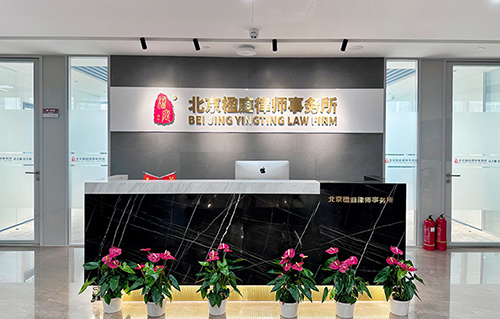
Beijing Yingtong Law Firm has focused on the protection of the rights and interests of private enterprises for many years. It has represented many corporate rights protection cases in the legal practice of rights protection in natural resources, mining, land, waters, territorial space, corporate equity, criminal defense, factory demolition, environmental protection shutdown, prohibition and vacation, etc., including large-scale real estate...
Law firm services
Law firm personnel More》








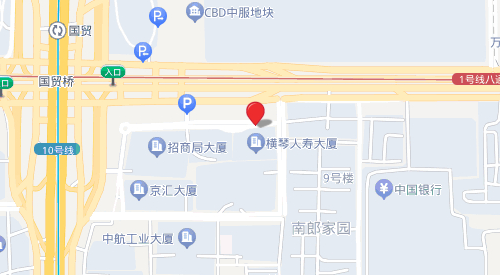
Visiting address More》
A land acquisition and demolition case that was slapped in the face three times
Home page >> Ying Ting Information >> Legal information
Article author:Yingting Lawyers Group | Update time:2022-11-08 | Reading times:425
At the end of 2018, the Supreme People's Court issued the "Typical Cases of Giving Full Play to Trial Functions and Protecting Property Rights and the Legitimate Rights and Interests of Entrepreneurs".
Among the seven typical cases, the case of Xu Moumou suing the Wucheng District People's Government of Jinhua City for administrative coercion and administrative compensation has attracted widespread attention. This case was tried at the intermediate and senior levels and retried by the Third Circuit Court of the Supreme People's Court, which highlighted the two judicial spirits of "denying the government's willfulness and attributing the benefit of doubt to the administrative counterpart". The judiciary sent a strong signal to the administration in accordance with the law.
In July 2001, due to the construction needs of the land reconstruction in the west area of Houxi Street and the "Two Streets" integrated block reconstruction project in Wucheng District, Jinhua City, Zhejiang Province, the former Jinhua Real Estate Administration issued a house demolition permit to Jinhua Urban Construction Development Co., Ltd. Xu's houses at Nos. 8 and 9 Yingbin Lane, Wuyi Road, Wucheng District, Jinhua City were included in the demolition red line of the above-mentioned demolition permit. However, the demolishers have not implemented the demolition within the period specified in the demolition permit.
timg.jpg
On August 31, 2014, the Wucheng District Government issued the "Announcement of the Wucheng District People's Government on the Expropriation Scope of Houses for Old City Renovation in the Erqi Block", clarifying the implementation of the transformation within the Erqi Block and publishing a house expropriation scope map. The Yingbin Lane block where Xu's house is located is within the expropriation scope.
On October 26, 2014, the Wucheng District Government issued a house expropriation decision, and the houses involved in the case were included in the scope of the expropriation decision. However, the house was demolished on September 26, 2014, before the Wucheng District Government made the decision to expropriate it.
Xu Moumou filed an administrative lawsuit, requesting confirmation that the Wucheng District Government's administrative act of forcibly demolishing his house was illegal. He also made three requests for administrative compensation, including loss of house, loss of production and business suspension, and loss of items.
The Jinhua Intermediate People's Court of Zhejiang Province holds the view that: 1. The defendant forced the relocation without reaching a demolition compensation agreement with the plaintiff, which is an illegal administrative coercion; 2. There is no possibility of restoring the demolished house to its original condition, and compensation should be made according to the housing compensation plan.
The Zhejiang Provincial High Court’s view is that it supports the Jinhua Intermediate People’s Court’s judgment and revokes the judgment that it does not support the suspension of production and business suspension compensation. It also added support for the plaintiff’s request for compensation for losses of 20,000 yuan per month due to production and business suspension. However, because the plaintiff did not provide evidence of losses, the judgment was revoked and did not support the compensation for demolition losses. It also did not support the damage to the property in the house caused when the house was forced to be demolished.
The Supreme Court’s view is that it supports the judgments of Jinhua Intermediate People’s Court and Zhejiang High Court. And compensation shall be made within the scope of the list of items that the plaintiff can provide.
Obviously, the judgments of the three-level courts have denied the administrative actions of the defendant Wucheng District Government. It is believed that although the demolition is not directly organized by the government, the subject and scope of the demolition are entrusted, determined and participated by the Wucheng District Erqi Block Renovation Project Command. The "Wucheng District Erqi Block Renovation Project Command" is a temporary organization established by the Wucheng District Government and given administrative functions but does not have the ability to independently bear legal responsibility. Therefore, the responsibility for its illegal infringement should be borne by the Wucheng District Government.
The third-level courts have stepped up efforts to protect the plaintiff’s interests. The plaintiff Xu Moumou proposed three requirements: confirming that the administrative act is illegal, and that the government compensate for the loss of the house, the loss of production and business suspension, and the loss of the relocation items.
First of all, Jinhua Intermediate People's Court said that it only supports compensation for house losses, and it is based on the standards of the "Housing Expropriation Compensation Plan for Old City Renovation in Erqi Block, Wucheng District" and does not support losses from production and business suspension and losses from relocation items.
Subsequently, the Zhejiang Provincial High Court said that the demolition of the plaintiff's house did not constitute state compensation. It should be said differently that compensation for house expropriation should be applied. In addition, I not only support compensation for house demolition, but also support you in obtaining compensation for suspension of production and business, but I do not support compensation for loss of relocated items.
Finally, it went to the Supreme Court for a retrial, saying that the State Compensation Law and the Regulations on the Expropriation and Compensation of Houses on State-Owned Land were both applicable and would be implemented without discount.
First, if a house is demolished, you can use either compensation or compensation. We will use whichever compensates more. However, you cannot use the "Compensation Plan for Housing Expropriation for Old Town Renovation in the Erqi Block of Wucheng District" because you may have set it too low. You should "use the method of providing similar houses in the renovated area or nearby areas, and calculate the compensation based on the real estate market assessment price that was valid at the time when the compensation decision was made." Anyway, the market has the final say after independent assessment.
Second, if the plaintiff provides evidence such as a "Business License" and tax payment certificate to prove that the demolished house was legally used for business purposes, the government will pay compensation for the suspension of production and business.
Third, if the plaintiff provides photos, items and lists of the house before it was demolished, compensation can be made at its discretion in accordance with the "principle in favor of the plaintiff", and the government must pay the compensation within 90 days.
The Supreme Court supports all requests from the administrative counterpart and requires the government to pay compensation quickly, make multiple compensations, and compensate in full.
This case, regarded as a typical case by the Supreme Court, has sounded the alarm to all local governments.
The promulgation and implementation of the Regulations on the Expropriation and Compensation of Houses on State-Owned Land provide a good legal basis for resolving administrative disputes during expropriation and demolition and achieving "good governance" in the field of house expropriation and compensation on state-owned land.
In fact, this case has given the government a "lesson" and a "sword of wisdom" to administrative counterparts.
The implications are:
1. Let the government stop being arrogant. Here we talk about administration in accordance with the law, including entrusting the demolition subject in accordance with the law (the subject of demolition cannot have any interest in the demolition and land acquisition), bearing the administrative consequences in accordance with the law (some places always think that the demolition team and temporary workers will be used as cannon fodder in the name of civil disputes), and formulating compensation plans in accordance with the law (market pricing, independent evaluation, neither allowing the government to make unilateral decisions, nor allowing the masses to ask for prices, to avoid falling into a protracted war).
2. Let citizens not be cowardly. This case fully embodies the spirit of the rule of law of prompt compensation, reasonable compensation and fair compensation, and establishes the precedent that the compensation received by the property owner due to infringement by administrative agencies cannot be lower than the compensation that should be received according to legal expropriation procedures. Give full play to the evaluation and guidance functions of the judiciary and prevent local governments from using compensation procedures to avoid national liability for compensation after illegal demolitions.
3. Let the judiciary have authority. Encouraging, supporting, and guiding the development of the non-public economy, ensuring that all forms of ownership of the economy are equally protected by law, supporting the development of private enterprises, and stimulating the vitality of various market entities are important contents proposed in the reports of the 18th and 19th National Congress on accelerating the improvement of the socialist market economic system.
Previous article:How many years is the demolition agreement valid for?
Next article:What are the demolition compensation fees?
Recommended reading
- Mineral rights mortgage financing: a new financing path for private mining companies
- Should the government’s investment promotion agreement be scrapped at the drop of a hat? The law has your back!
- Mining in the name of land leveling? The Central Inspection Team is exposed! Mine bosses, please don’t step into this trap.
- Mining license renewal delayed? The new regulations stipulate that a reply must be made within 15 days
- New opportunities for administrative reconsideration: increased litigation winning rate, smoother rights protection channels
- Mineral rights mortgage financing: a new financing path for private mining companies
- Should the government’s investment promotion agreement be scrapped at the drop of a hat? The law has your back!
- Mining in the name of land leveling? The Central Inspection Team is exposed! Mine bosses, please don’t step into this trap.
- Are companies being fined too much for small things? Court: The punishment is inappropriate and must be corrected!
- New opportunities for administrative reconsideration: increased litigation winning rate, smoother rights protection channels