Law firm introduction More》
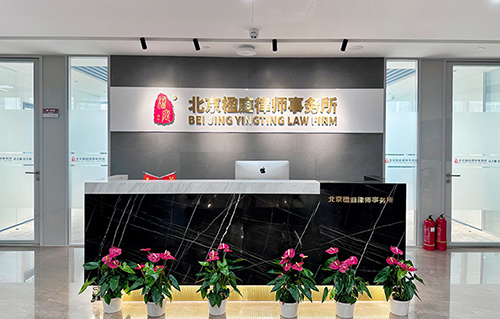
Beijing Yingtong Law Firm has focused on the protection of the rights and interests of private enterprises for many years. It has represented many corporate rights protection cases in the legal practice of rights protection in natural resources, mining, land, waters, territorial space, corporate equity, criminal defense, factory demolition, environmental protection shutdown, prohibition and vacation, etc., including large-scale real estate...
Law firm services
Law firm personnel More》








Visiting address More》

Optimizing the business environment case: analysis of administrative penalty cases for selling expired products
Home page >> Ying Ting Information >> Legal information
Article author:Yingting Lawyers Group | Update time:2022-11-11 | Reading times:326
Analysis of typical cases involving the business environment. The case described in this article is an administrative penalty case regarding whether to sell expired products. Basic case facts: In August 2017, a district supervision bureau received a report from Zou that he purchased a bag of East China Sea hairtail segments in a supermarket. The production date was November 5, 2016, and the shelf life was nine months. Zou said he bought it on August 7, so he reported the supermarket for selling expired products. After the district market supervision bureau opened the case for investigation, it inspected the suppliers of the products involved. According to the supplier's purchase records, the batch of hairtail products reported by the whistleblower was not purchased at all. Therefore, the Supervision Bureau believed that the supermarket had not purchased this batch of hairtail fish-related goods at all and could not sell them, so it decided not to impose administrative penalties.
Zou was dissatisfied and applied for administrative reconsideration to the district authorities, who upheld the district market supervision bureau’s reply. It was also found that Zou had made settlements with the supermarket many times regarding expired merchandise and obtained compensation. The supermarket also provided video recordings. Zou has reached settlements with the supermarket many times over the issue of expired products. Moreover, the supermarket has videos that can prove that Zou has brought expired products into the supermarket, then pretended to be products sold by the supermarket, and then claimed compensation from the supermarket and obtained compensation.
Based on the above facts, both the market supervision department and the district competent authority conducting the administrative review determined that there was no problem with Zou’s reply. Because it involves the issue of professional anti-counterfeiting, there are indeed some illegal acts of fraud and extortion through anti-counterfeiting. By reporting to relevant departments, investigating and punishing the sale of expired products, in order to coerce operators to compensate them. Of course, this kind of professional anti-counterfeiting behavior is undoubtedly very beneficial to the majority of consumers, because it makes relevant operators dare not sell expired products. In this aspect, it protects the health of the general public. Because many people may have purchased goods, some people may pay attention to the expiration date of the products being sold. Some people may not pay much attention to these issues, but using expired goods may really cause some harm to our bodies. Therefore, the existence of professional anti-counterfeiting behavior has its practical significance. However, there are also some people who fish in troubled waters and engage in extortion in the name of fighting counterfeiting, intercepting illegal benefits for their illegal purposes.
Based on the above-mentioned relevant evidence, the court in this case found that the evidence provided by Zou could not fully prove that the relevant products purchased were indeed goods sold by the supermarket, and the evidence provided by the supermarket proved that it did not purchase the relevant products of that batch. Therefore, the reply to Zou’s report was not inappropriate, and then dismissed Zou’s relevant litigation claims.
If the product is indeed expired, how do we consumers protect our rights? What we can do is to keep the corresponding evidence, such as receipts for purchasing goods. Some platforms also have their own APPs, and sales-related products are also listed. Therefore, when we find that this problem exists, we must save the relevant evidence in a timely manner.
In addition, we must keep the outer packaging of relevant products, which can be used as evidence when we carry out relevant rights protection and reporting. If such infringement does occur, we must resolutely safeguard our rights and interests. If we encounter such a situation where the relevant administrative agencies fail to act, we must have relevant evidence in hand to effectively safeguard our legitimate rights and interests.
The typical significance of this case is that professional anti-counterfeiting has played a positive role in improving my country's product quality, legislation and law enforcement in the consumer field. However, there are also some malicious anti-counterfeiters who lack integrity, and creating anti-counterfeiting cases may involve criminal offenses. This kind of malicious crackdown on counterfeiting to seek unfair benefits undoubtedly disrupts social order and wastes administrative resources. In this case, the relevant administrative agencies protected the rights and interests of legal operators. The court supported the administrative agencies’ exercise of market supervision and management powers in accordance with the law, which played a positive role in improving the business environment of the supermarket retail industry. This is to protect the business environment and operators from another angle. Because sometimes in the process of cracking down on counterfeiting, in some cases, roles may be reversed, and operators become a vulnerable group. Therefore, in this process, we must make judgments based on basic facts. If operators do sell expired products, the market supervision and management department must resolutely punish them. If not, their rights and interests should be protected.
The legal knowledge in this article does not represent legal advice. If you encounter similar problems, you should analyze them in detail.
Previous article:How to determine the administrative agreement in typical administrative trial cases?
Recommended reading
- Mineral rights mortgage financing: a new financing path for private mining companies
- Should the government’s investment promotion agreement be scrapped at the drop of a hat? The law has your back!
- Mining in the name of land leveling? The Central Inspection Team is exposed! Mine bosses, please don’t step into this trap.
- Mining license renewal delayed? The new regulations stipulate that a reply must be made within 15 days
- New opportunities for administrative reconsideration: increased litigation winning rate, smoother rights protection channels
- Mineral rights mortgage financing: a new financing path for private mining companies
- Should the government’s investment promotion agreement be scrapped at the drop of a hat? The law has your back!
- Mining in the name of land leveling? The Central Inspection Team is exposed! Mine bosses, please don’t step into this trap.
- Are companies being fined too much for small things? Court: The punishment is inappropriate and must be corrected!
- New opportunities for administrative reconsideration: increased litigation winning rate, smoother rights protection channels