Law firm introduction More》
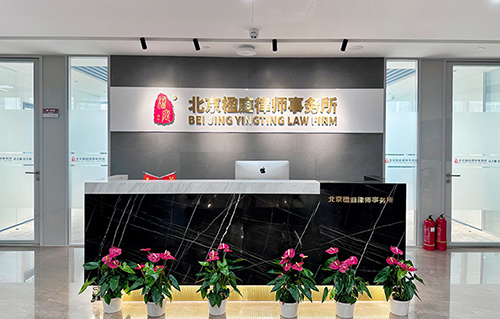
Beijing Yingtong Law Firm has focused on the protection of the rights and interests of private enterprises for many years. It has represented many corporate rights protection cases in the legal practice of rights protection in natural resources, mining, land, waters, territorial space, corporate equity, criminal defense, factory demolition, environmental protection shutdown, prohibition and vacation, etc., including large-scale real estate...
Law firm services
Law firm personnel More》








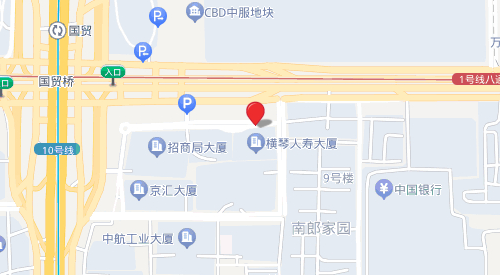
Visiting address More》
What should I do if the land acquired through legal auctions has no formalities for the seller and the compensation is low during expropriation?
Home page >> Ying Ting Information >> Legal information
Article author:Yingting Lawyers Group | Update time:2022-11-11 | Reading times:447
An enterprise obtains mixed land through legal bidding, but because the auctioneer did not complete the transfer procedures, compensation was not paid during expropriation. How should it safeguard its rights? Let’s analyze it through specific cases. A warehousing and logistics company in Nanyang, Henan Province owns state-allocated land with 7,000 square meters of buildings above ground.
The company obtained the land through formal auction channels at that time. The land belonged to the land restructured by the state-owned enterprise. However, due to the reasons of the relevant departments, the land transfer procedures have not been completed. The real estate certificate has been obtained, and the real estate certificate, planning certificate and other procedures have been completed. There is also a more important issue. The current land and real estate are not in the same person's name, but the land certificate is an old land certificate and is not in the same person's name as the new real estate certificate. Therefore, when encountering the relevant expropriation department, they say that the land is not yours at all and you are not the owner of the right to use it, so the standard of compensation is very low. How should companies solve this problem? How to solve it? How to safeguard rights?
During our current case handling process, there are many such cases. Although the land is used by private enterprises, the historical reasons for the allocated land are often surprisingly similar. Some companies purchased real estate on state-owned land from the court, and some obtained land use rights from factories purchased from bankrupt state-owned companies on state-owned asset auction platforms, etc. Such companies often set relatively low compensation for expropriation, so there are many such cases.
This type of case can basically get a satisfactory result, which can be analyzed from the following aspects: The case mentioned at the beginning of the article involves two legal relationships. One is that the person obtained the real estate through auction and obtained the land use rights. The land transfer procedures were not handled in time, and the land use rights certificate for the transfer was not handled. Who is responsible? According to the provisions of the Interim Regulations on the Transfer of Urban Land, when the allocated land is transferred, and when the housing structures and buildings on the allocated land are transferred, the transfer procedures must be completed and the land transfer fee must be paid, and the land transfer fee must be handled by the land use right holder, that is, the land use right holder of the original allocated land.
If the land in this case is really acquired through a state-owned assets trading platform, then who should pay the land transfer fee? It should be handled by the original State-owned Assets Supervision and Administration Commission, that is, the original state-owned enterprise with the original land use right. If the original state-owned enterprise goes bankrupt, it should be handled by the relevant shareholders, that is, the State-owned Assets Supervision and Administration Commission. Only after the land transfer fee is paid back can the final land use right certificate be issued.
In fact, at the time of the auction, the land transfer fee paid by the bidder should have included the land transfer fee, but the relevant departments withheld the land transfer fee and did not pay it back, so this responsibility should be borne by the relevant departments. If the land is acquired from the court, the original land use right owner must first pay the land transfer fee, and then go through the land transfer procedures and house registration procedures, etc.
Therefore, now that everyone knows the legal relationship in this regard and where the responsibility lies, this case is actually very clear. If expropriation is encountered now, the current expropriation department and the original shareholder of the state-owned enterprise, that is, the State-owned Assets Supervision and Administration Commission, belong to the same administrative agency. In fact, this problem can be easily solved.
We handled many cases that did not belong to the same administrative department. For example, a state-owned enterprise that was originally auctioned on state-owned assets was affiliated with the State-owned Assets Supervision and Administration Commission of another district. However, the current expropriation is done by the district competent department where the real estate is located, which belongs to different administrative agencies. This leads to some problems of mutual interest conflicts between administrative departments. The competent authorities in the expropriation area are unwilling to pay more for expropriation compensation, and the original State-owned Assets Supervision and Administration Commission is unwilling to bear the corresponding responsibilities. This problem requires companies to solve it through different legal methods and procedures.
First of all, corresponding compensation should be obtained for the first step of expropriation, and then other compensation should be borne by the original State-owned Assets Supervision and Administration Commission. This is an idea. Another idea is that according to the "Civil Code" and the "Land Management Law", there are similar provisions for housing anywhere. That is to say, if a unit obtains the ownership of a house, it will naturally obtain the right to use the land, and it will naturally receive the land tax.
Since the enterprise has obtained the property ownership certificate of the house, the right to use the land is legal and naturally obtained. As for whether the land transfer fee has been paid back, that is just a creditor's right and has nothing to do with property rights. Moreover, the creditor's rights are borne by the original State-owned Assets Supervision and Administration Commission, and the district administrative department should go to the original State-owned Assets Supervision and Administration Commission to make up for the land transfer fee and bear the corresponding interest losses, etc. This is also an idea.
Another legal relationship is that the land use right certificate and house ownership certificate involved in the enterprise are not in the name of the same unit. In fact, that is natural, because the land use right can only be allocated in the name of the old enterprise. Because allocated land is generally rarely allocated in the name of private enterprises or private enterprises. Of course, the company goes through a legal auction, and of course it is in the name of the company. How does this problem need to be solved? If you encounter expropriation, you can solve it in a package, such as the two solutions just mentioned.
If there is no collection or the collection is not particularly urgent and the date is not particularly urgent, you can completely solve it through the No. 1 Document of the Ministry of Natural Resources in 2021. The Ministry of Natural Resources’ 2021 Notice on Solving Historical Issues in Real Estate Registration clearly stipulates that if land use rights are not handled, corresponding procedures should be completed in accordance with the policies at the time. For example, if you go through the land transfer procedures according to the land transfer fee and the national regulations at the time, you will naturally obtain the land use right certificate through the transfer method, and then solve the problems of expropriation and compensation. Of course, if the company spends more money and can seek compensation from the original State-owned Assets Supervision and Administration Commission or relevant departments, that is another legal relationship.
When encountering similar problems, you can consult a professional team of lawyers in a timely manner. The lawyers will safeguard the legitimate rights and interests of the enterprise in accordance with legal regulations, local policies, document notices from relevant departments, and relevant case precedents. You can also consult us. For political and commercial disputes, of course you should consult Beijing Yingting lawyers. We will provide detailed legal opinions based on the provisions of laws, regulations, local policy normative documents, and relevant cases, combined with some factual evidence of the case, and use legal knowledge to negotiate with the competent authorities to strive for a fair and satisfactory solution.
The legal knowledge in this article does not represent legal advice. If you encounter similar problems, you should analyze them in detail.
Previous article:If buildings on allocated land purchased from relevant departments are expropriated, how should they be compensated?
Recommended reading
- Mineral rights mortgage financing: a new financing path for private mining companies
- Should the government’s investment promotion agreement be scrapped at the drop of a hat? The law has your back!
- Mining in the name of land leveling? The Central Inspection Team is exposed! Mine bosses, please don’t step into this trap.
- Mining license renewal delayed? The new regulations stipulate that a reply must be made within 15 days
- New opportunities for administrative reconsideration: increased litigation winning rate, smoother rights protection channels
- Mineral rights mortgage financing: a new financing path for private mining companies
- Should the government’s investment promotion agreement be scrapped at the drop of a hat? The law has your back!
- Mining in the name of land leveling? The Central Inspection Team is exposed! Mine bosses, please don’t step into this trap.
- Are companies being fined too much for small things? Court: The punishment is inappropriate and must be corrected!
- New opportunities for administrative reconsideration: increased litigation winning rate, smoother rights protection channels