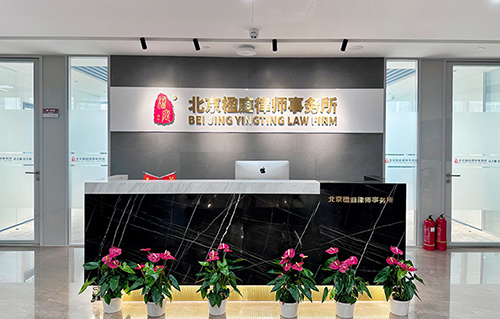
Beijing Yingtong Law Firm has focused on the protection of the rights and interests of private enterprises for many years. It has represented many corporate rights protection cases in the legal practice of rights protection in natural resources, mining, land, waters, territorial space, corporate equity, criminal defense, factory demolition, environmental protection shutdown, prohibition and vacation, etc., including large-scale real estate...








Expert seminar: Professor Li Xiandong joins hands with lawyer Ying Ting to explore the legal protection of the rights and interests of mining companies
Home page >> Ying Ting Information >> Yingting news
Article author:Yingting Lawyers Group | Update time:2023-12-07 | Reading times:1266
On November 15, Beijing Yingting Law Firm was honored to invite Professor Li Xiandong from China University of Political Science and Law to participate in an expert seminar on legal protection of rights and interests of mining companies with Beijing Yingting Law Firm to discuss the exit compensation case of a mica mine of a Zhangjiakou Mining Co., Ltd.
At the seminar, Professor Li Xiandong discussed the legal issues and solutions of the case with Beijing Yingting lawyer. It analyzed the rights and interests protection problems that mining companies may face during the exit compensation process, and conducted an in-depth discussion on how to safeguard the legitimate rights and interests of mining companies in accordance with the law.
As the director of the Land and Resources Law Research Center of China University of Political Science and Law, Professor Li Xiandong has rich research and practical experience in mining laws and regulations. He shared his views and suggestions at the seminar and provided valuable legal advice to resolve the case.
Through this seminar, the cooperation between Professor Li Xiandong and Beijing lawyer Yingting provided new ideas and methods for the protection of the rights and interests of mining companies. Discussions and exchanges between the two parties will help promote the sustainable development of mining companies, and also provide useful reference for the improvement of relevant legal systems.
Expert introduction
Li Xiandong is a professor and doctoral supervisor at the Civil, Commercial and Economic Law School of China University of Political Science and Law. Director of the Land and Resources Law Research Center of China University of Political Science and Law. He studied as an undergraduate at Beijing University of Political Science and Law in 1979 and as a postgraduate student at Beijing University of Political Science and Law in 1986. He studied at China University of Political Science and Law and McGill University in Canada.

1. Conference theme
1. Topic: Expert Seminar on Legal Protection of Rights and Interests of Mining Enterprises
2. Time: Tuesday, November 15, 2023
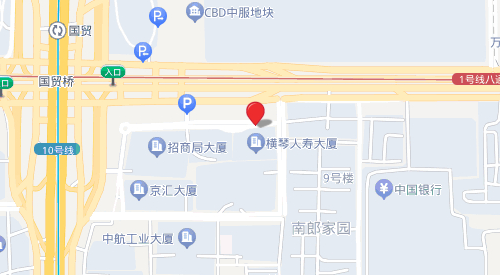
3. Location: 12th Floor, Hengqin Life Insurance Building, No. 108 Jianguo Road, Chaoyang District, Beijing
4. Moderator: Lawyer Lu Yongqiang
5. Brief description of the case: Lawyer Li Tingting from Beijing Yingting Law Firm
6. Participants:
Professor Li Xiandong—Professor and doctoral supervisor at the School of Civil, Commercial and Economic Law of China University of Political Science and Law. Director of the Land and Resources Law Research Center of China University of Political Science and Law
Lawyer Lu Yongqiang - Founding Partner of Beijing Yingting Law Firm, Founder of the Government-Enterprise Dispute Lawyers Group
Lawyer Dong Guonv - member of the Chinese Lawyers Association, member of the Beijing Lawyers Association, corporate legal advisor and member of the Administrative Litigation Committee of Chaoyang District, Beijing
Consultant Liu Jingzhu—Director of the Social E-Commerce Branch of China Council for the Promotion of International Trade, Perennial Legal Advisor to IDC CEO Summit Member Units
Lawyer Li Tingting—Member of Beijing Chaoyang District Lawyers Association and full-time lawyer at Beijing Yingtong Law Firm
Other lawyers participating in the seminar: Lawyer Wei Xingchen, Lawyer Shi Pengju, Lawyer Su Li, Lawyer Yuan Lijun, Lawyer Sun Zhenbo, Trainee Lawyer Sun Yaxuan, etc.
 Professor Li Xiandong (middle)
2. Summary of the meeting
If the mining license has not expired and the coal company is forcibly shut down, should compensation be given? The seminar mainly focused on the following three aspects:
1. Laws and regulations related to the protection of rights and interests of mining enterprises
2. Legal risks and rights protection strategies of mining companies in their operations
3. Analysis of typical cases involving administrative litigation involving mining companies

3. Brief description of the case
A mining company acquired iron ore through private transfer and attracted investment to build an iron ore mining and processing plant. A mining company has an iron ore mining and processing plant and a mica mine in a certain county. The Municipal Land and Resources Bureau applied for a mica mining license for the mining company. The company proposed to increase iron ore mining when renewing its mining license. Later, the mica mine was withdrawn and closed due to policy reasons.
In August 2020, the Natural Resources and Planning Bureau of a certain county issued a "Notice on the Exit of Mines with Expired Mining Licenses", part of which reads: "The mica mine of a mining company in XX County is valid until August 4, 2020. According to the spirit of the "XX County Notice on Issuance", your mine has been included in the list of mines to exit in 2020. Mine restoration will be carried out after receiving the notice."
In May 2023, a certain town administrative agency issued the "Announcement on the Time-limited Demolition and Cleanup of the Mica Mine of a Mining Co., Ltd. in XX County". According to the county administrative agency's "Notice on Issuing the Implementation Plan for the Green Development of the Mine Industry in XX County in an Orderly Retirement" (Zhengzi (2017] 18) document, you have entered the closure and withdrawal scope of our county (2016-2020). Your mine’s production equipment, houses, and wellheads are within the scope of demolition and cleaning. In accordance with the relevant requirements for mine closure and withdrawal, it has been decided after research that some houses of your mine will be demolished in September 2021. You are hereby notified that your mine will be demolished on the 15th day of the date of receipt of this notice. The remaining houses that have not been demolished will be dismantled, cleaned up and repaired as required. If they are not dismantled and cleaned up by the time limit, your mine will be deemed to have automatically abandoned it. Our town will organize personnel to carry out forced demolition and repair. The dismantling and treatment costs will be borne by your mine, and the resulting losses will be borne by your mine. "In June 2023, a certain town administrative agency implemented forced demolition.

4. Case analysis and existing problems
1. Public interests require the mine to exit. If the mine is in the exploration stage, should it be compensated during the mining stage? What is the scope of compensation and the corresponding basis?
2. In an administrative compensation dispute where a mine is shut down due to policy, can the mining entity claim both the loss of the initial investment and the value of the remaining reserves?
3. After the mining rights transfer contract expires, if the administrative agency closes the mine during the validity period of the mining rights license, can it still claim the value of the remaining reserves?
4. In this case, the mica mine was withdrawn due to policy, the administrative agency did not make a decision to close the mine, and the mining rights were canceled by the relevant departments after expiration. Can I claim compensation for this?
5. In this case, in February 2017, the "Expected Results" of the "Opinions on the Implementation of Mineral Resources Dynamic Survey" prepared by the Third Low-quality Brigade of the Hebei Provincial Bureau of Geology and Mineral Resources in February 2017 mentioned that the amount of (accompanied) raw phosphorus iron ore was (332+333) 80,000 tons. Can the amount of raw ore be included in the scope of operating losses of residual reserves?

5. Legal experts and lawyer Ying Ting analyzed the legal issues behind the case from all aspects
Law professor Li Xiandong and lawyers Dong Guonv and Lu Yongqiang will conduct a detailed analysis of the case and provide corresponding solutions.
The public interest requires that the mine exit should be compensated, which falls within the scope of administrative litigation, so the losses caused to the company should be compensated.
If the public interest requires the mine to withdraw, if the mine is in the exploration stage, whether the mining stage should be compensated is an issue of administrative compensation. The Civil Code stipulates that legally obtained exploration rights, mining rights, water abstraction rights, and rights to use waters and tidal flats for aquaculture and fishing are protected by law. This is stipulated in Article 329 of the Civil Code.
Exploration rights and mining rights obtained in accordance with the law are a kind of usufruct rights. Usufruct holders have the right to possess, use and benefit from mineral resources. Therefore, there is a right to compensation for mining rights related to exploration rights. At the same time, the Civil Code also stipulates that if real estate is expropriated or requisitioned for the purpose of extinguishing property rights or affecting the exercise of usufruct rights, corresponding compensation shall be obtained in accordance with the Civil Code.
Due to the needs of the public interest, corresponding compensation must be given when it comes to these. This is some principled compensation. What content needs to be compensated in the process of judicial practice. In terms of compensation, Document No. 130 of the Ministry of Land and Resources stipulates that when signing a compensation agreement, the scope of compensation includes the following two aspects: The first is the price payable by the mining right holder under current market conditions for the suppressed resource reserves. That is to say, based on the reserves of mineral resources, how much it costs to transfer the value of the mineral resources itself will compensate for the value of the mine itself. Second, it covers the investment in this kind of exploration, the investment in early exploration, and the exploration costs shared by mineral resources. The cost of investment in established mining facilities, the cost of investment in exploration and mining facilities, and direct losses to corresponding facilities.

During the negotiation process, we should pay attention to the fact that we still need to keep the corresponding evidence of each negotiation, some meeting minutes, and some commitments made by some administrative agencies. Therefore, consultation and negotiation play an important role in the process of such cases, and there is also a lot of work to be done. If negotiations cannot resolve the issue, non-litigation methods can be used when necessary, such as sending relevant letters, legal opinions, and other corresponding assistance to ultimately resolve the issue. This type of case requires a judgment. If administrative agencies are involved, more administrative measures may need to be considered.
If there is no involvement of administrative agencies and no evidence, it may be direct infringement compensation. Compensation for property damage is a civil lawsuit, and civil litigation will be required in the future. Therefore, for this type of case, the first step is to negotiate and mediate, and secondly, to resolve it through non-litigation. If the problem cannot be solved through non-litigation, we believe that administrative litigation should be given priority during litigation. Of course, civil litigation is also a major way to solve problems.
When the mining area was closed due to policy adjustments, the mining license had not yet expired, and relevant fees were paid to the relevant departments. It was a legal operation, and there was no clear closure without compensation in the documents of the provincial authorities, so the municipal authorities should provide corresponding compensation.

According to Article 8 of the Administrative Licensing Law, if an effective administrative license is withdrawn for the sake of public interests, thereby causing property losses to citizens, legal persons or other organizations, the administrative agency shall provide compensation in accordance with the law. If the coal mine is closed before the mining license expires, corresponding compensation should be given.
According to the provisions of the "Registration and Management Measures for Mineral Resources Exploitation", if an enterprise wants to mine mineral resources, it must undergo approval and registration in accordance with legal procedures and obtain a mining license. Therefore, corporate mining rights are an administrative license with an authorized nature.
Article 8 of the "Administrative Licensing Law" is actually a reflection of the administrative counterpart's trust in the administrative agency and the protection of interests. Even when the counterpart of the township competent department has legally obtained an administrative license of an authorized nature, only if the law changes or the objective situation changes significantly can the administrative agency revoke the effective administrative license in accordance with the law. Therefore, enterprises should be compensated accordingly for losses caused by the withdrawal of administrative licenses by administrative agencies.

Professor Li Xiandong takes a group photo with Beijing Yingting lawyer
Summary
Each case is different and requires specific analysis, so if a business owner encounters a similar situation, what should he do? It is recommended to find a professional team of lawyers for analysis in time, or you can consult us. For mining rights disputes, of course, you should consult Beijing Yingtong lawyers. The legal team will point out the way, collect factual and legal basis, and issue a simple case handling plan, and then the business owner will decide how to solve the problem next. Use legal tools to protect your legitimate rights and interests.
The legal knowledge in this article does not represent legal advice. If you encounter similar problems, you should analyze them in detail.
Previous article:Shenzhen Dawei Innovation Technology Co., Ltd.’s announcement on the progress of its wholly-owned subsidiary’s bid to obtain exploration rights
Recommended reading
- Mineral rights mortgage financing: a new financing path for private mining companies
- Should the government’s investment promotion agreement be scrapped at the drop of a hat? The law has your back!
- Mining in the name of land leveling? The Central Inspection Team is exposed! Mine bosses, please don’t step into this trap.
- Mining license renewal delayed? The new regulations stipulate that a reply must be made within 15 days
- New opportunities for administrative reconsideration: increased litigation winning rate, smoother rights protection channels
- Mineral rights mortgage financing: a new financing path for private mining companies
- Should the government’s investment promotion agreement be scrapped at the drop of a hat? The law has your back!
- Mining in the name of land leveling? The Central Inspection Team is exposed! Mine bosses, please don’t step into this trap.
- Are companies being fined too much for small things? Court: The punishment is inappropriate and must be corrected!
- New opportunities for administrative reconsideration: increased litigation winning rate, smoother rights protection channels