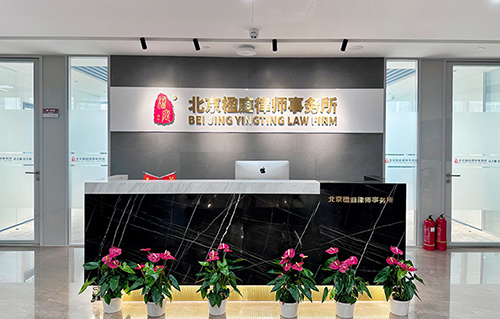
Beijing Yingtong Law Firm has focused on the protection of the rights and interests of private enterprises for many years. It has represented many corporate rights protection cases in the legal practice of rights protection in natural resources, mining, land, waters, territorial space, corporate equity, criminal defense, factory demolition, environmental protection shutdown, prohibition and vacation, etc., including large-scale real estate...








Yingting wins the case: Lawyer Wang Hejing's "administrative + civil" collaborative strategy determines success or failure and creates a new path
Home page >> Ying Ting Information >> Yingting news
Article author:Yingting Lawyers Group | Update time:2026-05-11 | Reading times:205
Introduction: When civil rights protection reaches a dead end, how can experienced lawyers break the situation?
In contract disputes involving the leasing and sale of commercial buildings, many parties often fall into the misunderstanding of "negotiating the contract": when the other party refuses to refund or compensate on the grounds that "the building is legal and valid", or even counterclaims for rent payment, the civil lawsuit can easily become passive because "the contract form is legal".
Recently, Wang Hejing, a lawyer from Beijing Yingting Law Firm, represented a company in a commercial construction contract dispute case, and successfully broke the deadlock through the collaborative strategy of "administrative law + civil code". Faced with a complex legal dilemma, lawyer Wang Hejing bypassed the dispute over the terms of the civil contract and approached it from the perspective of administrative law, urging the competent authorities to determine that the building of a real estate development company under the authorization of the defendant's management committee was illegally constructed and ordered it to be demolished within a time limit. This strategy directly paves the way for the parties’ subsequent civil claims and fully demonstrates the professional wisdom of experienced professional lawyers to “jump out of disputes and look at the essence.”
Case Dilemma 1: Civil procedures are limited, and there is no way to claim that the contract is invalid.
The party in this case, Wang (pseudonym), rented a shop from a real estate development company authorized by a certain district management committee to operate a bar. After the dispute occurred, Wang discovered that the shop involved in the case had not handled the"Construction Project Planning Permit", this is an illegal construction. During the civil litigation, Wang claimed that the lease contract was invalid based on this, but the court did not support it. The court held that the real estate company had submitted the "Application for Temporary Commercial Housing" and other materials, and the district management committee had approved the shop involved in the case as a temporary building in 2017 and extended the period to February 2023. Therefore, it determined that the performance period of the lease contract was legal and valid. Wang applied for an authenticity appraisal of the approvals involved in the case, but was rejected by the civil court on the grounds that they did not fall within the scope of civil case review. Civil procedures were completely unable to review the authenticity of the approvals, and the rights protection path for the parties to invalidate the contract was completely blocked.
Case Dilemma 2: Administrative litigation encounters obstacles and the case falls into procedural deadlock.
The authenticity of the approval could not be verified through civil channels, so Wang turned to administrative litigation, intending to find out the true legality of the temporary approval through administrative trials. However, the Administrative Court directly dismissed the lawsuit on the grounds that the plaintiff was unqualified, completely blocking the channel for verifying the truth of the approval. On the one hand, civil cases are not tried, while on the other hand, administrative cases are not accepted. The two major relief channels of the People's Bank of China have failed. The parties have no complaints and no way to investigate doubtful points. The case has fallen into idle procedures and desperate relief. Conventional litigation methods have completely failed.
Lawyers break the situation: Take over the "double desperate situation" case, break through against the trend, and reshape the path to break the situation
When lawyer Wang Hejing accepted the entrustment, the case had already reached a final impasse. A previous administrative lawsuit attempted by the parties was rejected by the court because the plaintiff was not qualified. This means that the parties could not directly revoke the illegal planning permission through administrative litigation, nor could they overturn the validity of the contract established based on the permission in civil litigation. The parties' rights protection path has fallen into a "double desperate situation" in which the People's Bank of China and the People's Bank of China are doubly blocked.
Faced with this complex predicament, lawyer Wang Hejing did not rush into a dead end. Instead, she jumped out of the inherent thinking of traditional disputes over civil contract terms, reorganized legal relationships, and adjusted case handling strategies. She is keenly aware that to break the deadlock, we cannot just rely on "patching" civil evidence, but must "find another way" and accurately approach it from the perspective of administrative compliance.
Put administration first and "take the salary out of the cauldron"
Lawyer Wang Hejing formulated a subversive strategy of “administration first, civil follow-up”. The core idea is: no longer get entangled in the minutiae of civil contracts, but start directlyadministrative supervision procedures, fundamentally denying the legality of the building involved, and then completely overturning the logical basis of the original judgment in accordance with Article 153 of the Civil Code, which stipulates that "civil legal acts that violate the mandatory provisions of laws and administrative regulations are invalid."
Accurately pinpoint the three fatal illegal points of "temporary buildings"
Wang Hejing’s legal team reviewed the approval documents of the building involved in the case.penetrating review, discovered the serious illegal issues hidden behind it:
1) Typical illegal forms of "temporary construction": The building involved is a two-story steel frame structure with a total area of more than 1,800 square meters. It is obviously a permanent building built in the name of temporary construction, which directly violates the mandatory provision of Article 44 of the "Urban and Rural Planning Law" that "temporary construction shall not build permanent buildings."
2) Illegal existence beyond the legal period: Even according to the approval submitted by the other party, the extension period has expired in 2021. Thereafter, the building continued to be used for commercial operations without any legal formalities, and its existence itself was illegal.
3) Flaws in the authority of the approval subject: Whether the approval behavior of the relevant management committee exceeds the legal authority and violates legal procedures is another major breakthrough in this case.
Launch administrative supervision to allow illegal buildings to “reveal their true colors”
Based on the above-mentioned solid legal arguments, lawyer Wang Hejing did not choose lengthy administrative litigation, but adopted a more efficient administrative supervision path. She submitted detailed legal opinions and evidence materials to a certain city's Natural Resources and Planning Bureau, clearly pointing out the illegality of the construction involved and the legality crisis of the original approval, and required the competent authorities to perform their investigation and handling duties in accordance with the law.
This strategy quickly achieved decisive results. In April 2026, at the moment, the Natural Resources and Planning Bureau of a certain city officially issued the "Notice of ordering correction of illegal conduct", clearly determined that the use period of the temporary building involved in the case has expired, violating the relevant provisions of the "Urban and Rural Planning Law", and ordered the construction unit to unconditionally demolish it within 30 days.
Connect civil litigation and completely remove obstacles to rights protection
After receiving this "Notice of Order to Correction", the nature of the case has undergone a fundamental reversal. This administrative determination directly denies the legal validity of the contract involved in the case from a legal basis. The client can immediately use it as core new evidence for subsequent civil retrials or litigation proceedings.
This determination successfully broke the original deadlock in the case, cleared key obstacles and paved the legal path for the parties to follow up on civil claims and rights. Not only does the party need not continue to pay rent, but its demands for the return of paid money and compensation for losses also receive solid legal support, which fully demonstrates the professional skills and overall wisdom of professional lawyers in breaking the situation and finding a way out of desperate situations in cross-complex cases involving the People's Bank of China.
Lawyer’s advice: An experienced lawyer knows how to “solve the problem from its source.”
The success of this case can be regarded as a textbook example of the "administrative + civil" collaborative litigation strategy. Through this case, lawyer Wang Hejing provided three crucial pieces of professional advice to clients facing similar difficulties:
1) Get out of the “discussing the matter as it stands” thinking and find the “root” of the dispute. The root causes of many civil disputes are often hidden in administrative actions. When a civil court makes an adverse judgment based on a “red-headed document,” don’t give up. Experienced lawyers will comprehensively sort out the context of the case and find the core factors that affect the validity of the contract - if the subject matter itself is illegal, then the administrative actions that support its "legality" must be the "seven inches" of the case.
2) Make good use of "administrative + civil" collaboration to form a joint force for rights protection. Administrative litigation, administrative supervision and civil litigation are not mutually exclusive, but a "combination punch" that can cooperate with each other to form a synergistic force. Promoting the competent departments to investigate and deal with illegal acts through administrative supervision can directly negate the legal basis of the contract; and the dilemma in civil litigation can provide a clear target for administrative rights protection. This "multi-line parallel" strategy can often have the effect of "making a big difference".
3) Pay attention to the "feedback" role of evidence and make administrative documents a "sharp tool" for civil rights protection. In this case, the "Notice of Order to Correction" is not only the result of administrative investigation, but also the "ace" evidence in civil litigation that proves the contract is invalid and overturns the original judgment. Experienced lawyers will pay attention to the collection and use of evidence, especially legal documents issued by administrative agencies, which can often become the key to turning things around.
Conclusion: The value of a professional lawyer lies in “finding the best solution for the client”
From the despair of civil results to the desperate counterattack through administrative rights protection, the success of this case fully proves that experienced lawyers not only understand legal provisions, but also know how to use legal strategies to solve practical problems.
Through the collaborative strategy of "administrative law + civil code", lawyer Wang Hejing not only ordered more than 1,800 square meters of illegal buildings to be demolished within a time limit, but also fundamentally safeguarded the legitimate rights and interests of the parties. This is exactly the core value of professional lawyers: not to be limited to a single legal field, but to comprehensively consider the overall context of the case, find the most fundamental solution, and strive for the best interests of the parties.
Beijing Yingting Law Firm will continue to uphold the concept of "Law of Ying, Trust in Court", provide all parties with comprehensive legal services, so that every dispute can be substantively resolved.

Lawyer in charge of this case
Beijing Yingting Law Firm Lawyer Wang Hejing

Lawyer Wang Hejing
Lawyer Wang Hejing
Beijing Yingting Law Firm Full-time Lawyer
Focus on handling major and complex cases involving cross-regional issues
Researcher, School of Institutional Studies, China University of Political Science and Law, Institute of Modern Enterprise Institutions
Mediator, Beijing Diversified Mediation Development Promotion Association
Member of Beijing Bankruptcy Law Society
Recommended reading
- Mineral rights mortgage financing: a new financing path for private mining companies
- Should the government’s investment promotion agreement be scrapped at the drop of a hat? The law has your back!
- Mining in the name of land leveling? The Central Inspection Team is exposed! Mine bosses, please don’t step into this trap.
- Mining license renewal delayed? The new regulations stipulate that a reply must be made within 15 days
- New opportunities for administrative reconsideration: increased litigation winning rate, smoother rights protection channels
- Mineral rights mortgage financing: a new financing path for private mining companies
- Should the government’s investment promotion agreement be scrapped at the drop of a hat? The law has your back!
- Mining in the name of land leveling? The Central Inspection Team is exposed! Mine bosses, please don’t step into this trap.
- Are companies being fined too much for small things? Court: The punishment is inappropriate and must be corrected!
- New opportunities for administrative reconsideration: increased litigation winning rate, smoother rights protection channels