Law firm introduction More》
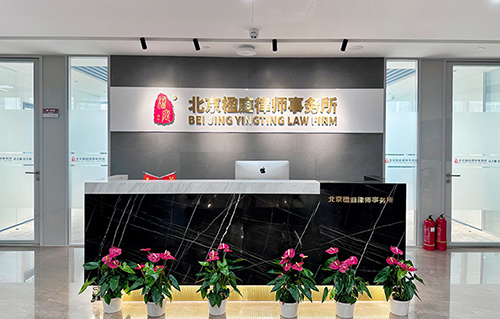
Beijing Yingtong Law Firm has focused on the protection of the rights and interests of private enterprises for many years. It has represented many corporate rights protection cases in the legal practice of rights protection in natural resources, mining, land, waters, territorial space, corporate equity, criminal defense, factory demolition, environmental protection shutdown, prohibition and vacation, etc., including large-scale real estate...
Law firm services
Law firm personnel More》








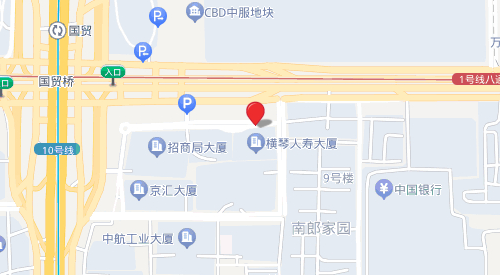
Visiting address More》
Confirm that the defendant, the People’s Government of Qinglong Town, Pengshan District, Meishan City, demolished the plaintiff Wang’s house.
Home page >> Ying Ting Information >> Yingting news
Article author:Yingting Lawyers Group | Update time:2019-04-22 | Reading times:1849
(2016) Administrative Judgment on the House Demolition Management Case of the People’s Government of Qinglong Town, Pengshan District, Meishan City, between the plaintiff Wang Moumou and the defendant No. 3, Xingchu No. 1403, Meishan City
Release date: 2016-08-02Viewed: 7 times·
· People's Court of Pengshan District, Meishan City, Sichuan Province
administrative judgment
(2016) Sichuan 1403 Bank Chu No. 3
Plaintiff Wang Moumou
The authorized agent is Wang Qingfeng, a lawyer at Beijing Yingtong Law Firm.
The authorized agent is Lu Jianan, a lawyer at Beijing Yingting Law Firm.
Defendant Qinglong Town People’s Government of Pengshan District, Meishan City
Legal representative Wu Hong, mayor of the town.
The authorized agent is Luo Fu'an, a lawyer at Sichuan Xianji Law Firm.
Plaintiff Wang Moumou filed an administrative lawsuit with this court on January 18, 2015 due to a housing demolition management case with the defendant Qinglong Town People's Government of Pengshan District, Meishan City (hereinafter referred to as Qinglong Town Government). After this court accepted the case on January 18, 2016, this court formed a collegial panel in accordance with the law and held a public hearing on the case on March 10, 2016. Plaintiff Wang Yuzhen entrusted agents Wang Qingfeng and Lu Jianan, defendant Qinglong Town Government Business Manager Jia Yang and his entrusted agent Luo Fu'an attended the court to participate in the lawsuit. The trial of this case has now been concluded.
The plaintiff Wang Moumou claimed that at about 16:30 on December 22, 2015, the defendant Qinglong Town Government Zhou Guangwen led more than 200 people including Qinglong Town government staff and special police to forcibly control and take away many villagers without any formalities, and illegally demolished the plaintiff's house, causing all the plaintiff's property to be buried under the rubble of the property. Now that the plaintiff has nowhere to live, the plaintiff requests to confirm that the defendant’s forced demolition is illegal. Plaintiff Wang Yuzhen submitted the following evidence to this court: a collective land use certificate, a photo of the demolished house and a video CD, proving that the house built on the land use rights legally obtained by the plaintiff was illegally demolished.
The defendant, the Qinglong Government, argued that on July 5, 2014, with the approval of the Ministry of Land and Resources, Land and Resources Letter [2014] No. 247, the land where the plaintiff’s house was located was expropriated for the construction of the Chengdu-Kunming Railway. On September 15, 2014, the People's Government of Pengshan District, Meishan City announced the land expropriation and the corresponding land compensation and resettlement plan, after which the defendant's staff negotiated with the plaintiff. The two parties did not reach an agreement, but the defendant had never forcibly demolished the plaintiff's house. It was true that the plaintiff Wang's house had been demolished, and the defendant did not know who demolished it. Therefore, the defendant requested that the plaintiff's claim be dismissed in accordance with the law. The defendant Qinglong Town Government submitted the following evidence to this court: Approval No. 247 of the Land and Resources Letter [2014] and its attachments, Peng Fuhan [2014] No. 102 and its attachments, Pengshan County People’s Government’s announcement on land expropriation for the construction of the Chengdu-Kunming Railway, Peng Fufa [2013] No. 81 and its appendix, Pengshan County People’s Government The government’s announcement on the land compensation and resettlement plan for the construction of the Chengdu-Kunming Railway and the photos of the announcement, the Qinglong Town Government’s notice and photos of the collection of attachments, the above evidence proves the purpose: to illustrate that the demolition of the land where the plaintiff’s house is located is a demolition after rural land acquisition, and the defendant’s land expropriation is legal.
After the trial, it was found that on July 5, 2014, the Ministry of Land and Resources of the People's Republic of China issued Guozi [2014] No. 247, which approved the expropriation of farmers' collective construction land involving the plaintiff's residence and house land. , on July 24, 2014, the former Pengshan County People's Government (now the Pengshan District People's Government of Meishan City) issued Peng Fuhan [2014] No. 102 approval, which was based on the Land and Resources Letter [2014] No. 247 approval. The main content of the approval was the compensation standard for land acquisition for the Chengdu-Kunming Railway Expansion and Renovation Project (Pengshan Section) and the compensation standard plan for house demolition and attachments. Afterwards, the former Pengshan County People's Government made public announcements on the relevant approvals, documents, land acquisition and resettlement plans. The defendant Qinglong Town Government was responsible for negotiating with the residents on the expropriated collective construction land within its jurisdiction for compensation for the demolition of houses and attachments. The defendant Qinglong government staff and the plaintiff did not reach a demolition agreement regarding compensation for the demolition of the house and attachments. On the afternoon of December 22, 2015, the house of the plaintiff Wang Moumou in Lianchi Village, Qinglong Town was demolished. The defendant had workers present when the house was demolished. After the plaintiff Chen Guoming's wall was demolished, he entrusted a lawyer to sue this court. During the trial, the defendant denied that he had carried out the demolition and agreed to negotiate with the plaintiff for compensation for the demolition.
This court believes that the plaintiff's house located in Lianchi Village, Qinglong Town, falls within the scope of the Chengdu-Kunming Railway expansion and reconstruction, and is also within the scope of the defendant's specific implementation of negotiated demolition compensation for the house and attachments. Although the plaintiff did not submit direct evidence that the defendant demolished its house, the defendant was an interested party and had its staff present when the house was demolished. It was determined that the plaintiff's house was demolished, and the defendant should bear corresponding fault liability. It should be presumed that the defendant had carried out the act of demolishing the plaintiff's house. Since the defendant's demolition did not comply with the legal procedures stipulated in laws and regulations, the administrative act of demolishing the plaintiff's house by the defendant was illegal. This court supports the plaintiff’s litigation claims in accordance with the law. In accordance with the provisions of Article 74, Paragraph 2 (1) of the Administrative Litigation Law of the People’s Republic of China, the judgment is as follows:
It is confirmed that the administrative act of the People's Government of Qinglong Town, Pengshan District, Meishan City in demolishing the house of plaintiff Wang Moumou is illegal.
The case acceptance fee of 50 yuan shall be borne by the defendant, Qinglong Town People’s Government of Pengshan District, Meishan City.
If you are dissatisfied with this judgment, you may appeal within 15 days from the date of delivery of the judgment, submit an appeal petition to this court, and submit copies according to the number of opposing parties, and appeal to the Meishan Intermediate People's Court of Sichuan Province.
Chief Judge Chen Yongxue
Judge Duan Lixia
Judge Liu Xiangen
March 31, 2016
Secretary Yu Ruowei
Next article:It is easy to fall into these 4 legal traps when signing a pre-signed agreement for land acquisition and demolition!
Recommended reading
- Mineral rights mortgage financing: a new financing path for private mining companies
- Should the government’s investment promotion agreement be scrapped at the drop of a hat? The law has your back!
- Mining in the name of land leveling? The Central Inspection Team is exposed! Mine bosses, please don’t step into this trap.
- Mining license renewal delayed? The new regulations stipulate that a reply must be made within 15 days
- New opportunities for administrative reconsideration: increased litigation winning rate, smoother rights protection channels
- Mineral rights mortgage financing: a new financing path for private mining companies
- Should the government’s investment promotion agreement be scrapped at the drop of a hat? The law has your back!
- Mining in the name of land leveling? The Central Inspection Team is exposed! Mine bosses, please don’t step into this trap.
- Are companies being fined too much for small things? Court: The punishment is inappropriate and must be corrected!
- New opportunities for administrative reconsideration: increased litigation winning rate, smoother rights protection channels