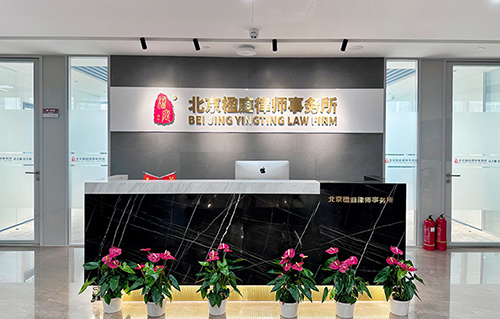
Beijing Yingtong Law Firm has focused on the protection of the rights and interests of private enterprises for many years. It has represented many corporate rights protection cases in the legal practice of rights protection in natural resources, mining, land, waters, territorial space, corporate equity, criminal defense, factory demolition, environmental protection shutdown, prohibition and vacation, etc., including large-scale real estate...








Yingting wins the case | Lawyer Han Jiafeng represented a certain area in a forestry administrative dispute case. The second-instance decision to reject the prosecution was revoked, and the rights pro
Home page >> Ying Ting Information >> Yingting news
Article author:Yingting Lawyers Group | Update time:2026-07-02 | Reading times:108
[Brief about winning the lawsuit]
In June 2026, an administrative agency classified a company’s legal forest land intonature reserve areaThe administrative disputes that resulted from the incident ushered in a major turnaround under the professional representation of lawyer Han Jiafeng of Yingting Law Firm. The Provincial High Court made a final ruling, revoking the first-instance ruling rejecting the prosecution and instructing a certain city's Intermediate People's Court to continue hearing the case. So far, this eight-year storm of "quietly changing" the nature of forest land has finally won the company a win.Substantive trialrights.
In 2016, the county administrative agency classified 1,159 acres of timber forest for which Lin's company has legal forest rights into a nature protection area, and changed the forest species to county-level public welfare forest. However, the administrative agency never notified the company in any form of this major administrative act involving the company's core property rights - no written decision was sent to it, it was not made public within the scope of its knowledge, and its opinions were not listened to or its right to make statements and defense was not guaranteed. Moulin Company had no knowledge of this and continued to operate the forest land according to the original model. For eight years, it was unaware that the "timber forest" on its forest rights certificate had been rewritten in the files.
It was not until the end of 2024 or the beginning of 2025, when a Lin company petitioned the relevant departments to issue a subsidy fund for the cessation of natural forest logging, that it became known for the first time for sure: the "timber forest" registered in black and white on its forest rights certificate had been quietly changed to a "public welfare forest" eight years ago. This means that companies can no longer carry out forest management and forest harvesting according to the original purpose-the harvesting right, the core disposal power of forest rights, has been essentially deprived of it. The business operators were shocked and immediately decided to protect their rights through legal channels.
Moulin Company immediately entrusted Beijing Yingtong Law Firm to represent the case. Lawyer Han Jiafeng, as the lead lawyer of the case, actively defended the rights of the companies involved. In 2025, Moulin Company filed an administrative lawsuit with the Intermediate People's Court of a certain city, requesting to revoke the relevant "Approval" issued by a certain county administrative agency. However, the litigation of the case did not get off to a smooth start. The court of first instance determined that the case was not a “litigation over real estate” on the grounds that “the administrative act complained of did not result in a change in the property rights of the real estate” and that the five-year prosecution period should be applied. The "Approval" involved in the case was issued in July 2016, and it was more than five years since Moulin Company filed the lawsuit in 2025. The court of first instance accordingly ruled to dismiss the lawsuit.
Facing the first-instance ruling, lawyer Ying Ting was not discouraged. Lawyer Han Jiafeng filed an appeal after in-depth study of the case, and his core arguments pointed to two major legal flaws in the first-instance ruling.
First, regarding the starting point of the prosecution period. Lawyer Ying Ting pointed out that the county administrative agency has never targeted Lin Company in notifying, serving or informing of relief channels, nor has it been made public within the scope of the company's knowledge. It was not until the end of 2024 or early 2025 that the company first learned that the nature of the forest land had been changed. It immediately filed a lawsuit in 2025, which fully complied with the "Administrative Litigation Law》Article 46, Paragraph 1, “Propose within six months from the date of knowing or should have known about the administrative act”. The court of first instance used the time when the administrative action was made instead of the time when the enterprise actually knew it as the starting point, which was an erroneous application of the prosecution time limit system.
Secondly, regarding the legal characterization of "litigation over real estate" - this is the core point of dispute in this case. Lawyer Ying Ting argued that classifying timber forests into nature conservation areas and changing them into public welfare forests is by no means as simple as "not causing a change in property rights." The change of forest species directly changes the legal use and management method of forest land, causing the company to be unable to engage in forest management and forest harvesting according to the original use, essentially depriving it of its core disposal power over its own forests. This major restriction and derogation of the exercise of forest rights has a far-reaching impact no less than the formal changes in property rights registration. According to Article 3, paragraph 2, of the "Interpretations of the Supreme People's Court on Several Issues Concerning the Application of Time Limits for Administrative Litigation", "litigation over real estate" refers to litigation directly filed due to the establishment, change, transfer, or elimination of real estate ownership resulting from administrative actions. In this case, the registration content of the forest rights certificate originally included "forest species: timber forest". The change of forest species constitutes a substantial change in the content of the forest rights registration, and the twenty-year period should be applied.Maximum prosecution periodprotect.
Again, lawyer Ying Ting emphasized the serious illegality of the administrative procedures of the administrative agencies. When the administrative agency made the decision to include the forest land, it never notified the Lin Company as the owner of the forest land use right and forest tree ownership, failed to solicit its opinions, and failed to protect its right to statement and defense in accordance with the law. The illegality of this procedure is not only a flaw in the administrative act itself, but also the fundamental reason why companies have been unaware of the existence of administrative acts for a long time. The illegality of the procedure continues to this day, and the company immediately sought relief after learning about it, which has sufficient legitimate reasons.
The Provincial High Court held a public hearing and adopted the core representation opinions of lawyer Ying Ting. The second-instance ruling clearly stated that the registration content of the forest rights certificate involved in the case includes "forest species: timber forest", and the nature of the forest species is one of the forest rights registration contents; according to relevant petition response documents and internal explanation materials of the administrative agencies, after the forest land involved in the case was classified into the nature protection area in 2016, the forest species category has actually changed from commercial forest (timber forest) to county-level public welfare forest, and the forest species have been changed in the forest resources archives. Although the forest rights certificate has not yet been changed and registered, the forest species involved in the case have actually changed due to the impact of the administrative action being sued, and the forest rights have also undergone some substantive changes. The first instance found that the accused administrative act did not result in improper changes in the property rights of the real estate. The lawsuit filed by Lin Company complies with the provisions of the Administrative Litigation Law regarding the time limit and conditions for filing a lawsuit.
In June 2026, the Provincial High Court made an administrative ruling: first, to revoke the relevant administrative ruling made by a certain city's Intermediate People's Court; second, to order a certain city's Intermediate People's Court to continue hearing the case. This final ruling has removed key procedural obstacles for the substantive rights protection of 1,159 acres of forest land of a certain Lin company, and also laid a solid legal foundation for the subsequent substantive trial of the case.
In this case, in the face of procedural barriers set up by administrative agencies based on the time limit for prosecution, lawyer Han Jiafeng relied on his deep understanding of the administrative litigation system and precise grasp of the statutory connotation of "litigation over real estate" to successfully persuade the second-instance court to correct the wrong determination of the first-instance trial, and secured a valuable substantive trial opportunity for the company. This ruling is not only a breakthrough in individual cases, but also provides a powerful judicial response to the controversial issue of "whether a change in forest species constitutes a change in property rights" in similar cases, fully demonstrating the protective function of administrative litigation in private property rights. (Except for the attorney, the names of the parties and companies in this article are pseudonyms)
Judgment in this case (part):


Sponsoring lawyer
Lawyer Han Jiafeng Beijing Yingting Law Firm

Lawyer Han Jiafeng, Beijing Yingtong Law Firm, full-time lawyer
Areas of expertise: He has profound professional accumulation in the field of mineral resources legal affairs, and comprehensively covers legal practice in the fields of civil and commercial litigation and administrative litigation. Core practice strengths include: 1. Compliance management and dispute resolution of the entire industry chain of mineral resources; 2. Civil and commercial contract structure design, text preparation and risk management and control; 3. Special legal due diligence and transaction document review; 4. Dispute resolution, communication and negotiation for government-enterprise cooperation PPP, BOT and other projects; 5. Construction of legal risk prevention and control system for daily business operations.
Practice philosophy: Lawyer Han Jiafeng adheres to the "people-oriented" practice philosophy, is committed to providing clients with professional and warm legal services, and regards the lawyer profession as the mission of safeguarding fairness and justice.
Recommended reading
- Mineral rights mortgage financing: a new financing path for private mining companies
- Should the government’s investment promotion agreement be scrapped at the drop of a hat? The law has your back!
- Mining in the name of land leveling? The Central Inspection Team is exposed! Mine bosses, please don’t step into this trap.
- Mining license renewal delayed? The new regulations stipulate that a reply must be made within 15 days
- New opportunities for administrative reconsideration: increased litigation winning rate, smoother rights protection channels
- Mineral rights mortgage financing: a new financing path for private mining companies
- Should the government’s investment promotion agreement be scrapped at the drop of a hat? The law has your back!
- Mining in the name of land leveling? The Central Inspection Team is exposed! Mine bosses, please don’t step into this trap.
- Are companies being fined too much for small things? Court: The punishment is inappropriate and must be corrected!
- New opportunities for administrative reconsideration: increased litigation winning rate, smoother rights protection channels