Law firm introduction More》
Beijing Yingtong Law Firm has focused on the protection of the rights and interests of private enterprises for many years. It has represented many corporate rights protection cases in the legal practice of rights protection in natural resources, mining, land, waters, territorial space, corporate equity, criminal defense, factory demolition, environmental protection shutdown, prohibition and vacation, etc., including large-scale real estate...
Law firm services
Law firm personnel More》








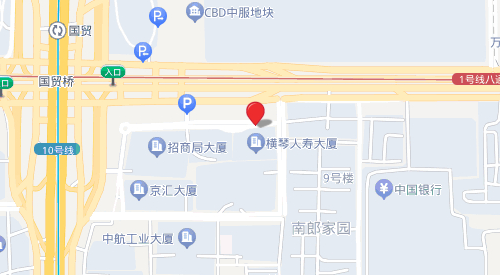
Visiting address More》
The defendant, Xinjin County People’s Government Wujin Sub-district Office (former Xinjin County Wujin Town People’s Government), made against the plaintiff Xiao Moumou on October 17, 2014, is revoked
Home page >> Classic case >> environmental shutdown
Article author:Yingting Lawyers Group | Update time:2019-04-17 | Reading times:1190
Xiao Moumou v. Xinjin County People’s Government Wujin Subdistrict Office Township Government First Instance Administrative Judgment
Pujiang County People's Court of Sichuan Province
administrative judgment
(2015) Pujiang Xingchu Zi No. 24
Plaintiff Xiao Moumou.
The authorized agent is Wang Qingfeng, a lawyer at Beijing Yingting Law Firm, whose agency authority is specifically authorized.
The authorized agent is Lu Jianan, a lawyer at Beijing Yingtong Law Firm, whose agency authority is specifically authorized.
The defendant is the Wujin Sub-district Office of the People’s Government of Xinjin County. Residence: Wujin Town, Xinjin County, Sichuan Province.
Legal representative Yang Chengjun, director.
The authorized agent is Zeng Hongli, a lawyer from Sichuan Huitao Law Firm, whose agency authority is specially authorized.
The authorized agent is Li Lin, a lawyer from Sichuan Huitao Law Firm, whose agency authority is specially authorized.
The plaintiff Xiao Moumou was dissatisfied with the "Notice Ordering Demolition within a Time Limit" (hereinafter referred to as the "Notice of Demolition within a Time Limit") issued by the Wujin Subdistrict Office of the People's Government of Xinjin County (hereinafter referred to as the Wujin Subdistrict Office), and filed an administrative lawsuit with our court on August 20, 2015. After accepting the case, this court served a copy of the complaint and a notice of response to the defendant on August 21, 2015. This court formed a collegial panel in accordance with the law and held a public hearing on this case on October 9, 2015. Plaintiff Xiao Moumou and his authorized agents Wang Qingfeng and Lu Jianan, defendant Wujin Subdistrict Office appointed deputy director Liu Guo and authorized agents Zeng Hongli and Li Lin attended the court to participate in the lawsuit. The case has now been reviewed.
On October 17, 2014, the Wujin Street Office (formerly the Wujin Town People's Government of Xinjin County) issued a "Demolition Notice within a Time Limit", stating: Comrade Xiao Moumou: It has been verified that the eight new brick-concrete houses you built in your own courtyard without authorization violated Article 40 of the Urban and Rural Planning Law of the People's Republic of China. According to the provisions of Article 64 of the Planning Law of the People's Republic of China, you are restricted to demolish the illegal buildings on your own before October 23, 2014. If it is not demolished within the time limit, it will be forcibly demolished in accordance with relevant laws and regulations.
Plaintiff Xiao Moumou claimed that the defendant issued a "Notice for Demolition within a Time Limit" issued on October 17, 2014, which identified the plaintiff's house and required it to be demolished within a time limit, but did not inform the plaintiff of its right to reconsideration and litigation. According to Article 41 of the "Interpretations of the Supreme People's Court on Several Issues Concerning the Implementation of the Administrative Litigation Law of the People's Republic of China", an administrative lawsuit was filed with the People's Court to request the cancellation of the "Demolition Notice within a Time Limit" issued by the defendant.
The defendant Wujin Street Office argued that: 1. As a township-level government, the Wujin Town People’s Government has the responsibility to supervise and manage various economic, cultural, civil affairs and other affairs within its administrative region. According to the Xinjin County Institutional Establishment Committee Office’s approval of the Wujin Town functional allocation, internal organization and staffing plan ( According to Article 1 of the New Organization Office (2008) No. 35), the main functions of the town government include “promoting and implementing the party’s line, principles, policies and national laws and regulations.” According to the feedback from the community where the plaintiff lives, the Wujin Town People’s Government learned through visits that the plaintiff did have illegal construction. In order to promptly stop illegal activities, the defendant exercised its management duties by sending the "Demolition Notice within a Time Limit" to the plaintiff. 2. The building built by the plaintiff did not obtain a planning permit in accordance with the law, which is an illegal construction and does not enjoy legal rights and interests. The "Notice of Demolition within a Time Limit" is an informative document that aims to inform the plaintiff that its behavior has violated the provisions of the "Planning Law of the People's Republic of China". It is not an administrative penalty or administrative compulsory measure taken against the plaintiff. If the plaintiff fails to demolish it within the notice period, the Wujin Subdistrict Office will report it to the relevant departments, who will handle it in accordance with the law. Therefore, the "Notice for Demolition within a Time Limit" does not cause damage to the plaintiff's legitimate rights and interests, and is not within the scope of the administrative litigation of the People's Court. The plaintiff's lawsuit should be dismissed in accordance with the law.
In order to prove that the "Notice for Demolition within a Time Limit" is not actionable and that the administrative action is legal, the defendant Wujin Subdistrict Office provided the following evidence materials and basis to this court within the statutory period:
1. "Reply of the Chengdu Municipal People's Government on Approving Xinjin County's Cancellation of the Establishment of the Wujin Sub-district Office in Wujin Town" (Chengfuhan (2013) No. 58), "Notice of the Xinjin County People's Government on the Cancellation of the Establishment of the Wujin Sub-district Office in Wujin Town", Article 61 of the "Organic Law of the Local People's Congresses at All Levels and Local People's Governments at All Levels of the People's Republic of China". Prove that the defendant has the responsibility for supervision and management of various affairs within this administrative region.
2. Village and town house ownership registration form, description of the situation, four photos, Article 40 of the "Urban and Rural Planning Law of the People's Republic of China". It was proved that the eight brick-concrete houses newly built by the plaintiff did not obtain planning permits and were illegal construction. The defendant's act of issuing the "Notice for Demolition within a Time Limit" was legal.
The plaintiff submitted the following evidence materials to this court to prove its claim:
1. "Notice of Demolition within a Time Limit". Prove the existence of the accused administrative act.
2. Copy of house ownership certificate. It was proved that the plaintiff did not need a permit to expand his house.
During the cross-examination at trial, the plaintiff had no objection to the subject qualification evidence in evidence 1 provided by the defendant, but had objections to the basis of authority, believing that the evidence could not prove that the defendant had the authority to identify and punish illegal buildings; the plaintiff had no objection to the authenticity of the village and town house ownership registration form in evidence 2, but believed that the description of the situation was inconsistent with the facts and had no relevance to this case. The origin and time of formation of the photo are unknown and are not legal. The defendant's application of Article 40 of the Urban and Rural Planning Law of the People's Republic of China was an error in application of law. The defendant has no objection to the authenticity of the house ownership certificate provided by the plaintiff, but has objections to the purpose of the certificate, believing that it cannot prove that new houses do not need to comply with legal requirements and obtain permits.
After cross-examination in court, this court certified the above evidence as follows. Evidence that is not disputed by both parties will be accepted because of its objectivity, relevance, legality and probative force. Regarding the evidence disputed by both parties, Article 61 of the Organic Law of the Local People’s Congresses and Local People’s Governments at All Levels submitted by the defendant cannot prove that the defendant has the statutory duty to identify and demolish illegal buildings, so this court will not accept it; the statement is the community residents’ committee’s reflection on the plaintiff’s illegal buildings, which is relevant to this case, and this court will accept it; the source and time of formation of the photos are unknown, and the form of evidence is illegal, so this court will not accept it. The house ownership certificate provided by the plaintiff cannot prove that the newly built house without permission complies with legal regulations, and this court will not accept it.
The trial found that on October 17, 2014, the Wujin Subdistrict Office issued a "Demolition Notice within a Time Limit" to the plaintiff, determining that the plaintiff's construction of eight new brick-concrete houses in his courtyard violated Article 40 of the Urban and Rural Planning Law of the People's Republic of China, and required the plaintiff to demolish it by himself before October 23, 2014, in accordance with Article 64 of the Law. If it is not demolished within the time limit, it will be forcibly demolished in accordance with relevant laws and regulations. and served the notice on the plaintiff. It was also found that on July 31, 2013, the Chengdu Municipal People's Government had issued the "Chengdu Municipal People's Government's Reply on Approving Xinjin County's Cancellation of Wujin Town's Establishment of Wujin Subdistrict Office" (Chengfu Han (2013) No. 58) to the Xinjin County People's Government, agreeing to the establishment of Wujin Subdistrict Office to govern the administrative area of the original Wujin Town. The Xinjin County People's Government issued a notice and announced the approval on March 6, 2014.
This court believes that the Wujin Town People's Government of Xinjin County has been approved to be revoked, and the relevant rights and obligations have been inherited by the Wujin Sub-district Office of the Xinjin County People's Government. According to Article 65 of the "Urban and Rural Planning Law of the People's Republic of China", "If a rural construction planning permit is not obtained in accordance with the law or construction is not carried out in accordance with the provisions of the rural construction planning permit within the township or village planning area, the township or town people's government shall order it to stop construction and make corrections within a time limit; if corrections are not made within the time limit, it may be demolished." Only if the illegally constructed buildings are located within the township or village planning area, the township and town people's governments can deal with illegal buildings in accordance with the relevant laws and regulations on urban and rural planning. In this case, the defendant failed to submit evidence to prove that the building involved was located within the township or village planning area, and the "Notice Ordering Demolition within a Time Limit" issued on October 17, 2014 was beyond its authority. The notice sets the plaintiff's obligation to demolish illegal buildings within a time limit and the consequences of failure to perform within the time limit. It is administratively mandatory and falls within the scope of administrative litigation according to law. Therefore, the defendant’s argument that the Notice Ordering Demolition within a Time Limit is not actionable is untenable and this court will not support it. According to the provisions of Article 70 (4) of the Administrative Litigation Law of the People's Republic of China, the judgment is as follows:
The "Notice of ordering demolition within a time limit" issued by the Wujin Sub-district Office of the People's Government of Xinjin County (formerly the Wujin Town People's Government of Xinjin County) on October 17, 2014 to the plaintiff Xiao Moumou is revoked.
The acceptance fee for this case, 50 yuan, shall be borne by the defendant, the Wujin Subdistrict Office of the People’s Government of Xinjin County.
If you are dissatisfied with this judgment, you may file an appeal within 15 days from the date of delivery of the judgment, submit an appeal petition to this court, and submit a copy of the appeal petition according to the number of opposing parties, and appeal to the Chengdu Intermediate People's Court.
Chief Judge Wang Guozhong
Judge Wu Runming
People's Assessor Chen Shijun
November 16, 2015
Secretary Jiang Li
Attachment: Relevant legal basis applicable to this judgment
"Administrative Litigation Law of the People's Republic of China"
Article 70: If an administrative act falls under any of the following circumstances, the people's court shall make a judgment to revoke or partially revoke the administrative act, and may order the defendant to re-engage in administrative act:
(1) The main evidence is insufficient;
(2) Wrong application of laws and regulations;
(3) Violating legal procedures;
(4) Exceeding authority;
(5) Abuse of power;
(6) Obviously inappropriate.
Previous article:Hu Pijin and the First Instance Administrative Judgment of Changxing County People’s Government
Recommended reading
- Mineral rights mortgage financing: a new financing path for private mining companies
- Should the government’s investment promotion agreement be scrapped at the drop of a hat? The law has your back!
- Mining in the name of land leveling? The Central Inspection Team is exposed! Mine bosses, please don’t step into this trap.
- Mining license renewal delayed? The new regulations stipulate that a reply must be made within 15 days
- New opportunities for administrative reconsideration: increased litigation winning rate, smoother rights protection channels
- Mineral rights mortgage financing: a new financing path for private mining companies
- Should the government’s investment promotion agreement be scrapped at the drop of a hat? The law has your back!
- Mining in the name of land leveling? The Central Inspection Team is exposed! Mine bosses, please don’t step into this trap.
- Are companies being fined too much for small things? Court: The punishment is inappropriate and must be corrected!
- New opportunities for administrative reconsideration: increased litigation winning rate, smoother rights protection channels