Law firm introduction More》
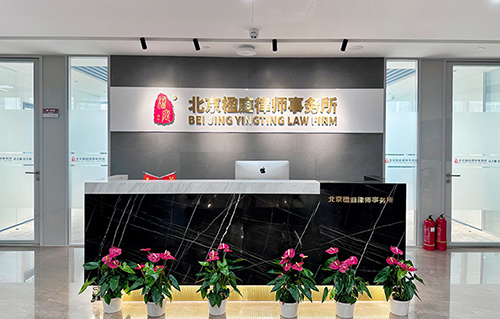
Beijing Yingtong Law Firm has focused on the protection of the rights and interests of private enterprises for many years. It has represented many corporate rights protection cases in the legal practice of rights protection in natural resources, mining, land, waters, territorial space, corporate equity, criminal defense, factory demolition, environmental protection shutdown, prohibition and vacation, etc., including large-scale real estate...
Law firm services
Law firm personnel More》








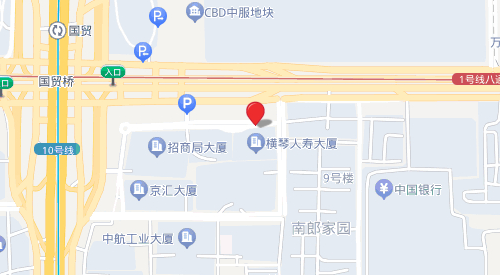
Visiting address More》
Administrative Compulsory Second Instance Administrative Judgment between Xuzhou City Gulou District Housing and Construction Bureau and Ma Liandi, Xuzhou City Gulou District People's Government and o
Home page >> Classic case >> environmental shutdown
Article author:Yingting Lawyers Group | Update time:2019-04-17 | Reading times:1361
Administrative Compulsory Second Instance Administrative Judgment between Xuzhou City Gulou District Housing and Construction Bureau and Ma Liandi, Xuzhou City Gulou District People's Government and others
Jiangsu Provincial Higher People's Court
administrative judgment
(2017)Su Xingzhong No. 637
The appellant (defendant in the original trial) is the Housing and Construction Bureau of Gulou District, Xuzhou City, with its domicile at No. 253, Zhongshan North Road, Gulou District, Xuzhou City.
The legal representative is Ping Xiujian, director of the bureau.
The entrusted agent is Chai Leiting, director of the Collection Office of the Housing and Construction Bureau of Gulou District, Xuzhou City.
The authorized agent is Ding Tao, a lawyer at Jiangsu Shengyi Law Firm.
Appellee (plaintiff in the original trial) Ma Liandi and 26 others (the specific list is attached).
Litigation representative Ma Liandi, female, born on October 6, 1947, Han nationality, lives in Gulou District, Xuzhou City.
Litigation representative Chen Yuxian, female, born on February 4, 1972, Han nationality, lives in Quanshan District, Xuzhou City.
Litigation representative Li Bingyu, male, born on April 30, 1963, Han nationality, lives in Gulou District, Xuzhou City.
Litigation representative Zhang Wenxue, male, born on December 10, 1953, Han nationality, lives in Xuzhou Economic Development Zone, Xuzhou City.
Litigation representative Wang Huijun, female, born on July 5, 1973, Han nationality, lives in Gulou District, Xuzhou City.
Dong Guonv and Lu Yongqiang, the joint agents of the appellee Ma Liandi and 26 other persons, are lawyers at Beijing Yingtong Law Firm.
The defendant in the original trial, the People's Government of Gulou District, Xuzhou City, is domiciled at No. 253, Zhongshan North Road, Gulou District, Xuzhou City.
The legal representative is Luo Qing, the district chief.
The authorized agent is Ding Tao, a lawyer at Jiangsu Shengyi Law Firm.
The defendant in the original trial is the Fengcai Street Office, Gulou District, Xuzhou City, and his residence is No. 35-5 Guangshan Road, Gulou District, Xuzhou City.
The person in charge is Liu Minhao, director of Fengcai Street Office in Gulou District, Xuzhou City.
Ma Liandi and 26 others sued the People's Government of Gulou District, Xuzhou City (hereinafter referred to as the Gulou District Government), the Housing and Construction Bureau of Gulou District, Xuzhou City (hereinafter referred to as the Housing and Urban-Rural Development Bureau of Gulou District), and the Fengcai Street Office of Gulou District, Xuzhou City (hereinafter referred to as the Gulou District Housing and Construction Bureau) (Fengcai Subdistrict Office) illegally set up a fence and required its removal. The Gulou District Housing and Urban-Rural Development Bureau was dissatisfied with the administrative judgment (2015) Xu Xingchu Zi No. 00194 of the Xuzhou Intermediate People’s Court of Jiangsu Province and appealed to this court. After accepting the case, this court formed a collegial panel in accordance with the law and held a hearing. Chai Leiting and Ding Tao, the authorized agents of the Gulou District Housing and Urban-Rural Development Bureau of the appellant, Li Bingyu and Zhang Wexue, the litigation representatives of 26 people including the appellee Ma Liandi, Wu Suwei, the person in charge of the Gulou District Government and the agent Ding Tao, the defendant in the original trial, and Zhong Shouyong, the person in charge of the Fengcai Street Office, the defendant in the original trial, attended the hearing. After reviewing the files, investigating and questioning the parties, this court decided not to hold a hearing in accordance with Article 86 of the Administrative Litigation Law of the People's Republic of China. This case has now been concluded.
The court of first instance found:
On June 23, 2015, the Gulou District Government issued Xu Guzheng Zhengzi [2015] No. 5 "House Expropriation Decision" (hereinafter referred to as "House Expropriation Decision No. 5") clarified: According to the "Xuzhou City Twelfth Five-Year Plan for National Economic and Social Development", "Xuzhou City Land Use Master Plan (2006-2020)", "Xuzhou City Urban and Rural Master Plan (2000) 7-2020)" and the requirements of the "Xuzhou City 2014 National Economic and Social Development Annual Plan" and in accordance with the "Regulations on the Expropriation and Compensation of Houses on State-owned Land" (hereinafter referred to as the "Regulations on Expropriation and Compensation"), the Gulou District Government decided to expropriate the houses within the scope of the old urban reconstruction project around the Xiadian Road Coal Machinery Factory, and the relevant departments will take back the use rights of state-owned land in accordance with the law. The Gulou District Housing and Urban-Rural Development Bureau is responsible for organizing and implementing the housing expropriation and compensation work for the reconstruction project of the old city around the Xiadian Road Coal Machinery Factory. On June 24, 2015, the Gulou District Government issued an "Announcement" clarifying: 1. No. 5 "House Expropriation Decision"; 2. The project name is the reconstruction project of the old city around the Coal Machinery Factory on Xiadian Road; 3. The expropriation scope is from Xuzhou Zhengda Co., Ltd. in the east, Xiadian Road in the south, To the north is the Coal Machinery Plant and to the west is Xugang Road; 4. The expropriation signing period is from June 25, 2015 to July 24, 2015; 5. Expropriation compensation plan; 6. The expropriation department is the Gulou District Housing and Urban-Rural Development Bureau; 7. The entrusted implementation unit for expropriation is Fenggai Subdistrict Office, etc. Around mid-July and early August 2015, the Fengcai Sub-district Office entrusted relevant units to set up fences within the scope of the expropriation involved.
The court of first instance also found that on May 13, 2016, the Gulou District Government issued the Xu Guzheng [2016] No. 32 Decision on Cancellation, which clarified that after investigation and verification, the ownership of some of the land involved in the reconstruction project of the old city around the Xiadian Road Coal Machinery Factory was collective land. After research and decision by the Gulou District Government, the No. 5 "House Expropriation Decision" was revoked.
The court of first instance held that:
First of all, regarding whether Ma Liandi and 26 other people filed this lawsuit in compliance with legal requirements. On the one hand, judging from the evidence in this case, the Gulou District Government made the No. 5 "House Expropriation Decision" on June 23, 2015, to expropriate the houses within the scope of the old city reconstruction project around the Xiadian Road Coal Machinery Plant, and the Fencai Subdistrict Office was the entrusted implementation unit of the expropriation. At the same time, the Fencai Subdistrict Office was clearly designated as the entrusted implementation unit of the expropriation, and it entrusted relevant units to successively set up fences within the scope of the expropriation involved. On the other hand, Ma Liandi and other 26 people provided relevant evidence to prove that they have the qualifications to be the subject of this case. The Gulou District Government and other three units did not object to the fact that Ma Liandi and other 26 people owned or used relevant houses within the scope of the expropriation project involved. Therefore, Ma Liandi and other 26 people have a legal interest in the act of setting up the fence and have the right to file a lawsuit in this case. According to the provisions of Article 5, Paragraph 2 of the "Regulations on Expropriation and Compensation", the legal consequences of Fenggai Subdistrict Office, as the entrusted implementation unit of the expropriation, setting up fences and other administrative actions within the expropriation scope involved in the case should be borne by the Gulou District Housing and Urban-Rural Development Bureau, the housing expropriation department. That is, the Gulou District Housing and Urban-Rural Development Bureau is a qualified defendant in this case, but the Gulou District Government and Fenggai Subdistrict Office are not qualified defendants in this case.
Secondly, regarding the legality of setting up fences involved in the case and the request of 26 people including Ma Liandi for an order to dismantle the fences and stop interfering with their legitimate operations. In this case, the Fengcai Street Office made it clear that the fence involved was set up during the expropriation process. However, judging from the facts of this case, although the Housing and Urban-Rural Development Bureau of Gulou District and the Fengcai Street Office, the entrusted implementation unit, claimed that they set up fences in accordance with relevant legal provisions, they did not No evidence was provided to prove that they had fulfilled the legal procedures, and judging from the facts verified in this case, the No. 5 House Expropriation Decision, which was the basis for the establishment of the fence, has been revoked by the Gulou District Government. Therefore, the reasons for Ma Liandi and 26 others to claim that the fence was illegal are established, and remedial measures should be taken to remove the fence so as not to interfere with the use of the house involved by Ma Liandi and 26 others. In accordance with the provisions of Article 74, Paragraph 2, Item 1 and Article 76 of the Administrative Litigation Law of the People's Republic of China and Article 3, Item 1 of the original Interpretation of the Supreme People's Court on Several Issues Concerning the Application of the Administrative Litigation Law of the People's Republic of China, the original court ruled: Confirmation of Gulou District Housing and Urban-Rural Development The bureau's act of setting up the fence involved in the case was illegal; the Gulou District Housing and Urban-Rural Development Bureau demolished the fence within 20 days from the date of the original judgment becoming legally effective, and stopped interfering with the legal use of the relevant properties by Ma Liandi and 26 other people; it rejected the lawsuit filed by Ma Liandi and 26 others against the Gulou District Government and Fengcai Sub-district Office.
The appellant, Gulou District Housing and Urban-Rural Development Bureau, appealed: 1. According to Article 22 of the "Jiangsu Province Urban Appearance and Environmental Sanitation Management Regulations", fencing should be set up at the construction site, so there is a legal basis for setting up fencing at the construction site. 2. The purpose of setting up enclosures at the construction site is to control dust pollution and improve environmental quality. 3. Setting up fences at the construction site is not an administrative act. Request this court to revoke the original judgment and change the judgment in accordance with the law.
Appellee Ma Liandi and 26 others did not submit written defense opinions to this court. During the hearing, they argued that the facts found in the original judgment were clear and the law was correctly applied. Request this court to dismiss the appeal and uphold the original judgment.
The defendants in the original trial, the Gulou District Government and Fengcai Subdistrict Office, did not submit written statements to this court.
The facts identified in the original judgment were correct and this court confirmed them in accordance with the law.
This court also found that due to the need to demolish houses, the Fengcai Street Office entrusted relevant units to set up fences within the expropriation area around mid-July to early August 2015, and left entrances and exits at both ends of the fence. When the fence involved in the case was set up, the contract signing rate was less than 50%. The scope of enclosure includes not only the houses delivered for demolition by the expropriated persons who have signed the compensation and resettlement agreement, but also the houses involved in the compensation and resettlement issues that have not yet been resolved and are not yet qualified for demolition. The house of Ma Liandi and 26 other people is located on the north side of ×× Road in Xuzhou City and is a commercial building facing the street. The demolished houses were on the north and west sides of the house involved, and were not in the same building as the houses of Ma Liandi and other 26 people. This court conducted an on-site survey on January 3, 2018 in the presence of both parties. The Fengcai Subdistrict Office organized personnel to dismantle the fence after the second instance hearing of this court.
This court believes:
1. The Housing and Urban-Rural Development Bureau of Gulou District is a qualified defendant in this case. The court of first instance was correct in rejecting the lawsuit brought by Ma Liandi and 26 others against the Gulou District Government and Fengcai Subdistrict Office.
Paragraph 1 of Article 26 of the "Administrative Litigation Law of the People's Republic of China" stipulates that if a citizen, legal person or other organization directly files a lawsuit with the People's Court, the administrative agency that made the administrative action shall be the defendant. In this case, the Gulou District Government issued the "House Expropriation Decision" No. 5 on June 23, 2015, to expropriate the houses of 26 people, including Ma Liandi. No. 5 "House Expropriation Decision" was revoked by the Gulou District Government on May 13, 2016. The fence involved in the case was set up after the No. 5 "House Expropriation Decision" was announced but before it was revoked. Since the fence setting is a factual act, it is difficult for Ma Liandi and 26 others to provide evidence to prove the subject of the fence setting. Therefore, the parties' statements should be combined with the provisions of the "Expropriation and Compensation Regulations" to comprehensively determine the fence setting subject and the responsible party.
During the trial in this court, the Fengcai Street Office admitted that the fence involved in the case was set up by itself. Since the Fenggai Subdistrict Office is the expropriation entrusted implementation unit for the house expropriation project involved in the case, the demolition of the house and the setting up of fencing at the demolition site are part of the house expropriation implementation work. The Fengcai Subdistrict Office considers that setting up fencing is consistent with its work responsibilities. The court of first instance found that the fencing involved in the case was correctly set up by the Fengcai Subdistrict Office. Paragraph 2 of Article 5 of the "Regulations on Expropriation and Compensation" stipulates that the house expropriation department shall be responsible for supervising the house expropriation and compensation activities carried out by the house expropriation implementation unit within the scope of entrustment, and shall bear legal responsibility for the consequences of its actions. The Gulou District Housing and Urban-Rural Development Bureau is the housing expropriation department for the project involved in the case. It shall bear legal responsibility for setting up fences for the Fencai Subdistrict Office, the unit that implements the housing expropriation. Therefore, the Gulou District Housing and Urban-Rural Development Bureau is a qualified defendant in this case, and the Fencai Subdistrict Office is not a qualified defendant in this case.
The Gulou District Government denied that it had set up a fence, and Ma Liandi and 26 others did not provide evidence to prove that the Gulou District Government had set up the fence involved in the case. Therefore, Ma Liandi and 26 others named the Gulou District Government as a defendant, which is obviously without factual basis. In accordance with the provisions of Article 3, Paragraph 1, Item 1 of the Interpretation of the Supreme People's Court on Several Issues Concerning the Application of the Administrative Procedure Law of the People's Republic of China, the court of first instance was correct in rejecting the lawsuit brought by Ma Liandi and 26 others against the Gulou District Government and Fenggai Subdistrict Office.
2. The expansion of the enclosure scope by the Gulou District Housing and Urban-Rural Development Bureau constitutes an abuse of administrative discretion and does not comply with the "principle of proportionality."
According to the provisions of Article 22 of the "Jiangsu Province Urban Appearance and Environmental Sanitation Management Regulations", the construction site should set up enclosures in accordance with regulations. Before the No. 5 "House Expropriation Decision" involved in the case was revoked, some expropriated persons had signed compensation and resettlement agreements and delivered their houses for demolition. Although the Gulou District Housing and Urban-Rural Development Bureau should set up a fence when demolishing a house, when considering the scope of the fence, it should first consider the purpose of the fence and properly exercise its administrative discretion to determine the scope of the fence. The purpose of setting up fences is to prevent dust and sewage from polluting the environment around the construction site. When the Gulou District Housing and Urban-Rural Development Bureau determines the scope of the enclosure to achieve this administrative purpose, it should be based on legitimate considerations and should not consider irrelevant factors, and reasonably determine the scope of the enclosure based on the scope of house demolition. Secondly, setting up fences at the house demolition site should comply with the "principle of proportion". The so-called "principle of proportionality" means that on the premise of complying with legal provisions, the effectiveness of administrative measures should first be considered, and at the same time, administrative measures that will least infringe the rights and interests of others should be selected to achieve administrative purposes. Since the houses of Ma Liandi and other 26 people are commercial buildings facing the street, setting up fences will inevitably affect customer flow and thus affect operating efficiency. Therefore, when setting up fences, the Housing and Urban-Rural Development Bureau of Gulou District should fully consider the impact of fences on the legitimate rights and interests of Ma Liandi and other 26 people, and try to reduce the scope of the fence to minimize the impact on the legitimate rights and interests of Ma Liandi and other 26 people, so as to minimize the infringement.
Paragraph 1 of Article 27 of the "Regulations on Expropriation and Compensation" stipulates that when implementing house expropriation, compensation should be paid first and then relocated. When the Gulou District Housing and Urban-Rural Development Bureau set up the fence, the compensation and resettlement issues for most of the expropriated people, including Ma Liandi and 26 other people, had not yet been resolved. The building where the houses of Ma Liandi and other 26 people were located was not yet qualified for demolition. In fact, the demolished houses were located on the north and west sides of the houses involved. The Housing and Urban-Rural Development Bureau of Gulou District expanded the enclosure scope and enclosed houses that were not eligible for demolition, which affected the normal operations of Ma Liandi and 26 other people, caused unnecessary infringement on the legitimate rights and interests of Ma Liandi and other 26 people, violated the "principle of proportionality", and constituted an abuse of administrative discretion.
3. The Gulou District Housing and Urban-Rural Development Bureau set up the fence involved in the case, which objectively constituted an illegal method of interrupting road traffic to force the expropriated people to relocate.
Paragraph 3 of Article 27 of the "Regulations on Expropriation and Compensation" strictly prohibits any unit or individual from using illegal means such as interrupting water supply, heat supply, gas supply, power supply and road access to force the expropriated person to relocate. When the housing involved in the case did not meet the conditions for demolition, the Gulou District Housing and Urban-Rural Development Bureau expanded the scope of the enclosure and enclosed the street-facing business premises of Ma Liandi and other 26 people. Although the Gulou District Housing and Urban-Rural Development Bureau set up the fence with entrances and exits at both ends, it objectively affected the flow of customers and affected the normal operation of the houses involved. Therefore, although this administrative measure controls dust pollution and improves environmental quality, it objectively constitutes the illegal method of interrupting road traffic to force the expropriated to relocate, which is prohibited by the "Expropriation and Compensation Regulations".
In summary, the Gulou District Housing and Urban-Rural Development Bureau’s expansion of the enclosure scope constitutes an abuse of administrative discretion; the enclosure of houses that are not eligible for demolition violates the “principle of proportionality.” The Gulou District Housing and Urban-Rural Development Bureau forced the expropriated people to relocate by interrupting road traffic, which violated the provisions of Article 27, Paragraph 3, of the "Expropriation and Compensation Regulations". The establishment of fences by the Gulou District Housing and Urban-Rural Development Bureau is an administrative act and does not have revocable content. When the court of first instance made its judgment, the fence involved in the case had not been demolished. Therefore, in accordance with the provisions of Article 74, Paragraph 2 and Article 76 of the Administrative Litigation Law of the People's Republic of China, the court of first instance ruled that it was illegal for the Gulou District Housing and Urban-Rural Development Bureau to set up the fence. It also ruled that the Gulou District Housing and Urban-Rural Development Bureau was correct in demolishing the fence involved in the case.
It should be pointed out that the administrative legal norms related to the establishment of fences only stipulate the circumstances under which fences should be set up, but do not specify the procedures for setting up fences. The court of first instance held that the Gulou District Housing and Urban-Rural Development Bureau violated statutory procedures when setting up fences. This court rectified the error in accordance with the law.
In summary, the Gulou District Housing and Urban-Rural Development Bureau’s grounds of appeal and request cannot be established according to law, and this court will not support it. The original judgment was correct and should be upheld in accordance with the law. In accordance with the provisions of Article 89, Paragraph 1, Item 1, of the Administrative Litigation Law of the People's Republic of China, the judgment is as follows:
The appeal was dismissed and the original judgment was upheld.
The second-instance case acceptance fee of RMB 50 shall be borne by the appellant, Xuzhou Gulou District Housing and Construction Bureau.
This judgment is final.
Chief Judge Liu Jun
Judge Zhang Shixia
Judge Miao Qing
March 14, 2018
Secretary Xu Xuan
Next article:Winning Case 1017: Lu Yongqiang represented Xue in the second instance of administrative relocation compensation
Recommended reading
- Mineral rights mortgage financing: a new financing path for private mining companies
- Should the government’s investment promotion agreement be scrapped at the drop of a hat? The law has your back!
- Mining in the name of land leveling? The Central Inspection Team is exposed! Mine bosses, please don’t step into this trap.
- Mining license renewal delayed? The new regulations stipulate that a reply must be made within 15 days
- New opportunities for administrative reconsideration: increased litigation winning rate, smoother rights protection channels
- Mineral rights mortgage financing: a new financing path for private mining companies
- Should the government’s investment promotion agreement be scrapped at the drop of a hat? The law has your back!
- Mining in the name of land leveling? The Central Inspection Team is exposed! Mine bosses, please don’t step into this trap.
- Are companies being fined too much for small things? Court: The punishment is inappropriate and must be corrected!
- New opportunities for administrative reconsideration: increased litigation winning rate, smoother rights protection channels