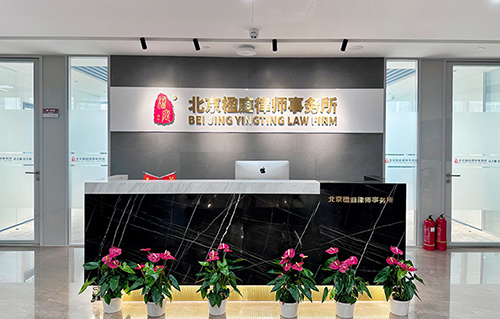
Beijing Yingtong Law Firm has focused on the protection of the rights and interests of private enterprises for many years. It has represented many corporate rights protection cases in the legal practice of rights protection in natural resources, mining, land, waters, territorial space, corporate equity, criminal defense, factory demolition, environmental protection shutdown, prohibition and vacation, etc., including large-scale real estate...








Practical sharing | Compliance isolation and risk cutting skills for groups, head offices and subsidiaries
Home page >> Classic case >> Government-enterprise disputes
Article author:Yingting Lawyers Group | Update time:2026-06-12 | Reading times:174
Group and chain enterprises are most worried that a single violation will implicate the entire company. Violations by subsidiaries and stores will lead to joint penalties and credit downgrades for the head office. The core of compliance risk control for large enterprises is to isolate subject risks and divide responsibilities. Lawyer Liu Jingzhu of Yingting Law Firm explained in detail the risk control techniques of group companies.
1. Legal liability boundaries of each entity. Subsidiaries are independent legal persons and bear administrative responsibilities independently. The parent company will not be implicated if it is not at fault; branches do not have independent legal person status, and the responsibility lies with the head office; franchise stores and cooperative outlets, if they are independent entities, bear the responsibility for violations, and the headquarters can achieve complete isolation.
2. The core evidence system for the headquarters’ faultlessness. If you want to cut off the responsibility of the headquarters, you must retain complete management evidence: unified compliance system, regular compliance training, regular inspection and supervision records, violation rectification notices, and internal accountability documents. It proves that the headquarters has fulfilled its management obligations and that violations by subordinates are private operations and individual faults and have nothing to do with headquarters management.
3. The Group’s long-term compliance and isolation mechanism establishes a compliance system with one review for each case and one inspection per month; clarifies the list of rights and responsibilities of each entity, and prohibits subordinate outlets from operating in violation of regulations; improves the compliance agreement for franchisees and cooperative entities, and stipulates that they will be responsible for violations; regularly archives inspection, training, and rectification materials to form a complete risk control evidence chain.
4. Real Case: Successfully Isolating Subsidiary Violation Risks A subsidiary of a group was punished for operating violations, and the law enforcement department planned to jointly and severally hold the group headquarters accountable. Lawyer Liu Jingzhu submitted the headquarters’ compliance system and training inspection records to prove that the headquarters had no management fault. In the end, only the subsidiary was punished, and the group headquarters was exempted from any liability and credit implication.
All in all, group enterprise risks can be accurately isolated. Improving the compliance management system and retaining complete evidence of performance of duties can avoid single-point violations and network-wide implication, and protect the overall operation and credit stability of the group.
Previous article:Why don’t banks accept mineral rights mortgage loans? This is how the new law is broken
Recommended reading
- Mineral rights mortgage financing: a new financing path for private mining companies
- Should the government’s investment promotion agreement be scrapped at the drop of a hat? The law has your back!
- Mining in the name of land leveling? The Central Inspection Team is exposed! Mine bosses, please don’t step into this trap.
- Mining license renewal delayed? The new regulations stipulate that a reply must be made within 15 days
- New opportunities for administrative reconsideration: increased litigation winning rate, smoother rights protection channels
- Mineral rights mortgage financing: a new financing path for private mining companies
- Should the government’s investment promotion agreement be scrapped at the drop of a hat? The law has your back!
- Mining in the name of land leveling? The Central Inspection Team is exposed! Mine bosses, please don’t step into this trap.
- Are companies being fined too much for small things? Court: The punishment is inappropriate and must be corrected!
- New opportunities for administrative reconsideration: increased litigation winning rate, smoother rights protection channels