Law firm introduction More》

Beijing Yingtong Law Firm has focused on the protection of the rights and interests of private enterprises for many years. It has represented many corporate rights protection cases in the legal practice of rights protection in natural resources, mining, land, waters, territorial space, corporate equity, criminal defense, factory demolition, environmental protection shutdown, prohibition and vacation, etc., including large-scale real estate...
Law firm services
Law firm personnel More》








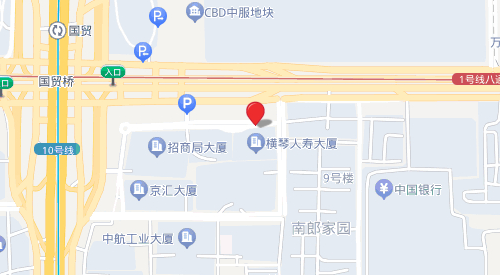
Visiting address More》
Yingting Mining Lawyers Team|10,000 words of in-depth interpretation of the "New Judicial Interpretation of Mining Rights Disputes" point by point: institutional breakthroughs, practical concerns and
Home page >> Business areas >> mineral resources
Article author:Yingting Lawyers Group | Update time:2026-03-25 | Reading times:613
Introduction: Judicial response after repeated calls
At a critical juncture when the new Mineral Resources Law was promulgated for more than a year and officially implemented for more than half a year, the "Interpretation on Several Issues Concerning the Application of Law in the Trial of Mineral Resources Dispute Cases" (hereinafter referred to as the "New Judicial Interpretation"), which was reviewed and approved by the Supreme People's Court at the 1961st meeting of its Judicial Committee on December 13, 2025, and will be officially implemented on February 1, 2026 (hereinafter referred to as the "New Judicial Interpretation"), has finally been implemented. The promulgation of this judicial interpretation can be described as "coming out after long-awaited calls". It directly responds to the common and systemic difficulties that courts at all levels across the country, especially grassroots courts, have faced when hearing cases involving mining rights disputes for a long time.
As we have experienced deeply in our daily work, in the past week alone, we have received calls from courts in Gansu, Hunan, Shanxi, Liaoning and other places to jointly discuss how to accurately apply laws and legal principles in a certain type of mining rights dispute cases. This phenomenon is enough to prove that in judicial practice, there are a lot of questions and a high degree of uncertainty about "how to try" and "how to characterize" mining rights dispute cases. This uncertainty not only affects the unity and authority of judicial decisions, but also seriously dampens the investment confidence of market entities and hinders the healthy development of the mineral resources market.
As a member of the Democratic National Construction Association, the author has submitted opinions to relevant departments on improving the supporting systems of the Mineral Resources Law many times as early as half a year ago. One of the core concerns is the application of law in mining rights disputes, and it is clearly recommended that the Supreme People's Court issue a special judicial interpretation as soon as possible. Many experts on our team also continue to provide advice and suggestions to the Supreme People's Court through various channels. Today, the promulgation of the "New Judicial Interpretation" is undoubtedly an important response to the previous calls from the industry.
However, after reading the full text, we found that although this interpretation showed a positive attitude on some clauses, on some fundamental and directional issues, it showed a regrettable "half-sentence" characteristic - that is, it stopped at the point, avoided the key points, and vaguely passed over key issues such as responsibility attribution, procedural paths and compensation standards that should have been clearly stated. The reason, we believe, is closely related to the structural imbalance in which civil society dominates and the administrative voice is relatively weak in the process of formulating judicial interpretations. This imbalance has led to a large number of mining rights disputes that are essentially administrative disputes being forcibly brought into the civil framework for processing, thus weakening the protection of mining companies as administrative counterparts.
Key points at a glance - progress and limitations coexist
1. Misalignment of fundamental attributes: Although the "New Judicial Interpretation" cites the Civil Code and the Mineral Resources Law, it does not mention the Administrative Litigation Law at all. It avoids the nature of administrative agreements in core disputes such as the transfer of mining rights, leading to the wrong choice of relief path.
2. Innovation of contract validity rules: Articles 5 to 11 establish the principle of "immediate effect" for civil contracts such as mineral rights transfer and mortgage, which is a strong judicial support for the "separation of rights and certificates" reform of the new Mineral Resources Law and is a major institutional advancement.
3. Absence of liability for invalid contracts: Although Articles 3 and 4 stipulate that contracts are invalid under certain circumstances, they do not mention the liability of administrative agencies that illegally sign contracts, making it difficult for companies to obtain substantive relief even after winning the lawsuit.
4. Expansion of the scope of identification of suppression: Article 15 creatively includes “prohibited mining areas around construction projects” into the scope of “suppression”, which greatly benefits mining companies, but its legal basis needs to be consolidated.
5. Overriding the conservative compensation standards: Although Article 17 lists a number of compensation items, it does not directly confirm that the "expected benefits" should be compensated. It is only covered with a vague "etc.", leaving huge room for interpretation and obstacles to rights protection.
6. Strict claims for suppression upon expiration: Article 19 sets a very high evidentiary threshold for situations where mining rights cannot be renewed due to suppression after expiration. In reality, companies often find it difficult to meet the requirements due to information asymmetry.
7. Restricted paths for recovery compensation: Article 20 requires that compensation be requested from the "administrative agency that made the decision to recover". However, in practice, such formal decisions are extremely rare, and companies often fall into the dilemma of "having nothing to complain about."
8. Professional response becomes the key: Facing the gray areas left by many "half-sentences" in interpretations, mining companies must improve their legal professional capabilities in order to effectively safeguard their rights and interests in complex disputes.
Detailed explanation step by step - in-depth perspective from text to practice
Article 1: Validity rules of mining rights transfer contracts and their fundamental deficiencies
Article 1 If the mining rights transfer department as the transferor and the transferee sign a mining rights transfer contract, and the parties request confirmation that it will take effect from the date of establishment in accordance with the law, the people's court shall support it, except where laws and administrative regulations provide otherwise or the parties agree otherwise.
Lawyer’s interpretation:
This article ostensibly establishes the principle that a mining rights transfer contract "takes effect from the time of establishment", seemingly simplifying the transaction process and enhancing contract stability. However, there is a fatal logical flaw hidden behind it - a deliberate avoidance of the fundamental nature of the contract.
We must clearly realize that a mining rights transfer contract is by no means an ordinary civil sales contract. According to the clear provisions of Articles 1 and 2 of the "Regulations of the Supreme People's Court on Several Issues Concerning the Trial of Administrative Agreement Cases", government franchise agreements, land and house expropriation compensation agreements, and mining rights and other state-owned natural resource use rights transfer agreements all fall within the legal scope of administrative agreements. In such agreements, the transferring authority (usually the natural resources authority) does not appear as an equal civil subject, but exercises ownership of mineral resources on behalf of the state, and its behavior is a typical administrative act.
Therefore, once a dispute arises around such a contract, such as the transferor failing to perform its registration obligations, unilaterally changing contract conditions, etc., the correct legal remedy should be to file an administrative lawsuit rather than a civil lawsuit. The core value of administrative litigation is to supervise the administration of administrative agencies in accordance with the law. This is the institutional tool needed to resolve such disputes.
However, the "New Judicial Interpretation" only lists the "Civil Code" and the "Mineral Resources Law" in the legislative basis at the beginning, and does not mention the "Administrative Procedure Law" at all. This selective invocation of law directly results in the entire interpretive perspective being locked within the civil framework. The consequence is that a large number of cases that should have been heard by administrative tribunals and subject to administrative law rules were mistakenly diverted to civil tribunals and tried according to civil contract rules. This is not only untenable in legal theory, but also greatly weakens the protection of mining rights holders in practice. Because civil litigation cannot review the legality of administrative actions of administrative agencies like administrative litigation, nor can it effectively pursue their administrative responsibilities.
Our team has repeatedly emphasized this point to the Supreme People's Court, but unfortunately, this interpretation has not been adopted. This reflects that the civil perspective occupies an absolutely dominant position, while the administrative voice, which is familiar with administrative law and well aware of the administrative nature of mining rights, is too weak. This is a structural regret, and it is also a key direction that we need to continue to promote improvement in the future.
Article 2: The two-sided nature of the right to terminate the contract and the lack of distinction between responsibilities
Article 2 If the transferor fails to register the mining rights for the transferee in accordance with the mining rights transfer contract, and fails to do so within a reasonable period of time after being urged, or the transferee is unable to obtain mining land for exploration and mining in accordance with the law after receiving the mining rights due to the transferor's reasons, and the transferee requests to terminate the transfer contract, the people's court shall support it.
If the transferee fails to pay the proceeds from the transfer of mining rights as agreed, resulting in the transferor being unable to achieve the purpose of the contract, and the transferor requests to terminate the transfer contract, the people's court shall support it.
Lawyer’s interpretation:
The first paragraph of this article gives the transferee the right to terminate the contract if the transferor breaches the contract, which is reasonable in itself. However, there is serious ambiguity in its expression and it fails to distinguish between "breach of contract" of different natures, thus laying huge legal risks.
Specifically, the transferor's "breach of contract" can be divided into at least two categories:
1. Subjective and malicious breach of contract: For example, the administrative agency deliberately delays or refuses to complete registration procedures without any legitimate reasons. For such behavior, in accordance with the relevant spirit of the "Opinions on Improving the Property Rights Protection System and Protecting Property Rights in accordance with the Law" (2016), the "Regulations on Optimizing the Business Environment" (2019) and the "Private Economy Promotion Law", not only the financial compensation liability must be investigated, but the legal liability of the relevant responsible persons should also be investigated.
2. Failure to perform due to public interest needs: For example, due to ecological protection policy adjustments, major infrastructure planning, etc., it is objectively impossible to perform the original transfer contract. At this time, although the administrative agency's behavior constitutes a "violation" of the contract, its motive is for higher-level public interests. In this case, it should not simply be regarded as a "breach of contract", but a fair and reasonable compensation procedure should be initiated.
Article 2 of the "New Judicial Interpretation" does not make any distinction between the above two completely different situations and uses the expression "termination of the contract" in general. This leads to two serious problems:
1. For subjective and malicious breach of contract, the company may only be able to obtain refund after the contract is terminated, but cannot claim punitive damages or pursue personal liability.
2. For failure to perform due to public interest, if it is simply treated as a "breach of contract", it may hinder the advancement of public interest projects; if it is not treated as a "breach of contract", the company will lose a clear legal basis to claim compensation.
In addition, paragraph 2 of this article stipulates that the transferee's failure to pay the transfer proceeds may result in the termination of the contract. This is true in theory, but in practice it is seriously out of touch with reality. In reality, the vast majority of companies fail to pay transfer proceeds on time, not because of subjective malice, but because of the administrative agencies' own reasons, such as sudden adjustments in planning, suppression of mining areas, non-renewal of licenses, etc., resulting in stagnation of projects and the inability of companies to continue investing. It is unfair to place the entire responsibility for the consequences caused by administrative actions on the enterprise and give the administrative agency the right to unilaterally terminate the contract.
To sum up, the biggest problem with this article is that "it always seems like a lot of things are only half said and the other half is swallowed." It did not answer the core questions of "Under what circumstances is a breach of contract? Under what circumstances does a change of situation or public interest take precedence? Is compensation or compensation after rescission? What is the standard?" These core questions once again throw the difficult problem to the grassroots courts and enterprises.
Article 3: The vacuum of identification and accountability mechanism for invalid contracts
Article 3 If the parties enter into a contract to conduct exploration and mining of mineral resources without mining rights and violate the provisions of Article 4, Paragraph 2 of the Mineral Resources Law, the People's Court shall determine that the contract is invalid.
In a contract for cooperative exploration, mining or transfer of mining rights to be obtained in the future, if the parties claim that the contract is invalid solely on the grounds that the partner or transferor did not obtain the mining rights when the contract was concluded, the People's Court will not support it.
Lawyer’s interpretation:
The “parties” referred to in the first paragraph of this article, in reality, almost without exception refer to local administrative agencies or their authorized departments and enterprises. If such a contract is signed between ordinary civil subjects, it will directly constitute the crime of illegal mining and fall within the scope of a criminal offence, rather than a simple invalidation of a civil contract.
The real pain point is that when an administrative agency signs a contract with a company to allow the company to conduct exploration and mining in areas where mining rights have not yet been established, but later claims that the contract is invalid on the grounds that it "violates mandatory provisions of the law," how should the company remedy the situation? The "New Judicial Interpretation" only provides for "determination of invalidity" but remains silent on the subsequent issue of liability.
From a legal logic point of view, after a contract is deemed invalid, it will inevitably involve the assumption of liability for contractual fault or tort liability. At the level of administrative law, if an administrative agency still signs a contract with an enterprise even though it knows it has no right to dispose of mineral resources, it falls under Article 75 of the Administrative Litigation Law, which stipulates that "the implementing entity does not have the administrative subject qualifications or has no basis for such a major and obvious illegal situation." This administrative action should be confirmed to be invalid, and the administrative agency must compensate the enterprise for all losses suffered as a result, including early exploration investment, equipment and facilities investment, expected profits, etc.
However, the "New Judicial Interpretation" completely avoids this administrative law accountability path and only stays at the level of invalidity of civil contracts. This makes companies still face the problem of "who is responsible?" after winning the "contract invalidity" lawsuit. Due to the lack of clear judicial guidance, the grassroots courts are likely to significantly reduce or even exempt administrative agencies from liability on the grounds that “both parties are at fault,” ultimately allowing the company to bear all investment losses alone.
It is worthy of recognition that the second paragraph of this article has important positive significance. It clearly denies the practice of claiming that a cooperation or transfer contract is invalid on the grounds that “mineral rights were not obtained at the time of signing.” This directly responds to common disputes in practice. For example, after a geological exploration unit in Inner Mongolia successfully cooperated in exploration, it used the excuse that it had "no mining rights" to try to deny the "28-share" cooperation agreement signed with a Hong Kong-funded enterprise. This stance of the Supreme Court effectively protects transaction arrangements based on reasonable business expectations and stabilizes market confidence.
Article 4: Deep logical misunderstanding that invalidates contracts in nature reserves
Article 4: If the parties agree to explore and exploit mineral resources in a national park or other natural reserve area and violate the mandatory provisions of Articles 27 and 28 of the National Park Law and other laws and administrative regulations, the people's court shall determine that the contract is invalid.
Lawyer’s interpretation:
Similar to Article 3, the “party agreement” in this article also refers to administrative agencies and enterprises. No ordinary civil subject dares to sign an exploration and mining agreement in a nature reserve, otherwise they will face criminal risks.
The problem with this article is the misalignment of its argument logic. It cited "mandatory provisions" in laws such as the National Park Law to argue that the contract was invalid from the perspective of civil contract validity. This is certainly true, but it is a matter of looking far away from the near and avoiding the important and the trivial.
The more direct and fundamental legal basis should be Article 75 of the Administrative Litigation Law. Approval of exploration and mining by administrative agencies in nature reserves is a major illegal act that exceeds statutory powers and has no legal basis. This kind of behavior is invalid from the beginning, and there is no need to resort to the concept of civil "mandatory provisions" to make roundabout arguments.
More importantly, the explanation was once again "half-finished" - it only said "the contract is invalid" but did not say "what to do after it is invalid?" The answer should be: the administrative agency must bear all economic losses caused to the enterprise by its illegal behavior, including but not limited to all initial investments and future expected returns. If a company is introduced into a protected area by administrative agencies without knowing it, it is a completely innocent victim and should receive full compensation.
In addition, another common situation needs to be distinguished: a company first legally obtains mining rights, and then the area is included in a national park or nature reserve. In this regard, Article 26 of the Mineral Resources Law clearly stipulates that if the company needs to withdraw due to public interests, fair and reasonable compensation should be given. This is different in nature and standard from "compensation" caused by illegal approval by administrative agencies, but the "New Judicial Interpretation" does not make a distinction between this, which seems to be too general.
Articles 5 to 11: Comprehensive establishment of civil contract rules and protection of property rights
Article 5 If a party requests confirmation that a mining rights transfer, capital contribution, mortgage or cooperative exploration or mining contract shall take effect from the date of legal establishment, the people's court shall support it, except where otherwise provided by the state, in the mining rights transfer contract, or otherwise agreed upon by the parties.
Article 6: After the mining rights transfer or investment contract comes into effect, if the mining rights holder fails to perform its obligation to transfer the mining rights in accordance with the contract, and the counterparty to the contract requests that it continue to perform, the people's court shall support it.
If the mining rights holder fails to perform its obligation to transfer the mining rights in accordance with the contract, and fails to perform within a reasonable period of time after being urged, and the counterparty to the contract requests to terminate the contract and the mining rights holder bears the liability for breach of contract, the People's Court shall support the request.
Article 7: After the mining rights transfer contract comes into effect, the transferor transfers the mining rights to a third party and handles the transfer registration. If the transferee requests to terminate the contract and return the transfer fee paid, and the transferor bears the liability for breach of contract, the people's court shall support the request.
The transferor maliciously colludes with a third party to enter into a separate mining rights transfer contract and handles the transfer registration, resulting in the transferee being unable to obtain the mining rights. If the transferee requests confirmation that the contract concluded between the transferor and the third party is invalid, the people's court shall support it.
Article 8 If the transferee requests confirmation of the mining rights obtained when the relevant matters of the mining rights are recorded in the mining rights registration book, the people's court shall support the request.
If the mining rights certificate is inconsistent with the mining rights registration book, and the party requests that the mining rights registration book be used as the standard, the people's court shall support it unless there is evidence to prove that there is an error in the mining rights registration book.
Article 9 When a mortgage is established over mining rights, if the party concerned requests confirmation that the mortgage right was established when the mortgage matters were recorded in the mining rights register, the People's Court shall support the request.
Article 10: When a mortgage is established with mining rights, and the debtor fails to perform due debts or a situation occurs that realizes the mortgage rights as agreed by the parties, and the mortgagee applies to realize the mortgage rights in accordance with Articles 207 and 208 of the Civil Procedure Law, the People's Court may auction or sell the mining rights.
Article 11 After the mining rights are mortgaged in accordance with the law, if the mining rights are extinguished due to reasons such as the suppression of mineral resources or the withdrawal of mining rights, and the mortgagee requests that the insurance money, compensation money or compensation money obtained by the mortgagor be paid in priority according to the order of the original mortgage rights or the money be deposited, the people's court shall support it.
Summary of provisions:These articles systematically stipulate issues such as the validity, performance, liability for breach of contract, changes in property rights, and realization of mortgage rights in civil contracts such as mineral rights transfer, capital contribution, mortgage, and cooperative exploration and mining.
Lawyer’s interpretation:
This part is the clearest and most constructive chapter in the "New Judicial Interpretation", which fully reflects the respect for the property attributes of mining rights and the maintenance of market transaction security.
Article 5 establishes the "establishment effectiveness doctrine" and completely bids farewell to the old model that relied on administrative approval as a prerequisite for contract effectiveness. This means that as long as the contract is established in accordance with the law, it will be legally binding between the parties and the transferor will not be able to renege at will.
Articles 6 and 7 provide the non-defaulting party with powerful remedies, including requesting continued performance, rescission of the contract, liability for breach of contract, and even direct request to confirm the invalidity of the subsequent transfer contract in the case of "one mine, two sales" and malicious collusion by a third party. This greatly enhances the security and predictability of transactions.
Articles 8 and 9 clarify the principle of public disclosure of changes in property rights, that is, the establishment and change of mining rights and their mortgage rights shall be subject to being recorded in the mining rights registration book, rather than holding a certificate. This is completely consistent with the rules on changes in real estate property rights in the Civil Code, and clarifies a long-standing practical misunderstanding.
Articles 10 and 11 solve the practical difficulties in realizing mortgage rights, allowing the disposal of mining rights through judicial auctions and sales procedures, and confirm that the mortgagee has priority in receiving compensation for the insurance, compensation, and compensation received after the mining rights are extinguished due to suppression, revocation, etc. (i.e., physical subrogation).
Overall, these articles build a complete and self-consistent system of civil rules, providing solid judicial protection for the market-oriented transfer of mining rights as an independent property right. The success of this part just highlights the shortcomings of the aforementioned provisions involving administrative disputes.
Articles 12 to 14: Refined construction of tort liability for cross-border exploration and mining
Article 12 In cases of disputes over cross-border exploration and mining of mineral resources, if the parties have disputes due to overlapping or unclear boundaries between registered exploration and mining areas, and the dispute should be handled by the relevant authorities according to law, the People's Court shall rule not to accept the case and notify the parties to apply to the relevant authorities for settlement; if it has been accepted, the People's Court shall rule to dismiss the prosecution.
Article 13: If due to cross-border exploration or mining of mineral resources, the people's court shall support the request by the people's court to the infringer's civil liability to stop the infringement, remove obstructions, return property, compensate for losses, etc.
Article 14 If a mining right holder requests an infringer to compensate for the following losses caused by cross-border exploration or mining, the people's court shall support it:
(1) The value of mineral products obtained by the infringer through cross-border exploration and mining;
(2) The infringement causes the mining rights owner to be unable to extract the value of mineral products that could be extracted according to the approved preliminary design of the mine, design of safety facilities or mining plan;
(3) The infringement causes the mining right holder to increase the mining costs and ecological restoration costs of the mining area.
If the mining right holder requests to calculate the value of the mineral products specified in the preceding paragraph based on the market price when the loss occurred, the people's court shall support it.
If the holder of the exploration right requests the infringer to compensate for the increased exploration costs, recovery costs and loss of profits that can be obtained in accordance with the law due to cross-border exploration and mining, the people's court should support it.
Summary of provisions:Article 12 clarifies that disputes arising from overlapping registration areas or unclear boundaries should be handled first by administrative agencies; Articles 13 and 14 specify in detail the scope of tort liability and loss compensation for cross-border exploration and mining.
Lawyer’s interpretation:
Article 12 reflects the judicial power’s respect for administrative power. Historically, the unclear boundaries of mining rights caused by technical, policy and other reasons are highly professional and have complex historical causes. It is not appropriate for the court to directly intervene to confirm the rights, but should be handled first by the natural resource authorities who know the situation best. This is the correct application of the principle of judicial modesty.
Articles 13 and 14 are a highlight of this interpretation, especially the historic breakthrough in the protection of exploration rights.
The scope of compensation is unprecedentedly detailed: it includes not only the market value of the mineral products obtained by the infringer (rather than its profits), but also the value of mineral products that cannot be mined due to infringement, increased mining costs, ecological restoration costs, etc.
Recognize the future value of exploration rights: It is clear that exploration rights holders can claim "loss of benefits that can be obtained according to law", that is, expected benefits. This is the first time at the level of judicial interpretation that the property value of exploration rights as a high-risk, high-return investment has been clarified, and has far-reaching strategic significance for encouraging social capital to invest in the field of geological exploration.
It should be noted that although cross-border exploration and mining may also constitute a criminal offense, regardless of whether criminal proceedings are entered into, the injured mining rights holder can file a civil lawsuit based on this article and claim the above compensation. This provides rights holders with diversified relief channels.
Article 15: Revolutionary expansion of the definition of overburdened mineral resources
Article 15: The People's Court may determine any of the following circumstances as "overwhelming mineral resources" as stipulated in Article 32 of the Mineral Resources Law:
(1) The area occupied by the construction project overlaps with the legally registered exploration and mining area, or even though it does not overlap, exploration and mining are prohibited within a certain range around the construction project in accordance with relevant regulations, which directly affects the exercise of mining rights;
(2) Exploration and mining are restricted within a certain range around the construction project. According to relevant regulations, the mining rights holder must obtain the consent of the construction project rights holder or the approval of the relevant administrative department before prospecting or mining, but the consent or approval is not obtained within a reasonable period.
Lawyer’s interpretation:
This article is the most favorable provision for mining companies in the "New Judicial Interpretation" and can be called a model of "expanded interpretation".
Traditionally, “overburden” simply meant that the physical footprint of the construction project overlapped in vertical projection with the mine boundaries. But in reality, various “safe distance” or “no mining zone” regulations often have a greater impact on mining activities. For example, mining is prohibited within 1 kilometer on both sides of railways and highways; some provinces even stipulate that mining is not allowed "within visual range." Although these regulations do not directly occupy land, they prevent the mine from normal production, and its impact far exceeds physical pressure.
Paragraph 1 of Article 15 of the "New Judicial Interpretation" keenly captures this realistic pain point, and includes the situation of "although the prohibited mining areas directly affect the exercise of mining rights although they do not overlap", into the category of "override". This means that enterprises can claim comprehensive compensation from the construction unit or administrative agency, not just for the small area that was physically occupied.
However, this expanded interpretation also poses legal challenges. Strictly speaking, the establishment of such no-mining zones is an act of planning adjustment. According to the Urban and Rural Planning Law and other relevant regulations, if planning adjustments cause losses to administrative counterparts, the administrative agencies shall compensate them. However, this interpretation characterizes it as "override", which may transfer the compensation liability to the construction unit.
This is a double-edged sword. On the one hand, it provides a more convenient way to resolve disputes; on the other hand, many construction units (such as temporarily established project companies) have limited capital and may not be able to afford huge compensation, which ultimately leads to the company winning the lawsuit but not receiving the money. In contrast, compensation by administrative agencies with strong financial strength can better protect the ultimate realization of corporate rights and interests. Therefore, when selecting a claimant, an enterprise needs to carefully assess the other party’s solvency.
Articles 16 to 19: Real Dilemma and Strict Thresholds of Override Compensation
Article 16 If the construction unit and the mining right holder fail to perform the agreed obligations after signing a compensation agreement for overturning mineral resources, and the mining right holder requests the construction unit to continue to perform and bear liability for breach of contract, the People's Court shall support the request.
Article 17 If the construction unit overwhelms mineral resources without signing a compensation agreement with the mining rights owner, and the mining rights owner requests the construction unit to bear infringement liability, the people's court shall support it.
For energy, transportation, water conservancy and other construction projects involving public interests organized and implemented by the government, those that require override approval have been approved by the natural resources authorities, and those that do not need override approval have completed project approval (approval), planning permission and other procedures in accordance with the law. The construction unit has not contacted the mining rights holder When a compensation agreement is signed to overwhelm mineral resources, and the mining right holder requests the construction unit to compensate the overturned mineral resources for losses such as paid mining rights transfer income, exploration investment, investment in established mining facilities and their interest, as well as relocation costs of corresponding facilities, etc., the People's Court shall support the request. If laws and administrative regulations have other provisions on the scope of compensation for overburdened mineral resources, such provisions shall prevail.
Article 18 If the parties have a dispute over the reserves of suppressed mineral resources, the people's court shall make a determination based on the investigation and evaluation report made by the natural resources department when the suppression was approved or the reserve report reviewed and filed by the natural resources department.
If the reserves report issued by the mining right holder on its own behalf has not been reviewed and filed by the natural resources department and the construction unit does not approve it, the people's court will not accept it.
Article 19 When the mineral resources are suppressed, the mining rights have been extinguished due to the expiration of the term. If the original mining rights holder requests the construction unit to compensate or compensate for its losses based on the suppression of mineral resources, the people's court will not support it, except where there is evidence to prove that the mining rights have not been renewed due to the suppression of the construction project.
Summary of provisions:
These articles stipulate in detail the performance of the agreement for override compensation, tort liability, scope of compensation and handling of special circumstances.
Lawyer’s interpretation:
While Article 15 brought hope, subsequent provisions quickly poured cold water on it.
Article 17 stipulates the scope of compensation for public interest projects organized and implemented by administrative agencies, including "losses such as transfer income, exploration investment, investment in established mining facilities and their interest, and relocation costs of corresponding facilities." The most critical word here is "wait". According to the Civil Code, as a usufruct right, the core value of mining rights lies in the right to benefit. For a mature mine, the expected returns far exceed the initial investment. Compensating only the input costs is tantamount to depriving the company of its core property rights and violates the basic principle of "fair and reasonable compensation" in Article 26 of the Mineral Resources Law.
The Supreme People's Court has previously made it clear in its precedents that "fair and reasonable compensation" should refer to market prices and include expected returns. Relevant documents from the Ministry of Natural Resources also hold this view. However, the "New Judicial Interpretation" did not dare to go further, and only used a vague word "etc." to prevaricate. This reflects the judiciary’s cautious and even conservative attitude when it comes to huge financial expenditures. As a result, the grassroots courts will be at a loss when hearing such cases, and companies will face huge resistance in claiming expected benefits.
Article 19 raises another almost insurmountable obstacle. It stipulates that if the mining rights have been lost due to expiration when the suppression occurs, compensation will not be supported in principle unless "there is evidence to prove that the mining rights have not been renewed due to the suppression of the construction project."
In practice, local administrative agencies often refuse to renew the renewal several years in advance after learning that a major project (such as a high-speed rail) will pass through a certain area in the future, but do not inform the company of the real reason. Due to information asymmetry, companies cannot obtain direct evidence of "non-renewal due to suppression". By the time the project actually started and the overturning fact occurred, the mining rights had already expired, and the company could only suffer a "dumb loss."
The “half-sentence” missing from this article should be: “If there is evidence to prove that during the period of application for renewal of mining rights, the relevant construction project has entered preliminary procedures such as site selection and project approval, it can be presumed that there is a causal relationship between the non-renewal and the suppression.” Only in this way can the legitimate rights and interests of enterprises be truly protected. Faced with this dilemma, companies must immediately launch professional investigation and evidence collection procedures when encountering non-renewal, and look for clues from administrative agencies' information disclosure, internal meeting minutes and other channels.
Article 20: Difficulties between the “name” and “reality” of recovery of compensation
Article 20 If a mining right is withdrawn in accordance with the law due to public interest needs before the expiration of the time limit, and the mining right holder requests compensation from the administrative agency that made the decision to withdraw the mining right, the People's Court shall support the request.
If a mining right holder withdraws from a nature reserve in accordance with the law due to non-compliance with management and control requirements before the expiration of the time limit, and the mining right holder requests compensation from the administrative agency that made the withdrawal decision, the People's Court shall support the request.
Lawyer’s interpretation:
The original intention of the legislation of this article is good, and it aims to ensure that mining rights holders who withdraw due to public interests receive compensation. However, there is a fatal practical obstacle in its formulation - "the administrative agency that makes the decision to withdraw".
In the hundreds of similar cases we have handled during our more than 20 years of practice, we have almost never seen a formal document called "Decision to Recover Mining Rights." Local administrative agencies usually use documents with various names such as "shutdown notice", "exit plan approval", "rectification instructions", etc. to achieve the actual effect of recovery.
If this article is understood mechanically and requires a "resumption decision" before a lawsuit can be filed, then the vast majority of companies will be blocked from the court. Therefore, we must interpret “repossession decision” broadly. Any administrative action taken by the competent department at or above the county level or its functional department that can permanently and irreversibly deprive the mining right holder of the exploration and mining rights, regardless of its name, should be regarded as a "resumption decision."
When an enterprise encounters such a situation, it should carefully analyze the substantive content and legal effects of administrative documents, identify the real responsible party (usually the competent department at or above the county level), and file an administrative compensation lawsuit on this basis.
Articles 21 to 23 and others
Article 21 If the holder of the exploration right has completed the cleanup and restoration of the exploration area in accordance with regulations, or the holder of the mining right has completed the ecological restoration of the mining area in accordance with the approved ecological restoration plan of the mining area and has passed the acceptance inspection, unless there are new facts, the People's Court will not accept a civil public interest lawsuit filed by an agency prescribed by the state or an organization prescribed by law for ecological damage caused by the same exploration or mining act.
Article 22: When the people's court hears cases involving mineral resource disputes and finds that the parties concerned are conducting exploration and mining without a license, falsifying geological data, or failing to perform ecological and environmental protection obligations during exploration and mining, etc., they shall transfer relevant illegal and criminal clues and materials to the relevant authorities for processing in accordance with the law.
Article 23: In cases of mineral resource disputes arising from legal facts before the implementation of the "Mineral Resources Law of the People's Republic of China" on July 1, 2025, the provisions of the laws and judicial interpretations at that time shall apply, except where otherwise provided by law.
Lawyer’s interpretation:
Article 21 establishes the principle of "exemption from liability if the ecological restoration is qualified", which avoids the double liability risk of an enterprise being subject to public interest litigation by the procuratorate after being accepted by the administrative agency for the same behavior, and is conducive to encouraging enterprises to proactively fulfill their ecological restoration obligations.
Article 22 reiterates the obligation of judicial organs to transfer clues of illegal crimes discovered during the trial, reflecting the requirements for execution connection.
Although the provisions on retroactivity in Article 23 are controversial in legal terms (judicial interpretations are usually regarded as procedural laws and should be "renewed"), its purpose is to ensure a smooth transition and avoid judicial confusion caused by the replacement of old and new laws, which is understandable.
Conclusion - Seeking the optimal solution in an imperfect system
The promulgation of the "New Judicial Interpretation of Mining Rights Disputes" is undoubtedly an important milestone in the process of legal rule in my country's mining industry. It has made many useful explorations in aspects such as the validity of civil contracts, determination of tort liability, and definition of the scope of suppression. In particular, the recognition of expected benefits from exploration rights demonstrates the openness of the judicial organs to keep pace with the times.
However, its fundamental flaw - excessive civil handling of administrative disputes - has also been exposed. By avoiding administrative attributes, downplaying the responsibilities of administrative agencies, and being conservative in fair compensation standards, the explanation has largely failed to solve the core pain points of mining companies. This makes the entire explanation present a contradictory state of "only saying half of what is good for the company."
Faced with such a judicial interpretation full of tension and blank spaces, mining companies can no longer place their hope in a perfect, all-encompassing legal document. On the contrary, professional, precise and forward-looking legal response will become the key to the survival and development of enterprises.
We recommend that businesses:
1. Strengthen risk due diligence before signing a contract, and be particularly vigilant about the legality and sustainability of administrative agencies’ commitments;
2. Improve the evidence management during the contract performance process and systematically archive all communications and document exchanges with administrative agencies;
3. When a dispute first emerges, immediately introduce a team of professional mining lawyers to accurately determine the nature of the case (administrative or civil) and choose the optimal litigation strategy;
4. Dare to and be good at asserting core rights and interests such as expected returns, and make full use of legal principles and existing precedents to make up for the shortcomings of judicial interpretations.
Although judicial interpretations have been promulgated, their vitality lies in their implementation. We believe that through the fair trial of countless specific cases and the continuous efforts of the legal community, those "swallowed half sentences" will eventually be completed in future judicial practice. Until then, only professionalism can provide escort.
Introduction to the team and authors
Yingting Mining Lawyers Group brings together the most authoritative professional lawyers in the field of domestic mining disputes. The team has been engaged in related administrative disputes since 2001, with a special focus on complex legal affairs related to mineral resources. It has accumulated more than 20 years of professional experience. The team specializes in handling a wide variety of mining-related cases, and is particularly good at exploration rights disputes, mining rights disputes, mineral resource overwriting disputes, mining land, mining rights renewals, mining rights transfers, mining company acquisitions, mergers and acquisitions, restructuring and other legal services.

Author | Lu Yongqiang
Organization | Yating Mining Lawyers Group
Previous article:We sincerely invite partners and elite lawyers from the Guangzhou branch to join the Guangzhou branch of Yingting Law Firm
Recommended reading
- Mineral rights mortgage financing: a new financing path for private mining companies
- Should the government’s investment promotion agreement be scrapped at the drop of a hat? The law has your back!
- Mining in the name of land leveling? The Central Inspection Team is exposed! Mine bosses, please don’t step into this trap.
- Mining license renewal delayed? The new regulations stipulate that a reply must be made within 15 days
- New opportunities for administrative reconsideration: increased litigation winning rate, smoother rights protection channels
- Mineral rights mortgage financing: a new financing path for private mining companies
- Should the government’s investment promotion agreement be scrapped at the drop of a hat? The law has your back!
- Mining in the name of land leveling? The Central Inspection Team is exposed! Mine bosses, please don’t step into this trap.
- Are companies being fined too much for small things? Court: The punishment is inappropriate and must be corrected!
- New opportunities for administrative reconsideration: increased litigation winning rate, smoother rights protection channels