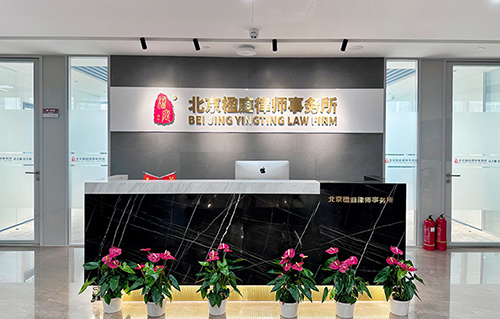
Beijing Yingtong Law Firm has focused on the protection of the rights and interests of private enterprises for many years. It has represented many corporate rights protection cases in the legal practice of rights protection in natural resources, mining, land, waters, territorial space, corporate equity, criminal defense, factory demolition, environmental protection shutdown, prohibition and vacation, etc., including large-scale real estate...








Want to acquire land for a strategic mineral project? Understand this new policy first, and the approval process will be twice as fast
Home page >> Business areas >> mineral resources
Article author:Yingting Lawyers Group | Update time:2026-05-27 | Reading times:108
[Posted on the official website] Mining companies, please note: Mining rights can now be used as collateral for loans! Officially implemented from June 15
Article 4: Want to acquire land for strategic mineral projects? Understand this new policy first, and the approval process will be twice as fast
Mr. Li has encountered a headache recently.
His company wants to invest in a phosphate rock project in the southwest region, which has good resource endowments and good market prospects. However, the project land could not be approved because there is some permanent basic farmland above the ore body.
Mr. Li has been running around for half a year, from the county to the city, and from the city to the province. The answer he got was: "The permanent basic farmland cannot be moved. Please find another place."
Mr. Li was helpless: "Do you just give up like this?"
Here’s the good news – Document No. 38 provides a new way out.
What does Document No. 38 say?
In 2026, the Ministry of Natural Resources and the State Forestry and Grassland Administration jointly issued the "Opinions on Coordinating and Promoting the Guarantee of Natural Resource Elements" (referred to as "Document No. 38" in the industry), which specifically targeted the issue of land use for strategic minerals and provided a major breakthrough.
The core content is in one sentence: open-pit mining of strategic minerals can temporarily use the land.
How is it specified?
First, temporary land use is allowed.
For open-pit mining of strategic minerals (oil, natural gas, rare earths, tungsten, coal, etc.), the land required for exploration and mining projects can be used as temporary land.
Second, the renewal period shall not exceed the term of the mining right.
The period of use of temporary land, after renewal, shall not exceed the period of the relevant mining rights. In other words, as long as your mining rights are still valid, the temporary land can be renewed.
Third, provincial-level approval of land use must be carried out first.
Before the construction project land is submitted for approval, if it is urgent to start construction due to public interests and it is really difficult to wait for formal approval, you can apply for advance land use. Moreover, Document No. 38 delegates this authority to the provincial level - the Ministry entrusts the provincial level to handle it, and the approval time limit is greatly reduced.
Fourth, there are new regulations on the overlap between farmland occupation and mineral rights.
Geothermal and mineral water development and utilization projects can be overlapped with permanent basic farmland. This means that some hot spring development and mineral water projects no longer have to go around permanent basic farmland.
What is the significance of this policy?
What does the issuance of Document No. 38 mean to mining companies?
First, it lowers the threshold for project implementation.
In the past, many good mining rights could not be landed at all because they involved basic farmland and cultivated land red lines. Document No. 38 provides a road for temporary land use, which is equivalent to opening a window for enterprises.
Secondly, the approval speed has been accelerated.
Provincial approval for land use will be implemented first, authority will be delegated and procedures will be simplified. In the past, you had to wait half a year or even a year for land use approval, but now it can be done in a few months.
Third, the existing mineral rights were revitalized.
The mineral rights of many companies have been unable to be put into production due to unresolved land use issues. Document No. 38 provides a way out, and these "sleeping" mining rights are expected to be activated.
Practical points: Although the policy is good, the operation must be careful
Document No. 38 has given policy dividends, but there are still many details that need to be paid attention to in its implementation:
Regarding the scope of temporary land use:You must be "open-pit mining strategic minerals" to enjoy this policy. Minerals mined underground are not applicable for the time being. Not all strategic minerals are acceptable - they must be varieties in the national strategic mineral catalog.
Regarding the land use approval process:Temporary land use must also undergo approval procedures in accordance with laws and regulations. The materials that need to be submitted include: temporary land use application, mining rights certificate, project approval documents, land reclamation plan, etc.
Regarding farmland protection:Temporary land use does not change land ownership, but farmland must be protected as required during use and must not cause permanent damage. After the project is completed, land reclamation needs to be carried out according to the land reclamation plan.
Regarding the connection with other policies:Document No. 38 is a new policy specifically aimed at strategic mineral land, but there are problems with the connection with existing laws and regulations such as the Land Management Law and the Farmland Protection Law. In specific operations, specific judgment may need to be combined with local regulations.
Yingting lawyer reminds
Document No. 38 is a good policy, but "good policy" does not mean "without risks." Enterprises should pay attention to the following points when utilizing this policy:
1. Confirm whether the mineral is a strategic mineral.Rare metals such as rare earths, tungsten, tin, antimony, and molybdenum, and bulk minerals such as phosphate ore, iron ore, and coal mines must be checked against the national catalog to confirm which ones are "strategic."
2. Temporary land ≠ permanent land occupation.Temporary land must be reclaimed after it expires. If the land is not reclaimed properly, you may face penalties.
3. If permanent basic farmland is involved, extra caution must be exercised.Although geothermal mineral water can overlap with basic farmland, other minerals that overlap with basic farmland are still sensitive areas. It is recommended to consult a professional lawyer and conduct a risk assessment before operating.
4. Local regulations may be stricter than national policies.Document No. 38 is a national-level policy, but each province may have supporting details or more stringent regulations. Be sure to fully understand local regulations before landing.
If you are planning a strategic mineral project or encounter problems with mining land, please contact Yingting Law Firm. We can help you with policy interpretation, feasibility analysis, and approval process design to help you seize policy dividends and avoid legal risks.
---
Source: Yingting Law Firm
Previous article:Can mining also lead to "land leveling"? Mine bosses should not step on the trap exposed by the Central Inspection Team
Next article:Green mines must be built! Failure to meet standards may affect the renewal of mining rights
Recommended reading
- Mineral rights mortgage financing: a new financing path for private mining companies
- Should the government’s investment promotion agreement be scrapped at the drop of a hat? The law has your back!
- Mining in the name of land leveling? The Central Inspection Team is exposed! Mine bosses, please don’t step into this trap.
- Mining license renewal delayed? The new regulations stipulate that a reply must be made within 15 days
- New opportunities for administrative reconsideration: increased litigation winning rate, smoother rights protection channels
- Mineral rights mortgage financing: a new financing path for private mining companies
- Should the government’s investment promotion agreement be scrapped at the drop of a hat? The law has your back!
- Mining in the name of land leveling? The Central Inspection Team is exposed! Mine bosses, please don’t step into this trap.
- Are companies being fined too much for small things? Court: The punishment is inappropriate and must be corrected!
- New opportunities for administrative reconsideration: increased litigation winning rate, smoother rights protection channels