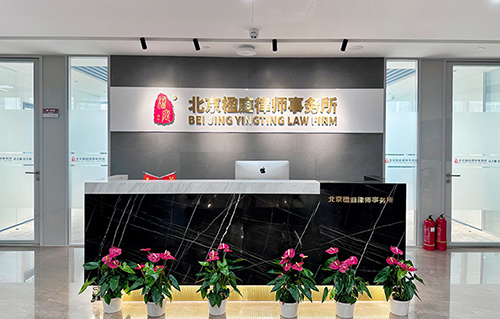
Beijing Yingtong Law Firm has focused on the protection of the rights and interests of private enterprises for many years. It has represented many corporate rights protection cases in the legal practice of rights protection in natural resources, mining, land, waters, territorial space, corporate equity, criminal defense, factory demolition, environmental protection shutdown, prohibition and vacation, etc., including large-scale real estate...








If you have a dispute over the loss caused by the company's suspension of production and operations and want to file a lawsuit, you must know these three key points.
Home page >> Business areas >> mineral resources
Article author:Yingting Lawyers Group | Update time:2021-08-12 | Reading times:844
Article introduction: After the decision and announcement of expropriation and demolition are made, the enterprise will face the suspension of production and business, and bear the losses caused thereby. What factors determine the amount of losses due to suspension of production and business? If legal means of litigation are adopted, what key points should be grasped to litigate?
1. Regarding the decision to suspend production and business, oral orders and written announcements have different effects, and the written form is more effective.
According to the 2011 Regulations on Compensation for State-owned Land Expropriation, a decision on expropriation must be issued before expropriation. According to the relevant provisions of the Land Management Law, when collective land is expropriated, a land acquisition announcement must be issued to confirm that the area is included in the scope of land acquisition and that land acquisition is about to be implemented. After the land acquisition announcement and decision are issued, government departments or government functional agencies may notify enterprises to suspend production and operations in two ways. Maybe I told you verbally that we can no longer build it, you can no longer do this, our place will be expropriated, and we will require you to stop production and business. You may also directly issue a written announcement requiring you to suspend production and business within a time limit. We need to distinguish between oral notification and written notification, because the effects produced by the two forms are different. Ying Ting believes that a formal written statement is much more effective as evidence. In addition, it is also necessary to recognize the current situation of losses due to production and business suspension, such as equipment being smashed, sealed, sealed, etc.

2. The performance of an enterprise before closure is directly related to the amount of losses after closure.
We have studied several specific cases regarding enterprise production efficiency and output changes before and after closure, and all of them reflect this objective situation. Below we give a few examples to illustrate this issue.
The first situation,Due to environmental reasons, some food companies have closed down within this range. At this time, because the output and demand for food ingredients are both decreasing, if you stop production and business, the considerable profit gains will be very small, so the output ratio generated by this area is very low.
The second situation,For some companies, it is the peak season of production, when corporate profits are very good, and the output ratio is in a very stable state. If it is closed in March, it has been the peak season since last year and the market is in a good state, then the losses caused at this time will be very large. And one thing is certain, it is the actual loss caused by the suspension of production and business due to the issuance of the expropriation decision.
The third situation,If the efficiency of this enterprise is very poor, it is a half-dead enterprise, or it is an enterprise that is constantly losing money, then even after the expropriation decision is issued, the losses caused by the suspension of production and operations will be very limited. So in this process, rigorous evaluation agencies must be involved.
The fourth situation,The Yingting Demolition Team learned that there are some exceptions in practice. Some companies need to invest for three or four consecutive years, and even do not produce output until the fifth or sixth year. In the third year, this kind of enterprise is still investing and has no profit. But at this time, the business was closed. Then, the losses from production and business suspension must be calculated by a complete assessment agency. Because originally, the company had to reach the estimated market profit four years later. However, in practice, it is difficult to determine the losses caused by suspension of production and business operations in this area.
3. If there is compulsory behavior, the losses suffered by the company's closure will be more serious and the harm will be greater.
If the government imposes compulsory actions during this process, companies that originally had high profits will be affected, resulting in huge losses and serious consequences. If there is no compulsory action and only a verbal notification or a written notification is given, the harm to the enterprise will be relatively small. In legal practice, courts also judge based on these three points. Regardless of whether the expropriation decision or expropriation announcement has any impact on the enterprise, how much impact it has, or the actual loss caused, whether it should be included in the scope of compensation, these have corresponding standards, which are also the basic standards for determination.

4. Losses caused by suspension of production and business include “necessity losses” and “profit losses”.
The "State Compensation Law" mainly divides losses from production and business suspension into two parts: "necessity losses" and "profit losses". Questions such as under what circumstances compensation can be made, under what circumstances more compensation is required, and when it depends on the circumstances.
1. Necessary losses
After referring to many cases, we found that in the vast majority of cases, if you want to obtain compensation for necessary losses, you can get support and actual compensation can be paid. What are the main types of necessary losses? Take "employee losses" as an example, which can include employee social security, workers' wages, etc. Because even if there is no production and operation, some workers will continue to work here. For example, watching the venue, guarding the door, simple maintenance of the equipment, etc. In addition, the water and electricity bills paid during this non-operational process are all "necessary losses". Moreover, in some places, the damage or depreciation of equipment caused by the shutdown period is also included in the scope of "necessary losses" compensation. If the validity period of my equipment is ten years, then the loss caused by stopping it for one year is different from that of stopping it for ten years. In other words, as the suspension of production and business extends, the effective usability of the equipment decreases, so compensation can also be obtained for this aspect. Necessary losses are fixed expenses.
2. Profit loss
In practice, the possibility of supporting "profit loss" is not particularly high, and even if it is supported, the extent is often limited. How can I get support? As we said before, to make a determination, the relevant evidence must be favorable and tendentious to you. In this case, the possibility of obtaining compensation for "profitable" losses is very high. But don’t expect this kind of “profitable” compensation to be particularly large. Profit losses are non-fixed losses, and the amount of compensation you can receive must be calculated based on the company's true loss amount. In addition, we must also pay attention to the issue of causation. If the causal relationship is very large and there is sufficient evidence to support it, you can prove your losses. It is conducive to obtaining compensation through litigation!

Yingting reminds you:
1. To obtain compensation for losses caused by suspension of production and business, first of all, the registered address must be consistent with the actual business address. It must have a business license, tax registration, and tax records. It must be a legal enterprise with actual business activities and a normal business enterprise. Landlords who rent out properties have no right to claim "compensation for losses caused by suspension of business." In practice, the expropriation and demolition party often pays compensation directly to the lessor. Therefore, merchants must assert their legitimate rights and interests. If the matter cannot be resolved through negotiation, do not delay and take legal measures to safeguard your rights and interests as soon as possible.
2. According to the relevant laws and regulations of our country, the expropriated and demolished persons can file an administrative review within 60 days of receiving the expropriation decision, expropriation compensation decision and other specific administrative actions, and file an administrative lawsuit within 6 months. If your house is forcibly demolished, you must file a lawsuit to defend your rights within 6 months of knowing the date of demolition. Some relocated households will petition, but petitioning is not a legal channel, and no matter how long the petition lasts, it does not constitute a reason to interrupt the time limit for prosecution. Many people who were demolished were delayed in filing petitions and missed the statute of limitations. Even if they sued, the court would not accept it. Even if you find a lawyer, there is nothing you can do to help you! In practice, no matter how you report the situation to your superiors, report it to local staff, or visit everywhere, you can't actually solve the problem. What you only waste is your precious time to protect your rights and interests! If you cannot reach an agreement with the expropriation and demolition party, please contact a professional expropriation and demolition lawyer as soon as possible to find a solution.
Previous article:Does this shop have to be demolished if it is deemed an illegal building? How much compensation can be given?
Next article:Which administrative agencies have the power to impose administrative penalties on enterprises?
Recommended reading
- Mineral rights mortgage financing: a new financing path for private mining companies
- Should the government’s investment promotion agreement be scrapped at the drop of a hat? The law has your back!
- Mining in the name of land leveling? The Central Inspection Team is exposed! Mine bosses, please don’t step into this trap.
- Mining license renewal delayed? The new regulations stipulate that a reply must be made within 15 days
- New opportunities for administrative reconsideration: increased litigation winning rate, smoother rights protection channels
- Mineral rights mortgage financing: a new financing path for private mining companies
- Should the government’s investment promotion agreement be scrapped at the drop of a hat? The law has your back!
- Mining in the name of land leveling? The Central Inspection Team is exposed! Mine bosses, please don’t step into this trap.
- Are companies being fined too much for small things? Court: The punishment is inappropriate and must be corrected!
- New opportunities for administrative reconsideration: increased litigation winning rate, smoother rights protection channels