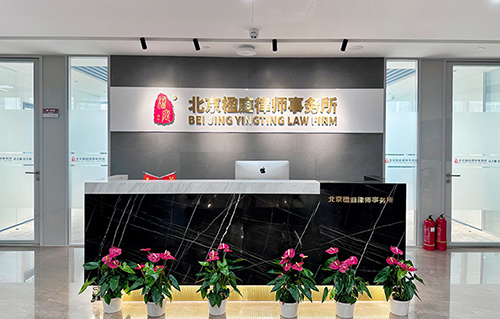
Beijing Yingtong Law Firm has focused on the protection of the rights and interests of private enterprises for many years. It has represented many corporate rights protection cases in the legal practice of rights protection in natural resources, mining, land, waters, territorial space, corporate equity, criminal defense, factory demolition, environmental protection shutdown, prohibition and vacation, etc., including large-scale real estate...








What should I do if a company is fined and shut down due to a pollutant discharge permit?
Home page >> Business areas >> mineral resources
Article author:Yingting Lawyers Group | Update time:2022-11-10 | Reading times:874
Introduction to the article: Today we will talk about the common reasons for environmental shutdowns during the case handling process, namely penalties or shutdowns due to "pollution permit" issues. What should a business owner do when faced with this situation?
First, what is a pollution discharge permit?
A pollutant discharge permit refers to a certificate issued by the environmental protection administrative department after a pollutant-discharging unit applies to the environmental protection administrative department, allowing the pollutant-discharging unit to discharge a certain amount of pollutants. my country's current pollution discharge permit system includes provisions on application, review, issuance, suspension, revocation, supervision and management, and penalties.
Second point, how important is a pollution discharge permit for a company?
According to the relevant provisions of the "Interim Provisions on the Management of Pollutant Discharge Licenses", pollutant-discharging units, that is, those enterprises, institutions and other production operators that are included in the classified management list of pollutant discharge licenses, must apply for a pollutant discharge license if they want to obtain legal business procedures. Otherwise, it is an illegal discharge of pollutants and illegal business operations, and you will face the risk of administrative penalties or business closure.

The third point: What are the common illegal situations related to "pollution discharge permit"?
1. Discharging pollutants without a license. That is to say, the pollutant-discharging enterprise has never obtained a pollutant discharge permit during the production and operation process. Fundamentally speaking, the company at this time has been operating illegally.
2. Application for change. The Yingting Demolition Group learned that during the validity period of the pollution discharge permit, if the basic information stated in the original copy such as name, registered address, legal representative or actual person in charge changes, or the licensing matters change, a new reconstruction and expansion project is implemented, the state or local implements new pollutant discharge standards and government-related documents, or an agreement is made with other enterprises to carry out regional substitution to achieve emission reductions, the pollutant discharge unit shall apply to the original issuance authority within the specified time to apply for a change in the discharge permit. Failure to apply for a change will also be classified as illegal discharge behavior.
3. The issue of renewal. If the pollutant discharge permit needs to continue to discharge pollutants after its validity expires, the pollutant discharge unit shall submit an extension application to the original issuing authority thirty days before the expiration of the validity period. Failure to apply and continue to discharge pollutants after the expiration date will be deemed as illegal and unlicensed pollutant discharge.
4. Violation of matters stated in the copy of the pollution discharge permit. If the scope of pollutant discharge specified in the pollutant discharge permit is exceeded, including the types of pollutants discharged and the permitted discharge amount; and the location and number of sewage outlets, discharge methods, discharge destinations, etc. Violation of these regulations is also an illegal discharge of pollutants.

Fourth point: If an enterprise is punished or shut down, how can it protect its legitimate rights and interests?
1. The prerequisite for administrative penalties must be that the enterprise has indeed committed illegal acts. That is to say, the administrative agency must inform the parties of the facts, reasons and basis for making administrative penalty decisions, and inform the parties of their rights to make statements and defend themselves in accordance with the law.
2. If the administrative agency believes that an enterprise has committed illegal acts, it must disclose the information to the society in accordance with the law and make it known to the public before making a penalty decision. This can play a role in supervising public opinion. If administrative agencies impose penalties without disclosing the enforcement to the public, the public will not be able to supervise it. Therefore, the Yingting Demolition Group believes that the supervision and inspection of administrative penalties and the penalty decisions made by administrative agencies are illegal or show fair administrative penalty decisions. In this regard, the administrative counterpart has the right to apply for cancellation, change or correction according to law.
3. In the absence of an illegal act being determined against the enterprise, the act of shutting down the enterprise is an illegal act. For example, if a company's "pollution discharge license" expires, the business owner applies to the relevant departments for renewal, but the administrative agency will not renew the license. Later, the company was shut down on the grounds that its license had expired and it did not meet legal production and operation conditions. In this case, business owners who are dissatisfied with the closure have the right to apply for administrative reconsideration or administrative litigation. and require the responsible party to compensate.

Yingting reminds you:
1. If your company is punished by relevant departments, shut down, or demolished. If you think the handling by the relevant departments is inappropriate, you can safeguard your legitimate rights and interests in accordance with Article 35 of the Administrative Penalty Law. That is, Article 35 of the Administrative Penalty Law stipulates that if the party concerned is dissatisfied with the administrative penalty decision made on the spot, he may apply for administrative reconsideration or file an administrative lawsuit in accordance with the law. If you encounter unclear legal issues, you can consult a professional lawyer to find a solution.
2. At the same time, please pay attention to the following legal deadlines to avoid missing the opportunity to protect your rights.
(1) Article 9 of the Administrative Reconsideration Law stipulates that if citizens, legal persons or other organizations believe that a specific administrative act infringes upon their legitimate rights and interests, they may file an application for administrative review within 60 days from the date of becoming aware of the specific administrative act; however, exceptions are made where the application period prescribed by law exceeds 60 days. If the statutory application deadline is delayed due to force majeure or other legitimate reasons, the application deadline will continue to be calculated from the date the obstacle is removed.

(2) Article 44 of the Administrative Litigation Law stipulates that for administrative cases within the scope of the People's Court, citizens, legal persons or other organizations may first apply to the administrative agency for reconsideration. If they are not satisfied with the reconsideration decision, they may then file a lawsuit with the People's Court; they may also file a lawsuit directly with the People's Court. Laws and regulations stipulate that one must first apply to the administrative agency for reconsideration. If one is dissatisfied with the reconsideration decision and then files a lawsuit in the People's Court, the provisions of laws and regulations shall apply. Article 45 stipulates that citizens, legal persons or other organizations that are dissatisfied with the review decision may file a lawsuit with the People's Court within 15 days from the date of receipt of the review decision. If the review authority fails to make a decision within the time limit, the applicant may file a lawsuit with the People's Court within fifteen days from the expiration of the review period. Except as otherwise provided by law. Article 46 stipulates that if a citizen, legal person or other organization directly files a lawsuit with the People's Court, it shall do so within six months from the date when it knows or should know that the administrative action has been taken. Except as otherwise provided by law. Except for cases filed over real estate, the People's Court will not accept cases filed more than five years from the date of administrative action.
3. The expropriated person and the demolished person may file an administrative review within 60 days of receiving the expropriation decision, expropriation compensation decision and other specific administrative actions, and file an administrative lawsuit within 6 months. If your house is forcibly demolished, you must file a lawsuit to defend your rights within 6 months of knowing the date of demolition. Some relocated households will petition, but petitioning is not a legal channel, and no matter how long the petition lasts, it does not constitute a reason to interrupt the time limit for prosecution. Many people who were demolished were delayed in filing petitions and missed the statute of limitations. Even if they sued, the court would not accept it. Even if you find a lawyer, there is nothing you can do to help you! In practice, no matter how you report the situation to your superiors, report it to local staff, or visit everywhere, you can't actually solve the problem. What you only waste is your precious time to protect your rights and interests! If you cannot reach an agreement with the expropriation and demolition party, please contact a professional expropriation and demolition lawyer as soon as possible to find a solution.
Previous article:After the company is demolished, how will the compensation be distributed?
Next article:What new inspections will be added to enterprises in environmental protection supervision in 2019?
Recommended reading
- Mineral rights mortgage financing: a new financing path for private mining companies
- Should the government’s investment promotion agreement be scrapped at the drop of a hat? The law has your back!
- Mining in the name of land leveling? The Central Inspection Team is exposed! Mine bosses, please don’t step into this trap.
- Mining license renewal delayed? The new regulations stipulate that a reply must be made within 15 days
- New opportunities for administrative reconsideration: increased litigation winning rate, smoother rights protection channels
- Mineral rights mortgage financing: a new financing path for private mining companies
- Should the government’s investment promotion agreement be scrapped at the drop of a hat? The law has your back!
- Mining in the name of land leveling? The Central Inspection Team is exposed! Mine bosses, please don’t step into this trap.
- Are companies being fined too much for small things? Court: The punishment is inappropriate and must be corrected!
- New opportunities for administrative reconsideration: increased litigation winning rate, smoother rights protection channels