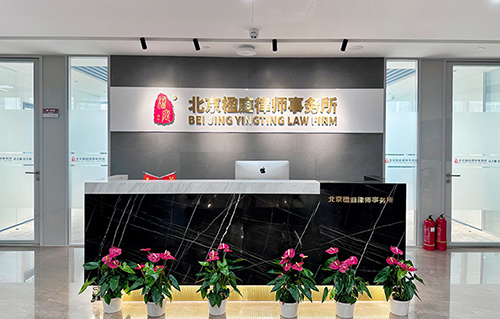
Beijing Yingtong Law Firm has focused on the protection of the rights and interests of private enterprises for many years. It has represented many corporate rights protection cases in the legal practice of rights protection in natural resources, mining, land, waters, territorial space, corporate equity, criminal defense, factory demolition, environmental protection shutdown, prohibition and vacation, etc., including large-scale real estate...








How can companies pay for environmental protection? The adjustment of the water source area led to the closure, and the court awarded 5.83 million yuan in compensation!
Home page >> Business areas >> environmental shutdown
Article author:Yingting Lawyers Group | Update time:2026-04-16 | Reading times:277
[Key points of the case]
The judgment logic of this case first established the principle of "protection of trust interests under the priority of public interest" and clarified the compensation liability of administrative agencies when enterprises are damaged due to adjustments in public interests. A mining company has obtained a mining license in accordance with the law and has been confirmed by the county administrative agency that it is not in a prohibited mining area. This administrative license constitutes a "basis of trust" in administrative law. When the administrative agency adjusts the scope of the protected area based on the need for water source protection, resulting in the company being unable to renew its mining rights, it essentially constitutes a change to the administrative license that has been in effect. Based on this, the court determined that when exercising administrative powers, administrative agencies must provide fair compensation to enterprises that have suffered special losses as a result. This not only maintains the credibility of administrative agencies, but also establishes the rule of law that "prioritizing public welfare does not mean free sacrifice of private interests."
In determining the specific amount of compensation, the court strictly defined the boundary between "actual losses" and "anticipated benefits" and established the adjudication rule that "actual losses are limited, and expected benefits are generally not included." In response to the company's claim, the court did not accept all claims. Instead, it recognized the direct property investment such as the mining rights price and mine construction investment costs as direct losses and included them in the scope of compensation; it did not support uncertain indirect losses such as future mining income. The final judgment was based on the actual investment value of more than 5.83 million yuan calculated in the evaluation report, which reflected the objectivity and fairness of judicial decisions in balancing the interests of all parties.
Another important highlight of this case is that the court chose "specific performance of the judgment" rather than "procedural judgment", practicing the judicial concept of substantively resolving disputes. The court did not simply rule that the administrative agency should "handle the case within a time limit," but directly clarified the specific amount of compensation and interest in the judgment, effectively preventing the administrative agency from delaying the decision for a long time or causing "procedural idleness." Lawyer Ying Ting believes that this kind of judgment directly ends administrative disputes, stabilizes administrative legal relations, and allows enterprises to receive compensation as soon as possible for conversion or resettlement. It fully reflects the judicial organs’ responsibility to serve the overall economic and social development and effectively protect the legitimate rights and interests of private enterprises, and achieves the organic unity of legal effects and social effects.
Case: Administrative compensation case brought by a mining company against the People's Government of a county in Guizhou Province - If the adjustment of the water source protection zone results in the inability to extend the mining rights or the need to withdraw, reasonable compensation should be provided in accordance with the law[Basic case facts]
A mining company obtained a mining license issued by the former Guizhou Provincial Department of Land and Resources, which is valid until December 2020. During the process of applying for the mining license involved in the case, the people's government of a certain county sent a letter to the former Guizhou Provincial Department of Land and Resources stating that the scope of the iron ore mining rights involved in the case was not within the prohibited mining and construction prohibited areas and complied with the provisions of Article 20 of the Mineral Resources Law of the People's Republic of China (2009 Amendment). On October 28, 2020, a branch of the Ecological Environment Bureau of a certain city informed a mining company that the scope of its mining area overlapped with a certain secondary lift-irrigated drinking water source protection zone after adjustment. A mining company was unable to renew its mining license because its mining area overlapped with a water source protection zone, and requested a county people's government to resolve the issue. In March 2021, at the request of a certain county people's government, a mining company actively performed the reclamation and greening work of the iron ore involved in the case and passed the inspection. Due to compensation matters, according to the arrangement of a certain county people's government, a certain county natural resources bureau commissioned an appraisal company in December of the same year to evaluate the iron ore mining rights and mine declared assets held by the mining company. The appraisal report stated that the appraisal value of the iron ore mining rights involved in the case was 5.637 million yuan, and the appraisal value of the mine's declared assets was 5.2779 million yuan. A mining company requested a county people's government to compensate 10.9149 million yuan, but the county people's government did not respond for a long time. A mining company then filed an administrative lawsuit with the People's Court, requesting a judgment from the People's Government of a certain county to provide compensation.
【Referee result】
The effective judgment of the People's Court held that the focus of the dispute in this case was whether the losses of a certain mining company were legitimate rights and interests and whether the people's government of a certain county should compensate it. If the adjustment of the water source protection area causes the mining area involved in the mining license to overlap with the water source protection area, and the administrative agency no longer applies for the extension of the mining license for the enterprise that has obtained the mining license, the mining right holder shall receive reasonable compensation for the loss of legitimate rights and interests. Regarding the scope, items and amount of legitimate rights and interests losses, factors such as the fact that the mining right holder has obtained an administrative license, the reasons why the administrative license is not renewed, and the specific content of the mining right holder’s legitimate rights and interests must be comprehensively considered. Actual losses are limited, and indirect losses such as expected income are generally not included. Therefore, the People's Court ruled that the People's Government of a certain county should compensate a mining company for its actual losses, including more than 5.83 million yuan in mining rights price, mine construction investment costs, and interest.
【Typical meaning】Strengthening the protection of the legitimate rights and interests of mining rights holders is an inevitable requirement for optimizing the business environment of the mineral market and promoting the sustainable development of the mineral industry. The newly revised "Mineral Resources Law of the People's Republic of China" was officially implemented on July 1, 2025. The law emphasizes the need to safeguard the rights and interests of state owners of mineral resources and the legitimate rights and interests of mining rights holders. It clearly stipulates that the state protects the exploration rights and mining rights obtained in accordance with the law from infringement, and maintains the production order and working order in mineral resource exploration and mining areas. In this case, based on the need for water source protection, the people's government of a certain county adjusted the scope of the water source protection zone to overlap with the mining area of a mining company's mining rights. As a result, a mining company's mining rights could not be renewed, and reasonable compensation should be given to the loss of its legitimate rights and interests. When hearing this type of administrative compensation cases, the people's courts should pay more attention to the substantive claims of the parties, focus on ascertaining the actual losses and causal relationships, determine the attribution of responsibility, clarify the compensation method and amount, and make as specific a performance judgment as possible when the time for judgment is ripe, so as to stabilize the administrative legal relationship as soon as possible, substantively resolve administrative disputes, reduce procedural idling, timely and effectively protect the legitimate rights and interests of private enterprises, and achieve the organic unity of the "three effects".
Recommended reading
- Mineral rights mortgage financing: a new financing path for private mining companies
- Should the government’s investment promotion agreement be scrapped at the drop of a hat? The law has your back!
- Mining in the name of land leveling? The Central Inspection Team is exposed! Mine bosses, please don’t step into this trap.
- Mining license renewal delayed? The new regulations stipulate that a reply must be made within 15 days
- New opportunities for administrative reconsideration: increased litigation winning rate, smoother rights protection channels
- Mineral rights mortgage financing: a new financing path for private mining companies
- Should the government’s investment promotion agreement be scrapped at the drop of a hat? The law has your back!
- Mining in the name of land leveling? The Central Inspection Team is exposed! Mine bosses, please don’t step into this trap.
- Are companies being fined too much for small things? Court: The punishment is inappropriate and must be corrected!
- New opportunities for administrative reconsideration: increased litigation winning rate, smoother rights protection channels