Law firm introduction More》

Beijing Yingtong Law Firm has focused on the protection of the rights and interests of private enterprises for many years. It has represented many corporate rights protection cases in the legal practice of rights protection in natural resources, mining, land, waters, territorial space, corporate equity, criminal defense, factory demolition, environmental protection shutdown, prohibition and vacation, etc., including large-scale real estate...
Law firm services
Law firm personnel More》








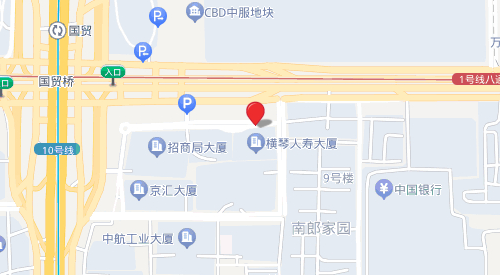
Visiting address More》
Regulations on Compensation for Store Demolition
Home page >> Business areas >> environmental shutdown
Article author:Yingting Lawyers Group | Update time:2022-11-10 | Reading times:1057
Below is an excerpt of the regulations on demolition compensation that lawyers from the Yingting Lawyers Group have compiled for you. Read it to your heart’s content!
Article 25 The demolisher shall provide compensation to the demolished persons in accordance with the provisions of these Measures. No compensation will be given for the demolition of illegal buildings and temporary buildings that have exceeded the approved period; for the demolition of temporary buildings that have not exceeded the approved period, compensation will be given based on the construction cost shared by the remaining use period.
Article 25 The demolisher shall provide compensation to the demolished persons in accordance with the provisions of these Measures. No compensation will be given for the demolition of illegal buildings and temporary buildings that have exceeded the approved period; for the demolition of temporary buildings that have not exceeded the approved period, compensation will be given based on the construction cost shared by the remaining use period.
Article 26 The ownership of houses within the scope of demolition shall be determined according to the house ownership certificate. If the demolished person cannot provide the house ownership certificate, it will be reviewed and confirmed by the real estate management department.
Article 27 Compensation for demolition can be either monetary compensation or house property rights exchange.
Article 28 In addition to monetary compensation for houses demolished in municipal construction projects and as stipulated in Paragraph 1 of Article 31 and Paragraph 2 of Article 33 of these Measures, the demolished persons may choose the method of compensation for demolition. The municipal construction projects in the preceding paragraph refer to construction projects such as roads, bridges, river regulation, flood control, drainage, sewage, sanitation facilities, public green spaces, squares, road lighting, and greening approved by the municipal and county (city) people's governments.
Article 29 The amount of monetary compensation shall be determined based on the location, use, construction area, newness, construction form and other factors of the demolished houses, and based on the real estate market appraisal price.
Article 30 The evaluation of urban house demolition compensation prices shall be carried out by an evaluation agency with real estate evaluation qualifications.
Article 31 If the property rights of a house are exchanged, the demolisher and the person being demolished shall calculate the compensation amount of the house to be demolished and the price of the house to be exchanged in accordance with the provisions of Article 29 of these Measures, and settle the price difference of the property rights exchange. If the attachments of non-public welfare houses are demolished, the property rights will not be exchanged, and the demolisher will provide monetary compensation. For houses that are subject to property rights exchange or that are purchased with monetary compensation by the demolished persons, the demolished persons will be exempted from paying house deed tax and property rights change transaction fees for the portion equivalent to the demolished house.
Article 32 If a building used for public welfare is demolished, the demolisher shall reconstruct it or provide monetary compensation in accordance with relevant laws, regulations and urban planning requirements.
Article 33 If a leased house is demolished and the lease relationship is terminated between the demolished person and the house lessee, or the demolished pair of house lessees are resettled, the demolished pair shall be compensated. If the demolished person and the house lessee cannot reach an agreement to terminate the lease relationship, the demolisher shall exchange the property rights of the house for the demolished person. The house whose property rights are exchanged shall be rented by the original lessee, and the demolished person shall enter into a new house lease contract with the original lessee.
Article 34 When a leased public residential house is demolished, the demolisher shall combine the compensation amount equivalent to the weight and price of the house to be demolished into a new part to compensate the house owner, and the remaining part shall be compensated to the house lessee. The lease relationship between the demolished person and the house lessee will be automatically terminated after the demolition compensation.
Article 35 The demolition party shall provide houses that meet quality and safety standards for demolition and resettlement.
Article 36 When demolishing a house with unclear property rights, the demolisher shall propose a compensation and resettlement plan and submit it to the house demolition management department for review and approval before the demolition is carried out. Before demolition, the demolisher shall submit relevant matters concerning the contract of the house to be demolished to the notary and the agency for evidence preservation.
Article 37 The demolition of houses with dian rights and mortgage rights shall be handled in accordance with relevant legal provisions.
Article 38 Within the scope of demolition, piped gas (including liquefied gas), cable TV, cable broadcasting and other facilities installed and used by the demolished person or the lessee of the house, as well as decoration projects for the house, as well as trees that have been cut down or transplanted, shall be compensated by the demolisher.
Article 39 The demolisher shall pay relocation subsidies to the demolished persons or house lessees. During the transition period, if the demolished person or the house lessee arranges his own residence, the demolisher shall pay the temporary resettlement subsidy; if the demolished person or the house lessee uses the turnover house provided by the demolisher, the demolisher shall not pay the temporary resettlement subsidy. The person being demolished or the lessee of the house shall bear the water, electricity and gas bills used by him/her during the transition period. The standards and settlement methods for relocation subsidies and temporary resettlement subsidies shall be formulated separately by the municipal and county (city) housing demolition management departments in conjunction with the price department.
Previous article:How will store demolition compensation be assessed?
Next article:Legal provisions on compensation for demolition of commercial buildings
Recommended reading
- Mineral rights mortgage financing: a new financing path for private mining companies
- Should the government’s investment promotion agreement be scrapped at the drop of a hat? The law has your back!
- Mining in the name of land leveling? The Central Inspection Team is exposed! Mine bosses, please don’t step into this trap.
- Mining license renewal delayed? The new regulations stipulate that a reply must be made within 15 days
- New opportunities for administrative reconsideration: increased litigation winning rate, smoother rights protection channels
- Mineral rights mortgage financing: a new financing path for private mining companies
- Should the government’s investment promotion agreement be scrapped at the drop of a hat? The law has your back!
- Mining in the name of land leveling? The Central Inspection Team is exposed! Mine bosses, please don’t step into this trap.
- Are companies being fined too much for small things? Court: The punishment is inappropriate and must be corrected!
- New opportunities for administrative reconsideration: increased litigation winning rate, smoother rights protection channels