Law firm introduction More》

Beijing Yingtong Law Firm has focused on the protection of the rights and interests of private enterprises for many years. It has represented many corporate rights protection cases in the legal practice of rights protection in natural resources, mining, land, waters, territorial space, corporate equity, criminal defense, factory demolition, environmental protection shutdown, prohibition and vacation, etc., including large-scale real estate...
Law firm services
Law firm personnel More》








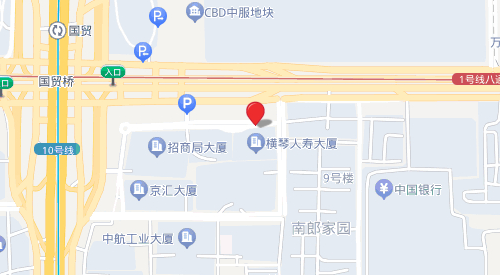
Visiting address More》
The Bureau of Housing and Urban-Rural Development’s “Penalty first and filing later” is illegal: Analysis on the administrative reconsideration of a real estate company
Home page >> Ying Ting Information >> Legal information
Article author:Yingting Lawyers Group | Update time:2026-04-24 | Reading times:157
When a real estate company applied for project completion acceptance registration, it was rejected by the local Housing and Urban-Rural Development Bureau because it exceeded the statutory 15-day application deadline on the grounds that "a fine must be paid first and then the registration is completed." This triggered a chain reaction: the owner was unable to apply for the real estate title certificate, the developer was unable to recover the final payment of the project, the conflict had been backlogged for many years, and many communications had not been substantively resolved. Is this seemingly “reasonable” administrative requirement really legal?
【Yingting Lawyer】When studying such cases, it was pointed out that administrative penalties and administrative filings are legally independent of each other, and there is no prerequisite relationship between who is responsible for whom. The Ministry of Housing and Urban-Rural Development’s "Measures for the Administration of Completion Acceptance and Registration of Housing Construction and Municipal Infrastructure Projects" clearly stipulates that if the registration is not filed within the time limit, the filing authority may order corrections within a time limit and impose a fine. However, this provision does not give the filing authority the power to "refuse to process the filing on the premise of payment of fines." If an administrative agency imposes conditions on its own outside of legal procedures, it is essentially illegally adding obligations and infringing on the legitimate rights and interests of business entities. In this case, the developer filed an administrative review under the guidance of the administrative review agency. The review agency directly pointed out at the mediation meeting that "punishment first, certification later" was unfounded in law. The Housing and Urban-Rural Development Bureau recognized it on the spot and promised to complete the filing within 15 days, thus resolving the backlog of problems for many years.
The typical value of this case is that it clearly delineates the boundaries of administrative filing power: "Nothing can be done without legal authorization" is not a slogan, but the bottom line that every administrative action must abide by. For companies encountering similar difficulties, when normal communication is ineffective and channels are blocked, administrative review is often a more efficient and direct legal remedy. In cases where administrative agencies set additional thresholds in violation of regulations, it is recommended to seek professional legal support as early as possible and fight for rights and interests through legal channels.
A real estate company is dissatisfied with the administrative reconsideration of the Housing and Urban-Rural Development Bureau of a city in Heilongjiang Province for failing to perform its statutory duty of project completion acceptance and filing - administrative agencies shall not create conditions or procedures at will when conducting administrative filings, and shall not diminish the rights of business entities or increase the obligations of business entities.
[Basic case facts]
Buildings 2, 3, and 31 of the first phase of the residential complex built by a real estate company of the applicant are commercial development projects and were purchased by a city’s shed renovation office as resettlement houses. The company obtained the completion report of the above-mentioned houses on November 29, 2019. On May 4, 2020, the applicant brought relevant materials to the Housing and Urban-Rural Development Bureau of a certain city of the respondent to apply for project completion acceptance record, but the application could not be processed due to a malfunction of the online approval platform. In November 2021, the applicant applied for registration again. The respondent believed that even if May 4, 2020 was used as the application time, the applicant's filing application had exceeded the legal application period, and an administrative penalty decision was required on the applicant. The filing could not be processed until a fine was paid, so the applicant's filing was not approved. As a result, the real estate certificate for the house involved in the case could not be obtained, and the applicant was unable to obtain the final payment of the project. The applicant and the house owner reported this problem to the petition department many times. After research and judgment, the petition matter met the conditions for handling through the administrative review procedure. After guidance, the applicant submitted an administrative review application to a certain municipal people's government in July 2024, requesting that the respondent be ordered to perform statutory duties.
【Reconsideration result】
The administrative review agency reviewed and determined that the focus of the case was whether the respondent's behavior of requiring the applicant to pay a fine first and then go through the registration process was legal. According to the provisions of the Ministry of Housing and Urban-Rural Development's "Measures for the Administration of the Recording of Completion Acceptance of Housing Construction and Municipal Infrastructure Projects", if the construction unit fails to complete the registration within 15 days from the date of the completion acceptance of the project, the filing authority has the right to order corrections within a time limit and impose a fine of not less than 200,000 yuan but not more than 500,000 yuan. In this case, although the applicant applied for filing beyond the statutory application period and was subject to administrative penalties according to law, the administrative penalty and the filing act were of different natures. The execution of the administrative penalty was not a prerequisite for filing. The respondent required him to pay a fine before filing, which was an illegal addition of filing conditions. At the administrative review mediation meeting, the administrative review agency explained to the respondent that its "punishment first, certification later" policy was unfounded in law. The respondent agreed and promised to handle the project completion acceptance record for the applicant within 15 days. The applicant withdrew the administrative review application on the spot, and the administrative review was terminated.
【Typical meaning】
"Nothing can be done without the authorization of the law" is the basic principle that administrative law enforcement agencies should abide by. Administrative agencies must strictly comply with the law when carrying out administrative filings. They cannot create conditions or procedures at will, and must not diminish the rights of business entities or increase the obligations of business entities. The Private Economy Promotion Law stipulates that administrative agencies should adhere to administration in accordance with the law, and when carrying out law enforcement activities, they should avoid or minimize the impact on the normal production and operation activities of private economic organizations. In this case, the administrative review agency focused on the focus of the dispute at the administrative review mediation meeting and clearly pointed out that the administrative agency's requirement to "punish first and then file" was essentially an illegal addition of filing conditions. It promoted relevant departments to correct illegal acts on their own through internal supervision of administrative review, and eliminated unnecessary restrictions on the completion acceptance and filing of enterprises. At the same time, the administrative reconsideration agency will include petition matters that meet the acceptance conditions into statutory review channels, so that this petition issue that has lasted for many years can be resolved in accordance with the law. It not only effectively solves the dilemma of enterprises, but also promotes the legalization of petition work and gives full play to the advantages of the administrative review system to solve petition problems. It provides replicable practical experience.
Previous article:Practical Q&A | How to optimize and adjust the permanent basic farmland protection red line
Recommended reading
- Mineral rights mortgage financing: a new financing path for private mining companies
- Should the government’s investment promotion agreement be scrapped at the drop of a hat? The law has your back!
- Mining in the name of land leveling? The Central Inspection Team is exposed! Mine bosses, please don’t step into this trap.
- Mining license renewal delayed? The new regulations stipulate that a reply must be made within 15 days
- New opportunities for administrative reconsideration: increased litigation winning rate, smoother rights protection channels
- Mineral rights mortgage financing: a new financing path for private mining companies
- Should the government’s investment promotion agreement be scrapped at the drop of a hat? The law has your back!
- Mining in the name of land leveling? The Central Inspection Team is exposed! Mine bosses, please don’t step into this trap.
- Are companies being fined too much for small things? Court: The punishment is inappropriate and must be corrected!
- New opportunities for administrative reconsideration: increased litigation winning rate, smoother rights protection channels