Law firm introduction More》
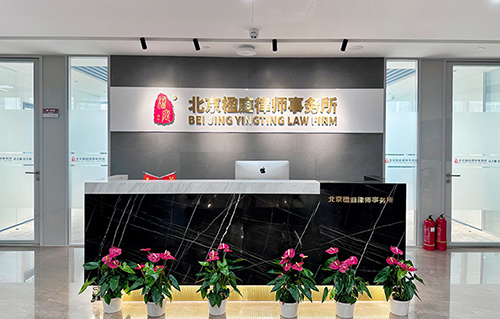
Beijing Yingtong Law Firm has focused on the protection of the rights and interests of private enterprises for many years. It has represented many corporate rights protection cases in the legal practice of rights protection in natural resources, mining, land, waters, territorial space, corporate equity, criminal defense, factory demolition, environmental protection shutdown, prohibition and vacation, etc., including large-scale real estate...
Law firm services
Law firm personnel More》








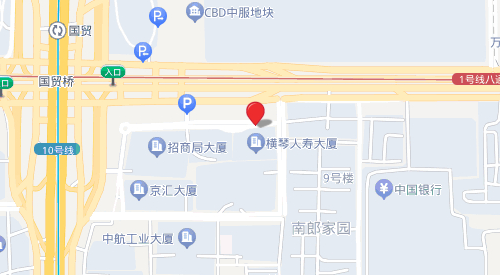
Visiting address More》
Are businesses subject to repeated inspections and arbitrary fines? The new plan of the State Council sets “red lines”
Home page >> Ying Ting Information >> Legal information
Article author:Yingting Lawyers Group | Update time:2026-04-27 | Reading times:232
The General Office of the State Council Guobanfa [2024] No. 54 issued the "Opinions on Strictly Regulating Enterprise-Related Administrative Inspections", which pointed out prominent problems such as the large number of administrative inspection items, high frequency, and high arbitrariness. The document clearly prohibits organizations without subject qualifications (such as third-party agencies, temporary workers) from conducting inspections, and requires inspection matters without legal basis to be sorted out and announced to the public to curb random inspections from the source.
The new regulations put forward "five strict prohibitions" and "eight no's": profit-seeking inspections, interfering with normal business operations, arbitrary punishment, issuing inspection targets, and disguised inspections; it is strictly prohibited to accept corporate gifts, deliberately require the presence of legal persons, and indiscriminate seizures, seizures, and freezing. Enterprises have the right to refuse illegal inspections and complain and report. A hierarchical and classified inspection system will be established before the end of June 2025, and the upper limit of annual inspection frequency will be announced.
Lawyer Ying Ting reminds,This opinion provides a clear basis for procedural protection for private enterprises. Enterprises should keep inspection notices, law enforcement certificate information and other evidence. For inspections that are excessively frequent, unfounded, or violate procedures, they can safeguard legitimate rights and interests through administrative reconsideration or administrative litigation. Procedural justice often determines the outcome of a case. When encountering "sports inspection" and "profit-driven law enforcement", the law is the best talisman.
Opinions of the General Office of the State Council on Strictly Regulating Enterprise-Related Administrative Inspections
State Council issued [2024] No. 54
The people's governments of all provinces, autonomous regions, and municipalities directly under the Central Government, all ministries and commissions of the State Council, and all agencies directly under the State Council:
Administrative inspection is an important way for administrative law enforcement entities to perform their administrative duties, and plays an important role in guiding and regulating the legal operations of enterprises and preventing and correcting illegal behaviors. In order to implement the Party Central Committee's decision-making and deployment on further standardizing enterprise-related law enforcement, strictly standardize enterprise-related administrative inspections, resolutely curb random inspections, and effectively reduce the burden on enterprises, with the approval of the State Council, the following opinions are hereby put forward.
1. Overall requirements
Adhere to the guidance of Xi Jinping Thought on Socialism with Chinese Characteristics for a New Era, thoroughly study and implement Xi Jinping Thought on the Rule of Law, fully implement the spirit of the 20th National Congress of the Communist Party of China and the Second and Third Plenary Sessions of the 20th Central Committee of the Communist Party of China, and address prominent issues such as the large number of administrative inspection items, high frequency, high arbitrariness, as well as arbitrary inspections, mobile inspections, and disguised inspections under various names, strengthen administration according to law, ensure that administrative inspections are legally based, strictly standardized, fair and civilized, accurate and efficient, and further optimize the business environment.
2. Clarify the subjects of administrative inspections and strictly prohibit organizations that do not have the subject qualifications from conducting administrative inspections
The subject conducting administrative inspection must have legal qualifications. Administrative agencies with administrative law enforcement power must implement administrative inspections within the scope of their statutory duties; organizations authorized by laws and regulations with the function of managing public affairs must implement administrative inspections within the scope of statutory authorization; entrusted organizations must implement administrative inspections within the scope of entrustment. Except for the above-mentioned entities, no organization or individual may conduct administrative inspections. The qualifications of administrative inspection subjects must be confirmed in accordance with the law and announced to the public. It is strictly prohibited for government coordination agencies to carry out administrative inspections under various names; it is strictly prohibited for inspection and testing agencies, scientific research institutes and other third parties to carry out administrative inspections; it is strictly prohibited to outsource administrative inspections to intermediary agencies; it is strictly prohibited for law enforcement auxiliary personnel, grid operators, temporary workers and other personnel who have not obtained law enforcement certificates to carry out administrative inspections.
3. Clean up and publish administrative inspection matters and curb random inspections from the source
Relevant competent departments must strictly implement the rights and responsibilities list system, sort out existing enterprise-related administrative inspection matters in this field and implement dynamic management. They must resolutely clean up those without legal basis, make timely adjustments if the legal basis changes, and cancel those that have no actual results. Administrative inspection matters must be announced to the public in accordance with the requirements of transparent rights and responsibilities and open use of rights, and accept the supervision of enterprises and society. Administrative inspection matters that have not been announced shall not be implemented.
4. Reasonably determine administrative inspection methods to minimize the frequency of enterprise inspections
Vigorously promote accurate inspections and prevent repeated inspections and multiple inspections. If administrative inspections can be combined and implemented, repeated inspections are not allowed; if administrative inspections can be jointly implemented, multiple inspections are not allowed; if administrative inspections can be supervised through written verification, information sharing, smart supervision, etc., on-site inspections are not allowed in enterprises. Strictly control the number of inspection personnel entering the enterprise, optimize "one comprehensive inspection", "double random, one open" spot inspections, and implement "one form for comprehensive inspection" of simple matters. Unless there is a statutory basis, enterprise inspection shall not be used as a prerequisite for administrative actions such as administrative licensing and administrative benefits. Before the end of June 2025, the relevant competent authorities of the State Council shall establish a hierarchical and classified inspection system in this field; the relevant competent authorities shall announce the upper limit of the annual frequency of administrative inspections carried out by the same administrative agency on the same enterprise. The frequency of administrative inspections shall be included in the annual statistical report on administrative law enforcement. If it is indeed necessary to implement administrative inspections based on clues such as complaints and reports, referrals, data monitoring, etc., or if administrative inspections are implemented at the request of an enterprise, they are not subject to the upper limit of frequency. However, if the frequency obviously exceeds the reasonable frequency, the administrative law enforcement supervision agency must promptly follow up and supervise. Explore the establishment of an economic impact assessment system for enterprise-related administrative law enforcement cases, and reduce the negative impact of administrative law enforcement, especially administrative inspections, on enterprises in accordance with the law.
5. Strict administrative inspection standards and procedures to prevent arbitrary inspections
The relevant competent departments of the State Council should sort out the existing administrative inspection standards in this field and publish them before the end of June 2025. If administrative inspection standards in different fields conflict with each other, the relevant competent departments must request the government at the same level or the higher-level administrative agency for coordination in accordance with regulations to avoid enterprises being at a loss as to what to do.
Before implementing administrative inspections, an inspection plan must be formulated and submitted to the person in charge of the administrative law enforcement entity for approval, and approval by the person in charge of the internal agency shall not be allowed. If the situation is urgent and needs to be implemented on the spot, it must be reported in time and the procedures must be completed. When conducting an administrative inspection, an administrative inspection notice must be issued. Accelerate the implementation of "scan QR code to enter the enterprise" and upload administrative inspection subjects, personnel, content, results and other data to the information system in real time. Law enforcement officers must take the initiative to show their law enforcement certificates, and it is strictly prohibited to use other certificates in place of law enforcement certificates to conduct administrative inspections; people's police must show their people's police certificates. Unless otherwise provided by law, the number of law enforcement officers shall not be less than two. When entering an enterprise for inspection, on-site inspection transcripts must be prepared, and audio and video records must be made if necessary. After the administrative inspection is completed, the enterprise must be informed of the results of the administrative inspection in a timely manner. Adhere to the principle of commensurate punishments, strictly implement the benchmark system of administrative discretion, and use more flexible law enforcement methods. Those who can be dealt with by reminding, informing, discouraging, etc. according to the law will not be punished or exempted from punishment based on the principle of inclusiveness and prudence. Cases with outstanding problems must be reported and exposed. The State Council's administrative law enforcement supervision agency will formulate unified basic format standards for administrative inspection documents by the end of April 2025 and announce them to the public. Enterprise-related administrative inspections are based on the principle of territorial jurisdiction. The relevant competent departments of the State Council must establish and improve off-site assistance mechanisms for administrative inspections by the end of December 2025, clarify relevant rules, and strictly prohibit off-site inspections in violation of regulations.
6. Strictly control special inspections and avoid “going through the motions” and sports inspections
For outstanding problems in a certain region or field, special inspections can be deployed in accordance with the law. Special inspections must meet the objective needs of supervision. If they are indeed required to be deployed after evaluation, the scope, content and time limit of the special inspections must be strictly controlled, and full coverage and indiscriminate inspections where "one person is sick and everyone takes medicine" must be resolutely put to an end. Special inspections must implement annual quantity control, draw up an inspection plan in advance, file it in accordance with regulations after approval by the government at or above the county level or the higher-level administrative agency that implements vertical management, and announce it to the public. If the inspection matters involve more than two departments, the relevant competent departments should jointly formulate an inspection plan to avoid multiple and repeated deployments. If there is a need to urgently deploy special inspections due to high potential risks and possible serious adverse consequences, the inspection plan must be modified in a timely manner and filed. Special inspections must be carried out in strict accordance with the standards and procedures of administrative inspections to ensure actual results and prevent "going through the motions".
7. Standardize administrative inspections and prevent profit-seeking and willful inspections
Enterprise-related administrative inspections must implement "five strict prohibitions" and "eight no-nos." Profit-seeking inspections are strictly prohibited. They are not allowed to accept any gifts, remuneration, or welfare benefits from the inspected enterprise. They are not allowed to participate in banquets, entertainment, tourism and other activities provided by the inspected enterprise. They are not allowed to pay consumer expenses or transfer inspection fees to the enterprise. Enterprises are not forced to accept services from designated intermediaries. It is strictly prohibited to interfere with the normal production and operation of the enterprise, and it is not allowed to deliberately require the legal representative to be present. It is strictly prohibited to arbitrarily punish enterprises, and shall not arbitrarily seal up, detain, freeze, or order to suspend production or business at any time. It is strictly prohibited to issue inspection indicators, and it is not allowed to link assessment and evaluation and budget project performance with the frequency of inspections and the amount of fines. Disguised inspections are strictly prohibited, and inspections in the name of observation, supervision, inspection, etc. are not allowed.
8. Consolidate standardized management responsibilities and strengthen law enforcement supervision of administrative inspections
Governments at all levels and relevant competent departments must conscientiously implement the "Opinions of the General Office of the CPC Central Committee and the General Office of the State Council on Strengthening the Construction of Administrative Law Enforcement Coordination and Supervision Work Systems", strictly implement various requirements, earnestly assume their responsibilities, and strengthen the standardized management of enterprise-related administrative inspections. Administrative law enforcement entities must uniformly publish matters related to administrative inspections that should be disclosed in accordance with the law on government websites, and implement administrative inspections in strict accordance with regulations. If an administrative inspection is carried out in violation of regulations, the enterprise has the right to refuse the inspection and the right to complain and report. Administrative law enforcement supervision agencies must conscientiously perform their supervisory duties, strengthen the training of administrative law enforcement personnel, effectively change the misconception of "responsibility-removing inspection" among administrative law enforcement personnel, innovate the methods of enterprise-related administrative inspection and supervision, promote the "supervision + service" model, and achieve normalized supervision. It is necessary to organically integrate various supervision methods to form an overall supervision force.
9. Strengthen digital technology empowerment to ensure accurate and efficient law enforcement supervision
The administrative law enforcement supervision agency of the State Council must speed up the construction of the national administrative law enforcement supervision information system, and relevant competent departments must actively coordinate to open up platforms and break down barriers. It is necessary to comprehensively, uniformly and timely collect relevant law enforcement data on administrative inspections, as well as administrative inspection matters, basis, standards, plans, frequency and other information filed or published in accordance with regulations, and supervise the entire process of administrative inspections. It is necessary to use artificial intelligence and big data for statistical analysis to quickly warn of multiple inspections, repeated inspections, high-frequency inspections and other behaviors, and to conduct timely supervision of common and high-incidence problems. It is necessary to collect the opinions and suggestions of enterprises on administrative inspections through the information system, pay attention to outstanding issues that enterprises and society have strongly expressed, and conduct key supervision on the acceptance and handling of enterprise complaints and reports by administrative law enforcement entities. It is necessary to establish and improve the information sharing mechanism for administrative law enforcement supervision and the 12345 government service convenience hotline, and at the same time give full play to the role of the Federation of Industry and Commerce and others in reporting clues to problems in enterprises.
10. Seriously pursue accountability and intensify the investigation and punishment of random inspections
Administrative law enforcement supervision agencies at all levels conduct inspections that do not have the qualifications of administrative law enforcement subjects, fail to conduct inspections in accordance with published administrative inspection matters and standards, fail to conduct inspections in accordance with prescribed procedures, deploy special inspections without authorization, conduct inspections in excess of the upper limit of the annual frequency of administrative inspections, and violate the "Five Strict Prohibitions" and "Eight Don'ts" If random inspections are required, they must be investigated and punished together and ordered to make corrections in a timely manner; the person in charge of the administrative law enforcement entity or the relevant responsible person shall be publicly interviewed; if there is a strong response to the enterprise and the negative impact on society, direct supervision and notification shall be made and exposed; those suspected of violating disciplines or duty-related crimes shall be transferred to the disciplinary inspection and supervision agencies in accordance with the law. At the same time, it is necessary to establish and improve mechanisms for accountability for administrative inspections and immunity from accountability for due diligence, and to detail relevant situations and procedures.
All regions and departments must conscientiously implement the decisions and arrangements of the Party Central Committee and the State Council. In accordance with the requirements of central coordination, provinces taking charge, and cities and counties taking charge of implementation, they must strengthen departmental coordination and cooperation, increase publicity and training, and vigorously promote work implementation. Standardize the management of enterprise-related administrative inspections as an important part of government supervision and administrative law enforcement supervision. It is necessary to prevent excessive inspections and law enforcement from disrupting enterprises, while ensuring that necessary inspections are carried out effectively, and timely summarizing experiences and practices, and reporting important situations and issues to the Ministry of Justice. As the administrative law enforcement supervision agency of the State Council, the Ministry of Justice must strengthen comprehensive coordination, guidance and supervision, track work progress, and promptly request instructions and reports on major matters.
general office of the state council
December 30, 2024
(This article is released to the public)
Article source | China Government Network
Recommended reading
- Mineral rights mortgage financing: a new financing path for private mining companies
- Should the government’s investment promotion agreement be scrapped at the drop of a hat? The law has your back!
- Mining in the name of land leveling? The Central Inspection Team is exposed! Mine bosses, please don’t step into this trap.
- Mining license renewal delayed? The new regulations stipulate that a reply must be made within 15 days
- New opportunities for administrative reconsideration: increased litigation winning rate, smoother rights protection channels
- Mineral rights mortgage financing: a new financing path for private mining companies
- Should the government’s investment promotion agreement be scrapped at the drop of a hat? The law has your back!
- Mining in the name of land leveling? The Central Inspection Team is exposed! Mine bosses, please don’t step into this trap.
- Are companies being fined too much for small things? Court: The punishment is inappropriate and must be corrected!
- New opportunities for administrative reconsideration: increased litigation winning rate, smoother rights protection channels