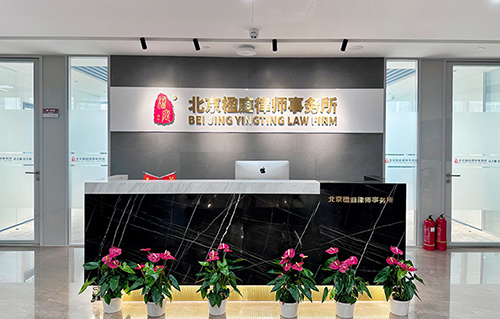
Beijing Yingtong Law Firm has focused on the protection of the rights and interests of private enterprises for many years. It has represented many corporate rights protection cases in the legal practice of rights protection in natural resources, mining, land, waters, territorial space, corporate equity, criminal defense, factory demolition, environmental protection shutdown, prohibition and vacation, etc., including large-scale real estate...








The company refuses to compensate for work-related injuries, but the Social Security Bureau refuses to accept it? The court ruled this way!
Home page >> Ying Ting Information >> Legal information
Article author:Yingting Lawyers Group | Update time:2026-05-06 | Reading times:214
[Key points of the case]
After the employee died on the job, the company failed to pay social security and refused to pay compensation. The family went through arbitration, litigation and enforcement, and only received a "final ruling." At this time, I applied to the Social Security Bureau for advance payment from the work-related injury insurance fund, but was rejected. The administrative counterpart is caught in the double dilemma of "corporate defaulters and funds not paying attention". The road to safeguarding rights seems to be at a dead end, and the procedural negligence makes it difficult for the deceased's family to rest in peace.
Lawyer Ying Ting pointed out that judicial practice should not let people get lost in the process. This case clarifies that the ruling to "terminate this execution procedure" can be regarded as a statutory "suspension of execution document". As long as it is proved that the enterprise refuses to pay and has exhausted all remedies, it will meet the conditions for advance payment. The Social Security Bureau refused on formal grounds, but in essence it was shirking responsibility. The court guides administrative agencies to self-correct through judicial suggestions, avoiding mechanical judgments and reflecting the warmth and efficiency of justice for the people.
In the end, the Social Security Bureau adopted the suggestion to pay the insurance premium in advance, and the family withdrew the lawsuit. This case established the rule that "the final ruling triggers advance payment" and opened up the last mile of implementation of work-related injury benefits. It warns administrative agencies that they must not be rigid and conservative in performing their duties, but should resolve disputes in a substantial way. For vulnerable groups, the law is not only a provision, but also the final safety net, which must be tightly woven.
Zhang Moumou v. Administrative Benefits Case of a Municipal Social Insurance Administration Bureau
Brief facts of the case
After Li Moumou joined a human resources service company, he died on the spot due to a traffic accident while working. After the application of Li's wife Zhang, a certain city's Human Resources and Social Security Bureau issued a decision to identify work-related injuries. Because the company failed to pay work-related injury insurance premiums for Li in accordance with the law, Zhang applied to a labor and personnel dispute arbitration committee for arbitration, requiring the company to pay work-related injury insurance benefits. After the arbitration committee made the ruling, the company failed to fulfill its obligations. Zhang Moumou and others applied to the court for compulsory execution, and the court issued an execution ruling to "terminate this execution procedure." Afterwards, Zhang Moumou submitted an advance payment application to a certain city's Social Insurance Administration Bureau, applying for advance payment of relevant benefits from the work-related injury insurance fund. A certain city's Social Insurance Bureau made a decision not to accept the advance payment application. Zhang Moumou was dissatisfied and filed an administrative lawsuit, requesting that the decision be revoked.
referee result
The existing materials are sufficient to prove that a human resources service company has refused to pay work-related injury insurance related expenses, and the close relatives of the injured employees have gone through work-related injury identification, arbitration, litigation, enforcement and other procedures, but have not yet received work-related injury insurance benefits. The situation meets the conditions for advance payment from the social insurance fund. The decision of a certain city's Social Insurance Administration Bureau to not grant advance payment lacks factual and legal basis. During the trial of the case, the People's Court made a self-correction suggestion to a certain city's Social Insurance Administration, which adopted the suggestion and paid Zhang Moumou's work-related injury insurance in advance. Zhang Moumou applied to the People's Court to withdraw the prosecution, and the court approved it in accordance with the law.
Typical meaning
In this case, the close relatives of the injured employees have not received work-related injury insurance benefits after multiple procedures. The People's Court's ruling to "terminate this execution procedure" can be regarded as the "suspension of execution document" in the provisions of Article 6, paragraph 2, item 3 of the "Interim Measures for Advance Payment of Social Insurance Funds", and meets the conditions for advance payment of social insurance funds. The People's Court did not simply make a judgment, but by making self-correction suggestions to the administrative agencies, it guided the administrative agencies to proactively correct improper administrative behaviors and promoted the substantive resolution of the administrative disputes involved in the case.
Recommended reading
- Mineral rights mortgage financing: a new financing path for private mining companies
- Should the government’s investment promotion agreement be scrapped at the drop of a hat? The law has your back!
- Mining in the name of land leveling? The Central Inspection Team is exposed! Mine bosses, please don’t step into this trap.
- Mining license renewal delayed? The new regulations stipulate that a reply must be made within 15 days
- New opportunities for administrative reconsideration: increased litigation winning rate, smoother rights protection channels
- Mineral rights mortgage financing: a new financing path for private mining companies
- Should the government’s investment promotion agreement be scrapped at the drop of a hat? The law has your back!
- Mining in the name of land leveling? The Central Inspection Team is exposed! Mine bosses, please don’t step into this trap.
- Are companies being fined too much for small things? Court: The punishment is inappropriate and must be corrected!
- New opportunities for administrative reconsideration: increased litigation winning rate, smoother rights protection channels