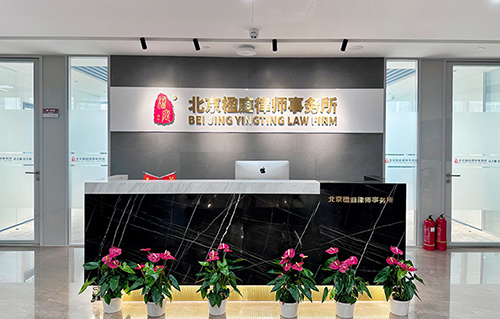
Beijing Yingtong Law Firm has focused on the protection of the rights and interests of private enterprises for many years. It has represented many corporate rights protection cases in the legal practice of rights protection in natural resources, mining, land, waters, territorial space, corporate equity, criminal defense, factory demolition, environmental protection shutdown, prohibition and vacation, etc., including large-scale real estate...








Ying Ting Sheng Case | Beijing Divorce Real Estate Dispute Case: More than 6 million yuan in house sales money was demanded? Xie Jindou, a lawyer from Yingting Law Firm, successfully dismissed all the
Home page >> Ying Ting Information >> Yingting news
Article author:Yingting Lawyers Group | Update time:2026-05-07 | Reading times:229
【Introduction】
The divorce agreement stipulated that "the property belongs to the woman" and also stated that "the child has the sole right to inherit." A few years later, the woman sold her house to replace it with a house in the school district, but her ex-husband sued and demanded that more than 6 million yuan of the sale proceeds be transferred into his daughter's name. What is the final outcome of this game about "ownership" and "inheritance"? Recently, the Beijing Haidian District People's Court made a first-instance judgment. Lawyer Xie Jindou of Beijing Yingtong Law Firm, as the defendant's attorney, successfully dismissed all the plaintiff's claims and helped the client to keep this huge amount of property.
[Review of the case: The dispute between "support" and "rights" caused by more than 6 million yuan in house sales]
In 2016, the plaintiff Wang (pseudonym) and the defendant Zhang (pseudonym) agreed to divorce. The two parties clearly agreed in the "Divorce Agreement" filed with the Civil Affairs Bureau that a property located in a certain district of Beijing is owned by the woman. They also agreed that "the child Wang XX (pseudonym) has the sole inheritance right."
In September 2023, Zhang sold the property and received a total of more than 6 million yuan in sales proceeds. In order to provide her daughter with better educational resources, Zhang subsequently purchased a school district house in a certain district.
However, ex-husband Wang believes that the property was originally intended to be left to his daughter, and Zhang was just the "custodian." After discovering that Zhang had sold his house, Wang filed a lawsuit with the People's Court of Haidian District, Beijing, requiring Zhang to transfer more than 6 million yuan in sales proceeds to his daughter's name.
[Lawyer Strategy: Go straight to the core of the agreement and clarify legal ownership]
After accepting the commission from the defendant Zhang, lawyer Xie Jindou from Beijing Yingting Law Firm quickly intervened and conducted an in-depth analysis of the case.
Lawyer Xie Jindou pointed out that the core dispute in this case lies in the legal characterization of "ownership" and "right to expect inheritance."
Establish the basis of ownership: The registered divorce agreement clearly states that the property "belongs to the woman", which means that Zhang is the full owner in the legal sense.
Distinguish between inheritance and ownership: "Children have the sole right to inherit" in the agreement is an arrangement for future inheritance matters. According to the Civil Code, inheritance begins at the death of the deceased. During Zhang's lifetime, his daughter only enjoyed the "right to expect inheritance" rather than the current "right to property". The plaintiff confused these two concepts and tried to limit the defendant's power of disposition during his lifetime.
Demonstrating the legitimacy of the punishment: Lawyer Xie Jindou emphasized that the defendant's behavior of selling the property and replacing the school district house was entirely to maximize the interests of the minor children and complied with the provisions of the Civil Code on the responsibilities of guardians.
[Court trial confrontation: Using the law as a basis to refute the fallacy of “escrow”]
During the trial, the plaintiff claimed that the filing agreement was not a true expression of intention and tried to use the previous draft agreement to overturn the filing agreement. Lawyer Xie Jindou argued hard, emphasizing that the Civil Affairs Bureau registration agreement has the highest legal effect, and the previous draft agreement became invalid due to failure to register and file it. As the owner, the defendant has the right to freely dispose of the property, and its behavior of replacing the property not only did not harm the interests of the children, but actually improved the children's educational environment.
【Winning result】
In April 2026, the People's Court of Haidian District, Beijing issued a first-instance judgment. The court fully adopted lawyer Xie Jindou's representation opinion and determined that the registered "Divorce Agreement" was legal and valid. The house involved in the case was owned by the defendant Zhang, and the third party (daughter) only had inheritance rights. The plaintiff's request that the defendant pay the sale proceeds to a third party is groundless in law.
The final judgment was that all the plaintiff Wang’s claims were dismissed. The defendant Zhang does not need to transfer more than 6 million yuan in house sales proceeds to his daughter's name.
[In-depth advice from lawyer Xie Jindou]
"This case is a typical dispute caused by misunderstanding of the terms of the divorce agreement. Many parties mistakenly believe that 'ownership belongs to one party, and the children have inheritance rights' is equivalent to 'reserving the property for the children,' thus limiting the rights of the owner. In fact, the law gives the owner full freedom of disposition."
Lawyer Xie Jindou specially reminds:
1) The wording of the agreement needs to be rigorous: If the parents’ true intention is to completely gift the property to their children, it should be clearly agreed that it “belongs to the children” or a conditional trust/custody clause should be established, rather than simply agreeing that “it is owned by one party and the children have the right to inherit.”
2) Respect legal facts: In marriage and family cases, "ownership" and "inheritance rights" must be strictly distinguished. Ownership is a present, exclusive right; inheritance is a future, conditional right. Before the conditions are met, the owner has the right to dispose of the property in accordance with the law.
3) The burden of proof must be clear: the parties concerned have the responsibility to provide evidence for their claims. The plaintiff's attempt to overturn the filing agreement using a previous draft was not supported by the court due to lack of sufficient evidence.
Winning this case not only saved the parties a huge amount of property, but also provided an important legal reference for similar family property disputes. Beijing Yingting Law Firm will continue to provide professional legal services to resolve disputes and protect the rights and interests of parties.
Attached is the judgment of this case (part)

Previous article:The company refuses to compensate for work-related injuries, but the Social Security Bureau refuses to accept it? The court ruled this way!
Recommended reading
- Mineral rights mortgage financing: a new financing path for private mining companies
- Should the government’s investment promotion agreement be scrapped at the drop of a hat? The law has your back!
- Mining in the name of land leveling? The Central Inspection Team is exposed! Mine bosses, please don’t step into this trap.
- Mining license renewal delayed? The new regulations stipulate that a reply must be made within 15 days
- New opportunities for administrative reconsideration: increased litigation winning rate, smoother rights protection channels
- Mineral rights mortgage financing: a new financing path for private mining companies
- Should the government’s investment promotion agreement be scrapped at the drop of a hat? The law has your back!
- Mining in the name of land leveling? The Central Inspection Team is exposed! Mine bosses, please don’t step into this trap.
- Are companies being fined too much for small things? Court: The punishment is inappropriate and must be corrected!
- New opportunities for administrative reconsideration: increased litigation winning rate, smoother rights protection channels