Law firm introduction More》

Beijing Yingtong Law Firm has focused on the protection of the rights and interests of private enterprises for many years. It has represented many corporate rights protection cases in the legal practice of rights protection in natural resources, mining, land, waters, territorial space, corporate equity, criminal defense, factory demolition, environmental protection shutdown, prohibition and vacation, etc., including large-scale real estate...
Law firm services
Law firm personnel More》








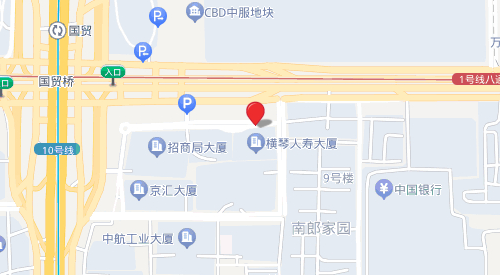
Visiting address More》
Disputes over compensation for rural land expropriation trigger thoughts
Home page >> Ying Ting Information >> Legal information
Article author:Yingting Lawyers Group | Update time:2019-04-26 | Reading times:508
1. The subject of the dispute
Acquisition of land from villagescompensationLooking at the main subject of the dispute case, rural land expropriationcompensationFinancial disputes can be mainly divided into the following categories:
1. Married women and their children request distributionLand acquisitioncompensationDue to the constraints of household registration and the influence of traditional marriage customs, village women who married urban workers and residents could not move their household registration to cities after marriage, and it was difficult for their children to obtain urban household registration. They stayed in the village, but due to various reasons did not enjoy differentiated responsibility fields, grain fields, homesteads and other economic rights, and were allocatedLand acquisitioncompensationWhen the funds are paid, the villagers' group funds will naturally not be distributed to them; more often, the married women also marry into the village and deliberately do not move their household registration, or even register their children's household registration in the village, and then request distribution on the grounds that the household registration is still in the village.Land acquisitioncompensationmoney.
2. The son-in-law who married into the village asked for distributionLand acquisitioncompensationDue to the influence of village customs, although the household registration is in the village, most of the village groups have passed the village rules and regulations formulated through "democratic" methods and refused to transfer the responsible land orLand acquisitioncompensationmoney allocated to them.
3. Requirements for distribution of extra children in the villageLand acquisitioncompensationIn many natural villages, the distribution plans and village rules and regulations formulated by villagers' groups do not allocate children born in the village on the grounds that they violate family planning.Land acquisitioncompensationHowever, the children who are born after birth require equal treatment and distribution with other villagers on the grounds that their household registration is in the village.Land acquisitioncompensationmoney.
4. Retired personnel from town-run enterprises and units return to the village and request distributionLand acquisitioncompensationPayment: Some town-run enterprises closed down and were dissolved, and no follow-up treatment was provided to the employees of the enterprises. These employees did not have retirement pensions, nor did they enjoy the low insurance premiums and social security fees for urban residents. After returning to the village (their household registration was also moved back to the village), they requested to enjoy the villagers' treatment distributionLand acquisitioncompensationThe villagers group disagreed.
5. Persons whose whole family has moved back to their hometown from other places and whose household registration has also been moved back to the village require allocation.Land acquisitioncompensationAfter these people moved back to their hometowns, the land they originally contracted was reclaimed by the village where they lived. When they moved back to live, the villagers group at their hometowns did not allocate them responsible land for farming. The land was requisitioned and distributed.Land acquisitioncompensationThe money was not given to them.
6. People whose families have moved to cities but whose household registration is still in the village request allocation.Land acquisitioncompensationAlthough some villagers still have their household registration in the village, they work or do business outside all year round, and their families have also moved to cities to live. They have not fulfilled any responsibilities in the village, and they have to be allocated by the villagers.Land acquisitioncompensationQian Shi comes back to demand his rights, which naturally arouses dissatisfaction among the villagers, and the villagers' group often disagrees with these people's requests.
7. Family members of newborns and deceased persons request allocationLand acquisitioncompensationWhen the baby is born and the villager dies, the land has been expropriated.Land acquisitionThe money was not distributed, and the village group argued that the land had been expropriated and distributed when the baby was born.Land acquisitionThe villagers refused to distribute the money at the time of payment because they were deceased.Land acquisitioncompensationmoney.
2. Focus of controversy
fromLand acquisitioncompensationLook at the categories of models,Land acquisitioncompensationlandcompensationfees, organization subsidy fees and ground materials and young cropscompensationfee. According to Article 26 of the "Regulations on the Implementation of the Land Management Law":
LandcompensationAll fees belong to the village collective economic organization; ground attachments and young cropscompensationThe fee belongs to all the attachments and green crops on the ground.
The organizational subsidies for land acquisition must be earmarked and must not be misappropriated for other purposes. If the people who need to be organized are organized by the village collective economic organization, the organization subsidy will be paid to the village collective economic organization, which will be managed and used by the village collective economic organization; if the people are organized by other units, the organization subsidy will be paid to the organizing unit; if unified organization is not required, the organization subsidy will be paid to the organized personnel individually or used to pay the insurance premiums of the organized personnel with the consent of the organized personnel.
At that time, the primary focus of the dispute was over land.compensationIt is caused by opinions on the distribution of fees and organization subsidies, especially whether individual villagers can allocate land under special circumstances.compensationThe phenomenon of fees and organizational subsidies is even more of a focus.
The main reason for the dispute is that now we haveLand acquisitionofcompensationOrganizational fees lack detailed rules for allocating them to farmers, causing conflicts between villages and groups.Land acquisitioncompensationThe distribution of organizational fees is confusing. For example, some are paid in full to each household, while some are partially retained in villages and groups, and the proportions of retained villages and groups are different; in terms of distribution time, some are distributed in one go, and some are distributed over several years; in terms of distribution targets, some are distributed per capita regardless of age, some are distributed according to the area of the expropriated land, and some are distributed according to whose land is acquired.compensationWhoever owns the organization fee will get all of it, and not a penny will be given if it is not collected. Even if the distribution is based on the permanent population, it still involves problems such as having land but not having household registration, and having household registration but not having land.
3. Treatment methods
1. Regarding the distribution requirements of married women and their childrenLand acquisitioncompensationPhenomenon of payment:
According to Article 30 of the "Law on the Protection of Women's Rights and Interests": "Villages distinguish responsibility fields, ration fields, etc., as well as homestead sites. Women and men enjoy equal rights, and women's legitimate rights and interests shall not be harmed. After women get married or divorced, their responsibility fields, ration fields, homestead sites, etc., shall be guaranteed." and implemented by Fujian Province. According to the relevant provisions of the Women's Security Law, if a village woman marries an urban man, her household registration has not been transferred, and she is unable to enjoy benefits such as low insurance premiums for urban residents, the village where she and her children live shall not cancel their household registration, and shall not reclaim their rations, responsibility fields, etc., and they shall still enjoy the rights and interests of social security for the villagers in the collectively owned land.
Therefore, married women and their children enjoy equal rights with other villagers. All the land acquired by the collective is expropriated.compensationpower, distribution to itLand acquisitioncompensationThe request for payment should be supported.
2. Regarding the distribution of requirements for sons-in-law who enter the villageLand acquisitioncompensationPhenomenon of payment:
As a product of villagers’ self-governance, the effectiveness of village rules and civil contracts must be conditional on not violating national laws and regulations and not damaging citizens’ basic rights. Otherwise, it will be an abuse of villagers’ self-governance power. Its rule that married men and their children cannot enjoy land contract and income rights violates the provisions of the Constitution, the Marriage Law and the Land Contract Law.
Therefore, the adopted son-in-law is the same as other villagers and has the right to participate inLand acquisitioncompensationdistribution of funds.
3. Regarding the distribution of extra children in the villageLand acquisitioncompensationPhenomenon of payment:
On the one hand, extra-birth children are born when their parents violate the family planning policy. After being punished by administrative agencies and reviewed, they are registered in the household and have villager status. However, this flaw in the identity of the villagers means that children born after birth should be different from other villagers as members of the village collective. Otherwise, it is assumed that land will be allocated to all extra-born children and ordinary villagers without distinction.Land acquisitioncompensationThe money has invisibly become an inspiration for "transcendent behavior".
On the other hand, whether extra-birth children enjoy village treatment and equal amounts of land allocation affects the direct interests of other members of the village collective. A balance should be found between the individual interests of villagers and the overall interests of other members of the village collective to protect the civil rights enjoyed by extra-birth children in accordance with the law.
Therefore, in the absence of clear laws and regulations, the exercise of the autonomy of village collective organizations should be respected. Whether and how much to distribute should be decided by the villagers in accordance with democratically agreed principles.
4. Distribution requirements for retirees from town-run enterprises and units who return to the village and those whose families move back to their hometowns from other places and whose household registration is also moved back to the village.Land acquisitioncompensationPhenomenon of payment:
Due to some special reasons, these "remigrated" people neither have retirement pensions nor enjoy the "subsistence allowance" and "social security" enjoyed by urban residents, and their basic livelihood is not guaranteed. According to the legislative purpose and spirit of the "Land Contract Law" and relevant policies and regulations, land is the basic means of livelihood and livelihood guarantee for villagers. According to the principle of household registration territoriality, they should enjoy the land contract rights and land in the village where their household registration is located.compensationDistribution rights serve as their basic means of subsistence and livelihood security.
Acquisition of land from villagescompensationLooking at the main subject of the dispute case, rural land expropriationcompensationFinancial disputes can be mainly divided into the following categories:
1. Married women and their children request distributionLand acquisitioncompensationDue to the constraints of household registration and the influence of traditional marriage customs, village women who married urban workers and residents could not move their household registration to cities after marriage, and it was difficult for their children to obtain urban household registration. They stayed in the village, but due to various reasons did not enjoy differentiated responsibility fields, grain fields, homesteads and other economic rights, and were allocatedLand acquisitioncompensationWhen the funds are paid, the villagers' group funds will naturally not be distributed to them; more often, the married women also marry into the village and deliberately do not move their household registration, or even register their children's household registration in the village, and then request distribution on the grounds that the household registration is still in the village.Land acquisitioncompensationmoney.
2. The son-in-law who married into the village asked for distributionLand acquisitioncompensationDue to the influence of village customs, although the household registration is in the village, most of the village groups have passed the village rules and regulations formulated through "democratic" methods and refused to transfer the responsible land orLand acquisitioncompensationmoney allocated to them.
3. Requirements for distribution of extra children in the villageLand acquisitioncompensationIn many natural villages, the distribution plans and village rules and regulations formulated by villagers' groups do not allocate children born in the village on the grounds that they violate family planning.Land acquisitioncompensationHowever, the children who are born after birth require equal treatment and distribution with other villagers on the grounds that their household registration is in the village.Land acquisitioncompensationmoney.
4. Retired personnel from town-run enterprises and units return to the village and request distributionLand acquisitioncompensationPayment: Some town-run enterprises closed down and were dissolved, and no follow-up treatment was provided to the employees of the enterprises. These employees did not have retirement pensions, nor did they enjoy the low insurance premiums and social security fees for urban residents. After returning to the village (their household registration was also moved back to the village), they requested to enjoy the villagers' treatment distributionLand acquisitioncompensationThe villagers group disagreed.
5. Persons whose whole family has moved back to their hometown from other places and whose household registration has also been moved back to the village require allocation.Land acquisitioncompensationAfter these people moved back to their hometowns, the land they originally contracted was reclaimed by the village where they lived. When they moved back to live, the villagers group at their hometowns did not allocate them responsible land for farming. The land was requisitioned and distributed.Land acquisitioncompensationThe money was not given to them.
6. People whose families have moved to cities but whose household registration is still in the village request allocation.Land acquisitioncompensationAlthough some villagers still have their household registration in the village, they work or do business outside all year round, and their families have also moved to cities to live. They have not fulfilled any responsibilities in the village, and they have to be allocated by the villagers.Land acquisitioncompensationQian Shi comes back to demand his rights, which naturally arouses dissatisfaction among the villagers, and the villagers' group often disagrees with these people's requests.
7. Family members of newborns and deceased persons request allocationLand acquisitioncompensationWhen the baby is born and the villager dies, the land has been expropriated.Land acquisitionThe money was not distributed, and the village group argued that the land had been expropriated and distributed when the baby was born.Land acquisitionThe villagers refused to distribute the money at the time of payment because they were deceased.Land acquisitioncompensationmoney.
2. Focus of controversy
fromLand acquisitioncompensationLook at the categories of models,Land acquisitioncompensationlandcompensationfees, organization subsidy fees and ground materials and young cropscompensationfee. According to Article 26 of the "Regulations on the Implementation of the Land Management Law":
LandcompensationAll fees belong to the village collective economic organization; ground attachments and young cropscompensationThe fee belongs to all the attachments and green crops on the ground.
The organizational subsidies for land acquisition must be earmarked and must not be misappropriated for other purposes. If the people who need to be organized are organized by the village collective economic organization, the organization subsidy will be paid to the village collective economic organization, which will be managed and used by the village collective economic organization; if the people are organized by other units, the organization subsidy will be paid to the organizing unit; if unified organization is not required, the organization subsidy will be paid to the organized personnel individually or used to pay the insurance premiums of the organized personnel with the consent of the organized personnel.
At that time, the primary focus of the dispute was over land.compensationIt is caused by opinions on the distribution of fees and organization subsidies, especially whether individual villagers can allocate land under special circumstances.compensationThe phenomenon of fees and organizational subsidies is even more of a focus.
The main reason for the dispute is that now we haveLand acquisitionofcompensationOrganizational fees lack detailed rules for allocating them to farmers, causing conflicts between villages and groups.Land acquisitioncompensationThe distribution of organizational fees is confusing. For example, some are paid in full to each household, while some are partially retained in villages and groups, and the proportions of retained villages and groups are different; in terms of distribution time, some are distributed in one go, and some are distributed over several years; in terms of distribution targets, some are distributed per capita regardless of age, some are distributed according to the area of the expropriated land, and some are distributed according to whose land is acquired.compensationWhoever owns the organization fee will get all of it, and not a penny will be given if it is not collected. Even if the distribution is based on the permanent population, it still involves problems such as having land but not having household registration, and having household registration but not having land.
3. Treatment methods
1. Regarding the distribution requirements of married women and their childrenLand acquisitioncompensationPhenomenon of payment:
According to Article 30 of the "Law on the Protection of Women's Rights and Interests": "Villages distinguish responsibility fields, ration fields, etc., as well as homestead sites. Women and men enjoy equal rights, and women's legitimate rights and interests shall not be harmed. After women get married or divorced, their responsibility fields, ration fields, homestead sites, etc., shall be guaranteed." and implemented by Fujian Province. According to the relevant provisions of the Women's Security Law, if a village woman marries an urban man, her household registration has not been transferred, and she is unable to enjoy benefits such as low insurance premiums for urban residents, the village where she and her children live shall not cancel their household registration, and shall not reclaim their rations, responsibility fields, etc., and they shall still enjoy the rights and interests of social security for the villagers in the collectively owned land.
Therefore, married women and their children enjoy equal rights with other villagers. All the land acquired by the collective is expropriated.compensationpower, distribution to itLand acquisitioncompensationThe request for payment should be supported.
2. Regarding the distribution of requirements for sons-in-law who enter the villageLand acquisitioncompensationPhenomenon of payment:
As a product of villagers’ self-governance, the effectiveness of village rules and civil contracts must be conditional on not violating national laws and regulations and not damaging citizens’ basic rights. Otherwise, it will be an abuse of villagers’ self-governance power. Its rule that married men and their children cannot enjoy land contract and income rights violates the provisions of the Constitution, the Marriage Law and the Land Contract Law.
Therefore, the adopted son-in-law is the same as other villagers and has the right to participate inLand acquisitioncompensationdistribution of funds.
3. Regarding the distribution of extra children in the villageLand acquisitioncompensationPhenomenon of payment:
On the one hand, extra-birth children are born when their parents violate the family planning policy. After being punished by administrative agencies and reviewed, they are registered in the household and have villager status. However, this flaw in the identity of the villagers means that children born after birth should be different from other villagers as members of the village collective. Otherwise, it is assumed that land will be allocated to all extra-born children and ordinary villagers without distinction.Land acquisitioncompensationThe money has invisibly become an inspiration for "transcendent behavior".
On the other hand, whether extra-birth children enjoy village treatment and equal amounts of land allocation affects the direct interests of other members of the village collective. A balance should be found between the individual interests of villagers and the overall interests of other members of the village collective to protect the civil rights enjoyed by extra-birth children in accordance with the law.
Therefore, in the absence of clear laws and regulations, the exercise of the autonomy of village collective organizations should be respected. Whether and how much to distribute should be decided by the villagers in accordance with democratically agreed principles.
4. Distribution requirements for retirees from town-run enterprises and units who return to the village and those whose families move back to their hometowns from other places and whose household registration is also moved back to the village.Land acquisitioncompensationPhenomenon of payment:
Due to some special reasons, these "remigrated" people neither have retirement pensions nor enjoy the "subsistence allowance" and "social security" enjoyed by urban residents, and their basic livelihood is not guaranteed. According to the legislative purpose and spirit of the "Land Contract Law" and relevant policies and regulations, land is the basic means of livelihood and livelihood guarantee for villagers. According to the principle of household registration territoriality, they should enjoy the land contract rights and land in the village where their household registration is located.compensationDistribution rights serve as their basic means of subsistence and livelihood security.
Next article:Nangang, Harbin City, Heilongjiang Province fully promotes land acquisition and demolition of two ditches
Recommended reading
- Mineral rights mortgage financing: a new financing path for private mining companies
- Should the government’s investment promotion agreement be scrapped at the drop of a hat? The law has your back!
- Mining in the name of land leveling? The Central Inspection Team is exposed! Mine bosses, please don’t step into this trap.
- Mining license renewal delayed? The new regulations stipulate that a reply must be made within 15 days
- New opportunities for administrative reconsideration: increased litigation winning rate, smoother rights protection channels
- Mineral rights mortgage financing: a new financing path for private mining companies
- Should the government’s investment promotion agreement be scrapped at the drop of a hat? The law has your back!
- Mining in the name of land leveling? The Central Inspection Team is exposed! Mine bosses, please don’t step into this trap.
- Are companies being fined too much for small things? Court: The punishment is inappropriate and must be corrected!
- New opportunities for administrative reconsideration: increased litigation winning rate, smoother rights protection channels