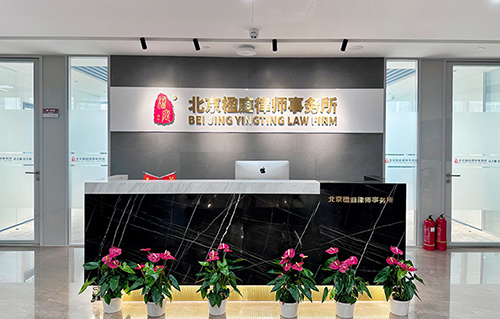
Beijing Yingtong Law Firm has focused on the protection of the rights and interests of private enterprises for many years. It has represented many corporate rights protection cases in the legal practice of rights protection in natural resources, mining, land, waters, territorial space, corporate equity, criminal defense, factory demolition, environmental protection shutdown, prohibition and vacation, etc., including large-scale real estate...








[Supreme Court Judgment] The provincial government’s land acquisition approval falls within the scope of administrative review
Home page >> Ying Ting Information >> Yingting news
Article author:Yingting Lawyers Group | Update time:2019-12-17 | Reading times:728
【Referee's Points】
Paragraph 2 of Article 30 of the "Administrative Reconsideration Law of the People's Republic of China" stipulates: "Based on the decisions of the State Council or the people's governments of provinces, autonomous regions and municipalities directly under the Central Government on the demarcation, adjustment or expropriation of administrative divisions, the administrative reconsideration decision of the people's government of the province, autonomous region or municipality confirming the ownership or use rights of land, mineral deposits, water flows, forests, mountains, grasslands, wasteland, tidal flats, sea areas and other natural resources shall be the final ruling." According to the Supreme People's Court (200 5) Xingta Zi No. 23 "Reply to Relevant Issues Concerning the Application of Paragraph 2 of Article 30 of the Administrative Reconsideration Law of the People's Republic of China". The final ruling stipulated in Paragraph 2 of Article 30 of the Administrative Reconsideration Law of the People's Republic of China shall include two situations: First, the decision of the State Council or the provincial people's government on the demarcation, adjustment or land acquisition of administrative divisions; second, the administrative reconsideration decision of the provincial people's government confirming the ownership or use rights of natural resources. The above provisions on "final ruling" confirm that the land expropriation decision made by the provincial people's government does not fall within the scope of administrative litigation, but it does not mean that it does not fall within the scope of administrative reconsideration. According to Article 14 of the Administrative Reconsideration Law of the People's Republic of China, "If you are dissatisfied with a specific administrative act of a department under the State Council or the people's government of a province, autonomous region, or municipality directly under the Central Government, you must apply to the department under the State Council or the people's government of a province, autonomous region, or municipality directly under the Central Government that made the specific administrative act. Administrative review. If you are dissatisfied with the administrative review decision, you may file an administrative lawsuit with the People's Court; you may also apply to the State Council for a ruling, and the State Council will make a final ruling in accordance with the provisions of this law. The land acquisition approval issued by the provincial government shall be within the scope of administrative review.
【Judgment Document】
Supreme People's Court of the People's Republic of China
Administrative ruling
(2018) Supreme Court Application No. 2985
Retrial applicant (plaintiff in the first instance, appellant in the second instance): Xue Longgui, male, born on April 1, 1964, Han nationality, living in Fangshan County, Shanxi Province.
Retrial applicant (plaintiff in the first instance, appellant in the second instance): Li Shichang, male, born on April 2, 1959, Han nationality, living in Fangshan County, Shanxi Province.
Commonly appointed agent:Lu Yongqiang, lawyer at Beijing Yingting Law Firm.
Commonly appointed agent:Dong Guonv, lawyer at Beijing Yingting Law Firm.
The respondent in the retrial (defendant in the first instance and appellee in the second instance): Shanxi Provincial People's Government, domicile: No. 101, Fudong Street, Taiyuan City, Shanxi Province.
Legal representative: Lou Yangsheng, governor of the People's Government of the province.
Plaintiff in the first instance: Xue Chenxia, male, born on February 10, 1975, Han nationality, living in Fangshan County, Shanxi Province.
Retrial applicants Xue Longgui and Li Shichang filed a lawsuit against the Shanxi Provincial People's Government for not accepting the administrative review decision. They were dissatisfied with the Shanxi Provincial Higher People's Court's (2017) Administrative Judgment No. 811 and applied to this court for retrial. This court formed a collegial panel consisting of Judge Tong Lei, Judge Yang Lichu, and Judge Zhang Zhigang in accordance with the law to review this case, and the review has now been concluded.
The Intermediate People's Court of Taiyuan City, Shanxi Province found in the first instance that in 2013, the Shanxi Provincial People's Government issued Jinzhengdizi [2013] No. 320 approval, agreeing that the Fangshan County People's Government would use 28.3271 hectares of collective construction land as the fifth batch of construction land in Fangshan County in 2012. The land contracted by Xue Longgui and three others was within the scope of the relevant project. In November 2016, Xue Longgui and others learned of the approval through information disclosure channels. In January 2017, they filed an administrative reconsideration application with the Shanxi Provincial People's Government, requesting the cancellation of the No. 320 "Reply on the Fifth Batch of Construction Land in Fangshan County in 2012." On January 11, 2017, the Shanxi Provincial People's Government issued the No. 4 "Decision on Not Accepting the Application for Administrative Review", which held that the relevant land expropriation decision was the final decision of the administrative agency and did not fall within the scope of administrative review. According to the provisions of Article 17 of the Administrative Reconsideration Law, it was decided not to accept the application. The decision was sent to Xue Longgui and three other people by express mail the next day.
The Intermediate People's Court of Taiyuan City, Shanxi Province held in the first instance that according to Article 30, Paragraph 2 of the Administrative Reconsideration Law of the People's Republic of China, "Based on the decisions of the State Council or the people's governments of provinces, autonomous regions, and municipalities directly under the Central Government on the demarcation and adjustment of administrative divisions or the expropriation of land, the people's governments of provinces, autonomous regions, and municipalities confirm that land, mineral deposits, water flows, forests, mountains, grasslands, "Administrative reconsideration decisions on the ownership or use rights of natural resources such as wasteland, tidal flats, and sea areas shall be the final ruling." The "Reply on the Fifth Batch of Construction Land in Fangshan County in 2002" (Jin Zheng Di Zi [2013] No. 320) involved in this case is a land expropriation decision made by the Shanxi Provincial People's Government, and it is an administrative act that is the final decision of the administrative agency. The administrative act of the final ruling does not fall within the scope of administrative review, and the Shanxi Provincial People's Government's decision not to accept the case complies with legal regulations. In accordance with the provisions of Article 69 of the Administrative Litigation Law of the People's Republic of China, the judgment was made to reject the lawsuit claims of Xue Longgui, Li Shichang, and Xue Chenxia.
Xue Longgui and Li Shichang were dissatisfied with the first-instance judgment and appealed to the Shanxi Provincial Higher People's Court.
The facts found by the Shanxi Provincial Higher People's Court in the second instance were consistent with those of the first instance court.
The Shanxi Provincial Higher People's Court held in the second instance that the "Reply on the Fifth Batch of Construction Land in Fangshan County in 2012" issued by the Shanxi Provincial People's Government (Jin Zheng Di Zi [2013] No. 320) was an administrative act that was the final decision of the administrative agency. The administrative act of this final ruling does not fall within the scope of administrative review, and the decision not to accept the administrative review made by the Shanxi Provincial People's Government complies with legal regulations. The first-instance judgment found the facts clearly and applied the law correctly, and should be upheld. The appeals of Xue Longgui and Li Shichang cannot be established and will not be supported. In accordance with the provisions of Article 89, Paragraph 1, Item 1, of the Administrative Procedure Law of the People's Republic of China, the appeal was dismissed and the original judgment was upheld.
Xue Longgui and Li Shichang were dissatisfied with the first and second instance judgments and applied to this court for a retrial, claiming: 1. The first and second instance courts made mistakes in determining the facts. The "Supreme People's Court's Reply to Issues Concerning the Application of Paragraph 2 of Article 30 of the Administrative Reconsideration Law of the People's Republic of China" clearly stipulates that the final ruling stipulated in Paragraph 2 of Article 30 of the "Administrative Reconsideration Law of the People's Republic of China" shall include two situations: First, the decision of the State Council or the provincial people's government on the demarcation, adjustment or land acquisition of administrative divisions; second, the administrative reconsideration decision of the provincial people's government confirming the ownership or use rights of natural resources. According to the provisions of the above-mentioned laws and judicial interpretations, if citizens, legal persons or other organizations are dissatisfied with the land expropriation decision made by the people's government of a province, autonomous region or municipality directly under the Central Government and apply for administrative reconsideration, the reconsideration authority shall accept the application in accordance with the law, and the subsequent administrative reconsideration decision shall be considered the final ruling. However, the respondent did not make a formal administrative review decision on the applicant's application for administrative review, but directly decided not to accept it, without forming a final ruling. 2. The court of second instance applied the law incorrectly. According to Article 30 of the Administrative Reconsideration Law, it can be seen that the applicant's application to the respondent for administrative review of the "Reply on the Fifth Batch of Construction Land in Fangshan County in 2012" (Jin Zheng Di Zi [2013] No. 320) complies with legal regulations. The court of second instance mistakenly identified the Reply as the final ruling and thus rejected the applicant's claim. This was an error in applicable law and should be corrected in accordance with the law. 3. The Supreme People’s Court’s (2017) Supreme Court Administrative Ruling No. 61 clearly stated in “This Court’s Opinion”: “If the review authority fails to conduct a substantive review of the land expropriation decision, the administrative decision will be procedurally rejected on the grounds that the review application does not meet the statutory acceptance conditions. Reconsideration applications and various forms of inaction by the review authorities are not final adjudication actions stipulated in Article 30, Paragraph 2, of the Administrative Reconsideration Law of the People's Republic of China, and are within the scope of the administrative litigation of the People's Court. "Request: Revoke the first and second instance administrative judgments and retry the case.
After review, this court held that Paragraph 2 of Article 30 of the "Administrative Reconsideration Law of the People's Republic of China" stipulates: "Based on the decisions of the State Council or the people's governments of provinces, autonomous regions and municipalities directly under the Central Government on the demarcation, adjustment or expropriation of administrative divisions, the administrative reconsideration decision of the people's government of the province, autonomous region or municipality confirming the ownership or use rights of land, mineral deposits, water flows, forests, mountains, grasslands, wasteland, tidal flats, sea areas and other natural resources shall be the final ruling." According to the Supreme People's Court. (2005) Xingta Zi No. 23 "Reply to Relevant Questions Regarding the Application of Article 30, Paragraph 2 of the Administrative Reconsideration Law of the People's Republic of China", the final ruling stipulated in Paragraph 2 of Article 30 of the Administrative Reconsideration Law of the People's Republic of China shall include two situations: first, the decision of the State Council or the provincial people's government on the demarcation, adjustment or land acquisition of administrative divisions; second, the administrative reconsideration decision of the provincial people's government confirming the ownership or use rights of natural resources. The above provisions on "final ruling" confirm that the land expropriation decision made by the provincial people's government does not fall within the scope of administrative litigation, but it does not mean that it does not fall within the scope of administrative reconsideration. According to Article 14 of the "Administrative Reconsideration Law of the People's Republic of China", "Anyone who is dissatisfied with a specific administrative act of a department under the State Council or the people's government of a province, autonomous region or municipality directly under the Central Government shall apply for administrative reconsideration to the department under the State Council or the people's government of a province, autonomous region or municipality directly under the Central Government that made the specific administrative act. Administrative review decisions If you are dissatisfied, you may file an administrative lawsuit with the People's Court; you may also apply to the State Council for a ruling, and the State Council will make a final ruling in accordance with the provisions of this Law. "The administrative review application submitted by the applicant for retrial is the land acquisition approval issued by the respondent Shanxi Provincial People's Government, and it should be within the scope of administrative review. In its decision not to accept the administrative review application that was the subject of this case, the Shanxi Provincial People's Government interpreted the provisions of Article 30, Paragraph 2 of the "Administrative Review Law of the People's Republic of China" to mean that the land acquisition approval it issued did not fall within the scope of administrative review, and it was indeed inappropriate to decide not to accept the review application. The first and second instance judgments also determined that the land acquisition approval involved in the case did not fall within the scope of administrative review, and that the application of the law was wrong and should be corrected in accordance with the law.
In summary, Xue Longgui and Li Shichang’s retrial applications comply with the circumstances stipulated in Article 91 of the Administrative Procedure Law of the People’s Republic of China. According to the provisions of Paragraph 2 of Article 92 of the Administrative Litigation Law of the People's Republic of China and Paragraph 2 of Article 118 of the Interpretation of the Supreme People's Court on the Application of the Administrative Litigation Law of the People's Republic of China, the ruling is as follows:
1. Order Shanxi Provincial Higher People’s Court to retry this case;
2. During the retrial, the execution of the original judgment shall be suspended.
Judge Tonglei
Judge Yang Lichu
Judge Zhang Zhigang
May 31, 2018
Judge Assistant Xu Xiaoyu
Secretary Guo Kai
Previous article:Ying Ting won the case. Due to the expropriation of houses for highway construction, the plaintiff requested resettlement of his homestead.
Next article:[Supreme Court Judgment] Understanding and grasping the principle of “one household, one house”
Recommended reading
- Mineral rights mortgage financing: a new financing path for private mining companies
- Should the government’s investment promotion agreement be scrapped at the drop of a hat? The law has your back!
- Mining in the name of land leveling? The Central Inspection Team is exposed! Mine bosses, please don’t step into this trap.
- Mining license renewal delayed? The new regulations stipulate that a reply must be made within 15 days
- New opportunities for administrative reconsideration: increased litigation winning rate, smoother rights protection channels
- Mineral rights mortgage financing: a new financing path for private mining companies
- Should the government’s investment promotion agreement be scrapped at the drop of a hat? The law has your back!
- Mining in the name of land leveling? The Central Inspection Team is exposed! Mine bosses, please don’t step into this trap.
- Are companies being fined too much for small things? Court: The punishment is inappropriate and must be corrected!
- New opportunities for administrative reconsideration: increased litigation winning rate, smoother rights protection channels