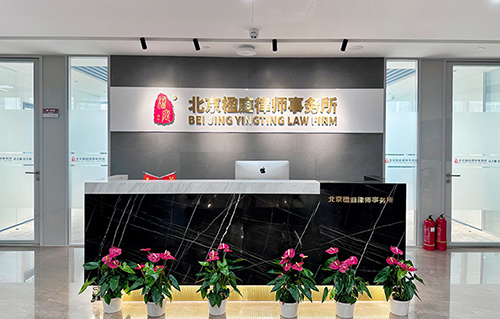
Beijing Yingtong Law Firm has focused on the protection of the rights and interests of private enterprises for many years. It has represented many corporate rights protection cases in the legal practice of rights protection in natural resources, mining, land, waters, territorial space, corporate equity, criminal defense, factory demolition, environmental protection shutdown, prohibition and vacation, etc., including large-scale real estate...








[Supreme Court Judgment] Understanding and grasping the principle of “one household, one house”
Home page >> Ying Ting Information >> Yingting news
Article author:Yingting Lawyers Group | Update time:2019-12-17 | Reading times:415
Rural homestead use rights refer to farmers’ rights to build residences and ancillary facilities and to occupy and use them. As one of the types of usufructuary rights stipulated in the Property Rights Law, this right is an important right for farmers to survive. Paragraph 1 of Article 62 of the "Land Management Law of the People's Republic of China" stipulates that each rural villager household can only own one homestead, and the area of its homestead must not exceed the standards stipulated by the province, autonomous region, or municipality directly under the Central Government. It can be seen from this regulation that a rural family can only own one homestead, but cannot own two or more homesteads. The purpose of this legislation is to not only protect the residential rights of farmers and prevent farmers from having no fixed place or even nowhere to live, but also to prevent one family from owning multiple homesteads, causing land waste and reducing land use efficiency. But at the same time, it cannot be concluded from this regulation that a family must own an independent homestead. When judging whether a family should own an independent homestead, it should be examined whether the family has a place to live and whether it has living difficulties. As long as the living conditions are met, two or more families living together on one homestead is consistent with the spirit of the law..
Original text of the judgment document
Supreme People's Court of the People's Republic of China
Administrative ruling
(2016) Supreme Court Application No. 1994
Retrial applicant (plaintiff in the first instance, appellant in the second instance): Li Liangyuan, male, born on February 12, 1957, Han nationality, living in Lianyuan City, Hunan Province.
Retrial applicant (plaintiff in the first instance, appellant in the second instance): Wu Xuchu, female, born on April 20, 1936, Han nationality, with the same address as above, the mother of Li Liangyuan.
The litigation attorneys jointly appointed by the above two retrial applicants are:Wang Qingfeng, lawyer at Beijing Yingting Law Firm.
The litigation attorneys jointly appointed by the above two retrial applicants are:Deng Hongxin, lawyer at Beijing Yingting Law Firm.
Respondent in the retrial (defendant in the first instance and appellee in the second instance): People's Government of Lianyuan City, Hunan Province. Residence: Renmin Road, Lantian Office, Lianyuan City, Hunan Province.
Legal representative: Liu Jie, Mayor of the People's Government of Lianyuan City, Hunan Province.
Authorized litigation agent: Cai Wenyou, staff member of the People's Government of Lianyuan City, Hunan Province.
Authorized litigation attorney: Li Xiong, Chief of the Regulations Section of the Land and Resources Bureau of Lianyuan City, Hunan Province.
The retrial applicants Li Liangyuan and Wu Xuchu filed a lawsuit against the respondent Lianyuan Municipal People's Government of Hunan Province (hereinafter referred to as the Lianyuan Municipal Government) in the demolition administration case. They were dissatisfied with the Hunan Provincial Higher People's Court's (2015) Xianggao Faxingzhongzi No. 313 Administrative Judgment and applied to this court for retrial. This court formed a collegial panel consisting of Judge Liang Fengyun, Judge Wang Haifeng, and Judge Luo Xia in accordance with the law, and reviewed this case. The review has now ended.
The Intermediate People's Court of Loudi City, Hunan Province found in the first instance that the Anhua (Meicheng) to Shaoyang Expressway starts from Meicheng Town, Anhua County, Yiyang City, connects to the proposed Chang (De) An (Hua) Expressway, and ends at Zaimu Mountain in Shaoyang County, connecting with Shanghai and Rui. The expressway is connected to the Shao (Yang) Yong (Prefecture) Expressway, with a total length of 130.8 kilometers. The main line in the Lianyuan section is 59.66 kilometers long, and the connecting line is 20.06 kilometers long. The total length is 79.72 kilometers. The Anhua (Meicheng) to Shaoyang Expressway is a section of the Erguang Expressway planned by the national expressway network and an important part of the five vertical and seven horizontal expressway network planned by Hunan Province. On August 20, 2008, the Bureau of Land and Resources of Lianyuan City, Hunan Province issued a "Land Acquisition Notice" to the village groups where Li Liangyuan and Wu Xuchu were located. On June 24, 2009, the Hunan Provincial People's Government issued (2009) Zhengguozi No. 623 "Agricultural Land Conversion and Land Acquisition Approval Form", which approved In 84 administrative villages, highway bureaus, and Baima Reservoir in 8 towns, including Shijing Township, Louxing District, Fukou Town, Baima Town, Dutoutang Town, Longtang Township, Meijiang Town, Qiaotouhe Town, and Shimashan Town, Lianyuan City, 452.2286 hectares of land were acquired for the construction of the Loudi section of the Anhua (Meicheng) to Shaoyang section of the expressway. On September 20, 2009, the Lianyuan Municipal Government issued the "Land Acquisition Announcement" No. 9 of Lian Zheng Tugong [2009] in accordance with the "Agricultural Land Conversion and Land Acquisition Approval Form" approved by the Hunan Provincial People's Government. The announcement specified the location, land ownership, land type, area, land acquisition and demolition of the acquired land.Compensation standard, the time, place and other matters of compensation registration. On October 15, 2009, the Lianyuan Municipal Government issued the Land Acquisition Plan No. 10 [2009] of Lianyuan City.Demolition compensationResettlement Plan Announcement", the announcement has been confirmedLand acquisition compensationThe standards are strictly implemented in accordance with the provisions of Xiangzhengbanfa [2005] No. 47, Xiangzhengbanhan [2008] No. 159, Xiangzhengban Mingdian [2009] No. 100, Lou Zhengfa [2003] No. 29, Lou Zhengfa [2008] No. 3, and Lou Zhengfa [2009] No. 5; The compensation standards for young crops are strictly implemented in accordance with the provisions of Lou Zhengfa [2003] No. 29; the compensation standards for ground attachments and buildings (structures) are strictly implemented in accordance with the provisions of Lou Zhengfa [2003] No. 29, Lou Zhengfa [2008] No. 3 and Lou Zhengfa [2009] No. 5; HousesDemolition and resettlementThe standards are implemented in accordance with the provisions of Lou Zhengfa [2008] No. 3 and Lou Zhengfa [2009] No. 5 and the minutes of the 10th Commander's Office meeting of the Loudi Expressway Construction Headquarters. All houses on collective land will be demolished and resettled in off-site new construction. The moving transition fee of the demolished people will be calculated at 2,000 yuan/person. The demolished households will be compensated at 162 yuan/square meter for the new homestead with three connections and one level and ultra-deep foundation. On February 9, 2010, Lianyuan City Anshao Expressway Construction Headquarters, as Party A, signed a House Demolition Agreement with Li Liangyuan and Wu Xuchu, as Party B. The agreement stipulated that Party A would demolish Party B's house and ancillary facilities due to construction needs for the construction of the Lianyuan section of the Anshao Expressway. After hearing notice, full discussion by the villagers' group, and full negotiation between both parties, a house demolition agreement was reached. Party A would pay compensation to Party B, and Party B would demolish, build, and find transitional housing by itself. The agreement also stipulates clear and specific provisions on the type, structure, area, compensation amount, payment method, house demolition time, etc. of the demolished houses. After the agreement was signed, Li Liangyuan and Wu Xuchu received corresponding house demolition compensation and other payments, and their houses were demolished. Li Liangyuan and Wu Xuchu sent a "Request for Land Acquisition" to the Lianyuan Municipal Government in March 2014.Demolition compensation and resettlementApplication Form". In January 2015, Li Liangyuan and Wu Xuchu started building new houses within the scope of their collective economic organization. Because they did not receive a reply from the Lianyuan Municipal Government, Li Liangyuan and Wu Xuchu filed an administrative lawsuit with the People's Court, requesting an order to order the Lianyuan Municipal Government to fulfill its obligation to resettle the expropriated homesteads.
The court of first instance held that: Article 10 of the "Regulations of the Supreme People's Court on Several Issues Concerning the Trial of Administrative Cases Involving Rural Collective Land" stipulates that if a land right holder has objections to the land compensation determined during the organization and implementation process of the land management department and directly files a lawsuit with the People's Court, the People's Court will not accept the case, but should inform the land right holder to first apply for an administrative agency ruling. Article 25 of the "Regulations on the Implementation of the Land Management Law of the People's Republic of China" stipulates that if there is a dispute over the compensation standard, coordination shall be made by the local people's government at or above the county level; if coordination fails, the people's government that approved the land expropriation shall make a ruling. Disputes over land acquisition compensation and resettlement will not affect the implementation of the land acquisition plan. The above provisions are that if you have any objection to land compensation, you should first apply for a ruling and then file a lawsuit with the People's Court. In this case, the main complaint brought by Li Liangyuan and Wu Xuchu was the implementation of the demolition and resettlement plan, but they had no objection to the demolition compensation plan and demolition compensation, so the People's Court could directly accept the case. The focus of the dispute in this case is whether the Lianyuan Municipal Government has fulfilled its obligation to resettle the expropriated homesteads of Li Liangyuan and Wu Xuchu. Since the dispute between the two parties in this case is the issue of the implementation of the homestead, not the performance of the "House Demolition Agreement", as long as the Lianyuan Municipal Government fails to resettle the homestead in accordance with the law and regulations, its failure to perform its statutory duties will continue, so there is no issue of exceeding the time limit for prosecution. Paragraph 1 of Article 62 of the "Land Management Law of the People's Republic of China" stipulates that each rural villager household can only own one homestead, and the area of its homestead must not exceed the standards stipulated by the province, autonomous region, or municipality directly under the Central Government. The Loudi City Compensation and Resettlement Measures for House Demolition on Collective Land (Lou Zhengfa [2008] No. 3, hereinafter referred to as the "Resettlement Measures") was approved by the Hunan Provincial People's Government and was the basis for compensation and resettlement for the demolition of collective land and its houses and other attachments in Loudi City at that time. Article 11 of the "Resettlement Measures" stipulates that outside the urban planning area, all resettlement will be in the form of new construction in other places. In addition to compensating the demolished houses according to the standards specified in Schedules 1 to 4, additional homestead sites will be arranged; Article 12 stipulates that resettlement in the form of new construction in off-site locations shall be implemented in the following manner: (2) Rural residents can only have one homestead site. The household referred to in this item refers to the family unit, with children as the main body. If two or more children reach the legal age of marriage, they can be divided into households, but household division cannot be used as a condition for housing land placement. (3) The land acquisition unit is responsible for demolishing the homestead with corresponding area on the bottom floor of the house, but the area of the homestead must not violate relevant regulations. In this case, the "House Demolition Agreement" signed by Li Liangyuan and Wu Xuchu with the Lianyuan Municipal Government did not involve the arrangement of the homestead. An original homestead owned by Li Liangyuan and Wu Xuchu has been demolished. According to the above-mentioned relevant laws, regulations and normative documents, the Lianyuan Municipal Government should resettle the homestead for Li Liangyuan and Wu Xuchu. Now Li Liangyuan and Wu Xuchu are building a new house, and they actually own a homestead. According to the provisions of Article 62, Paragraph 1 of the Land Management Law of the People's Republic of China, Li Liangyuan and Wu Xuchu's request for another homestead is illegal. According to the provisions of Article 12, Item 4 of the "Resettlement Measures", if the demolished persons handle relevant procedures on their own, the land acquisition unit shall pay for the reimbursement of the "three connections and one leveling" of the homestead as well as foundation, construction application, certificate application and other expenses. The basic elevation of the reimbursed homestead shall be based on the outdoor ground height, and may be implemented with reference to the relevant compensation standards in Appendix 11. In the "House Demolition Agreement" signed by Li Liangyuan and Wu Xuchu with the Lianyuan Municipal Government in this case, although they paid compensation for "three connections and one leveling" and ultra-deep foundations, they did not cover construction application, certification fees and other related matters. Therefore, the Lianyuan Municipal Government did not fully perform its obligations in accordance with the "Resettlement Measures". In accordance with the provisions of Article 72 of the Administrative Litigation Law of the People's Republic of China, the court of first instance ruled that the Lianyuan Municipal Government should implement matters related to the newly built houses and homesteads of Li Liangyuan and Wu Xuchu in accordance with laws and regulations within two months after the first instance judgment came into effect.
The facts found by the Hunan Provincial Higher People's Court in the second instance are consistent with those found by the first instance court.
The court of second instance held that the original houses of Li Liangyuan and Wu Xuchu had been expropriated and demolished due to the project on the Loudi section of the Anhua (Meicheng) to Shaoyang Expressway. According to the provisions of Article 62, paragraph 1, of the Land Management Law of the People's Republic of China and Articles 11 and 12 of the Resettlement Measures, the Lianyuan Municipal Government shall resettle Li Liangyuan and Wu Xuchu and pay relevant fees in accordance with the principle of "one household, one base". Based on the "House Demolition Agreement" signed by Li Liangyuan and Wu Xuchu with the Lianyuan Municipal Government and the fact that Li Liangyuan and Wu Xuchu were building new houses, the first-instance judgment ruled that it was not inappropriate for the Lianyuan Municipal Government to implement matters related to the homestead of Li Liangyuan and Wu Xuchu's new houses in accordance with relevant regulations. Whether the newly built houses of Li Liangyuan and Wu Xuchu comply with the principle of "one household, one foundation" and the relevant provisions of the "Resettlement Measures" shall be handled by the Lianyuan Municipal Government in accordance with its administrative powers and relevant regulations. The first-instance judgment found the facts clearly, applied the law correctly, and the procedures were legal. In accordance with the provisions of Article 89, Paragraph 1, Item 1, of the Administrative Litigation Law of the People's Republic of China, the court of second instance ruled to reject the appeal and uphold the original judgment.
Li Liangyuan and Wu Xuchu applied for retrial stating: 1. The main evidence used by the original court to determine the facts was insufficient. The two retrial applicants each own a homestead, and the government is obliged to arrange homesteads for the two retrial applicants respectively. The homestead sites for new houses are not resettled by the government, but are agricultural land or even basic farmland purchased at high prices from villagers in this group, other groups or other villages. The house built by the retrial applicant was an illegal building, and the retrial respondent was unable to handle homestead-related procedures for the retrial applicant; 2. The original court violated legal procedures and did not hold a hearing. Request that the first and second instance judgments be revoked and the judgments be changed in accordance with the law.
This court's retrial review found that: Li Liangyuan and Wu Xuchu each had a homestead in a rural collective economic organization, and signed a "House Demolition Agreement" with the Lianyuan City Anshao Expressway Construction Headquarters, and received "three connections and one leveling" and extra-deep foundation compensation fees respectively. In January 2015, Li Liangyuan and Wu Xuchu started building a new house within the scope of their collective economic organization. Currently, a four-story building has been built, covering an area of more than 200 square meters and a construction area of more than 800 square meters. Li Liangyuan and Wu Xuchu both lived here.
This court believes that the focus of the dispute in this case is whether the Lianyuan Municipal Government should resettle home sites for Li Liangyuan and Wu Xuchu.Rural homestead use rights refer to farmers’ rights to build residences and ancillary facilities and to occupy and use them. As one of the types of usufructuary rights stipulated in the Property Rights Law, this right is an important right for farmers to survive. Paragraph 1 of Article 62 of the "Land Management Law of the People's Republic of China" stipulates that each rural villager household can only own one homestead, and the area of its homestead must not exceed the standards stipulated by the province, autonomous region, or municipality directly under the Central Government. It can be seen from this regulation that a rural family can only own one homestead, but cannot own two or more homesteads. The purpose of this legislation is to not only protect the residential rights of farmers and prevent farmers from having no fixed place or even nowhere to live, but also to prevent one family from owning multiple homesteads, causing land waste and reducing land use efficiency. But at the same time, it cannot be concluded from this regulation that a family must own an independent homestead. When judging whether a family should own an independent homestead, it should be examined whether the family has a place to live and whether it has living difficulties. As long as the living conditions are met, two or more families can live together on one homestead, which is also consistent with the spirit of the law.In this case, the houses on the original homesteads of Li Liangyuan and Wu Xuchu were expropriated and demolished for the construction of a highway. According to the provisions of the above-mentioned laws and normative documents, the Lianyuan Municipal Government should resettle homesteads for Li Liangyuan and Wu Xuchu. Now Li Liangyuan and Wu Xuchu have built a new house with a construction area of more than 800 square meters. During the inquiry organized by this hospital, the Lianyuan Municipal Government also stated that it could apply for homestead use rights certificates for Li Liangyuan and Wu Xuchu. It can be seen that Li Liangyuan and Wu Xuchu have solved their housing problems and their living conditions have improved compared with before. Li Liangyuan and Wu Xuchu believed that another homestead should be resettled for them because they belonged to two different households, which was not in compliance with the law.
Although the Lianyuan Municipal Government paid the compensation for "three connections and one leveling" and the ultra-deep foundation, the "House Demolition Agreement" signed by Li Liangyuan and Wu Xuchu with the Lianyuan Municipal Government did not involve construction application, certification fees and other related matters, so the Lianyuan Municipal Government did not fully perform its obligations in accordance with the "Resettlement Measures". Accordingly, the court of first instance ruled that it was not inappropriate for the Lianyuan Municipal Government to implement matters related to Li Liangyuan and Wu Xuchu’s new houses and homesteads in accordance with laws and regulations within two months after the first instance judgment came into effect.
As for the issue that Li Liangyuan and Wu Xuchu claimed in the inquiry that the occupation of their own agricultural land to build new houses led to the reduction of agricultural income, it does not fall within the scope of the review of this case.
In summary, Li Liangyuan and Wu Xuchu’s retrial applications do not comply with the circumstances stipulated in Article 91 of the Administrative Procedure Law of the People’s Republic of China. In accordance with the provisions of paragraph 2 of Article 116 of the "Interpretation of the Supreme People's Court on the Application of the Administrative Procedure Law of the People's Republic of China", the ruling is as follows:
The retrial applications of applicants Li Liangyuan and Wu Xuchu were rejected.
Chief Judge Liang Fengyun
Judge Wang Haifeng
Judge Luo Xia
June 13, 2018
Secretary Liu Zijie
Previous article:[Supreme Court Judgment] The provincial government’s land acquisition approval falls within the scope of administrative review
Recommended reading
- Mineral rights mortgage financing: a new financing path for private mining companies
- Should the government’s investment promotion agreement be scrapped at the drop of a hat? The law has your back!
- Mining in the name of land leveling? The Central Inspection Team is exposed! Mine bosses, please don’t step into this trap.
- Mining license renewal delayed? The new regulations stipulate that a reply must be made within 15 days
- New opportunities for administrative reconsideration: increased litigation winning rate, smoother rights protection channels
- Mineral rights mortgage financing: a new financing path for private mining companies
- Should the government’s investment promotion agreement be scrapped at the drop of a hat? The law has your back!
- Mining in the name of land leveling? The Central Inspection Team is exposed! Mine bosses, please don’t step into this trap.
- Are companies being fined too much for small things? Court: The punishment is inappropriate and must be corrected!
- New opportunities for administrative reconsideration: increased litigation winning rate, smoother rights protection channels