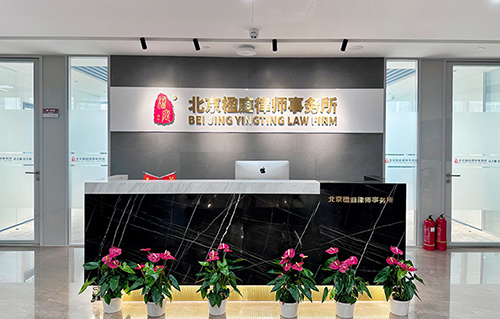
Beijing Yingtong Law Firm has focused on the protection of the rights and interests of private enterprises for many years. It has represented many corporate rights protection cases in the legal practice of rights protection in natural resources, mining, land, waters, territorial space, corporate equity, criminal defense, factory demolition, environmental protection shutdown, prohibition and vacation, etc., including large-scale real estate...








Can I terminate the contract if I regret it after signing it?
Home page >> Business areas >> Factory demolition
Article author:Yingting Lawyers Group | Update time:2022-11-10 | Reading times:1257

If after the contract is signed, the conditions for rescission of the contract are met, the contract can be terminated.
If the conditions for rescission of a contract are directly stipulated, the rescission shall be statutory rescission. In statutory rescission, some conditions are based on conditions applicable to all contracts, while others are only based on conditions applicable to a specific contract. The former is a general statutory discharge, and the latter is called a special statutory discharge. Chinese law generally recognizes statutory rescission, and there are provisions not only on general statutory rescission, but also on special statutory rescission.
Dismissal by agreement refers to a dissolution in which the parties agree in the form of a contract that one or both parties reserve the right to terminate. Among them, the agreement that reserves the right to terminate is called a termination clause. The right to terminate can be reserved to one party or to both parties. Reservation of the right to terminate can be agreed upon when the parties conclude a contract, or they can be concluded in a separate contract at a later date.
Legal termination of contract
Article 94 stipulates that the parties may terminate the contract under any of the following circumstances:
1. The purpose of the contract cannot be achieved due to force majeure. If force majeure prevents the purpose of the contract from being realized, the contract loses its meaning and shall be extinguished. In this case, my country's contract law allows the parties to terminate the contractual relationship by exercising the right to terminate.
2. Before the expiration of the performance period, one of the parties expressly expresses or shows by its own behavior that it will not perform its major obligations. This means that the debtor refuses to perform, also known as breach of contract, including express breach of contract and tacit breach of contract. As a condition for rescission of the contract, it requires that the debtor is at fault, refuses to act illegally (without legal reasons), and has the ability to perform.
3. One party delays the performance of its major debts and fails to perform within a reasonable period of time after being urged. This means that the debtor delays performance. According to the nature of the contract and the intention of the parties, if the performance period is not particularly important in the content of the contract, even if the debtor performs after the expiration of the performance period, the purpose of the contract will not be frustrated. In this case, in principle, the parties are not allowed to terminate the contract immediately, but a demand for performance should be issued to the debtor and a certain grace period for performance should be given. If the debtor fails to perform at the expiration of the grace period for performance, the creditor has the right to terminate the contract.
4. One party delays the performance of its debts or commits other breaches of contract, resulting in the failure to achieve the purpose of the contract. For some contracts, the performance deadline is extremely important. If the debtor fails to perform on time, the purpose of the contract cannot be achieved. In this case, the creditor has the right to terminate the contract. This shall also apply when other breaches of contract prevent the purpose of the contract from being achieved.
5. Other situations stipulated by law. If the law stipulates special statutory rescission conditions for certain specific contracts, such provisions shall prevail.
Termination of contract agreement
The condition for rescinding a contract agreement is that both parties agree to terminate the original contractual relationship. Its essence is to re-establish a contract between the parties to the original contract, the main content of which is to abolish the original contractual relationship between the two parties, so that the claims and debts incurred by both parties based on the original contract are extinguished.
The termination of an agreement takes the form of a contract (i.e., termination of the agreement), so it should meet the requirements for a valid contract, that is: the parties have the corresponding behavioral capacity; the intention is true; the content does not violate the norms of jus cogens and social public interests; and it adopts an appropriate form.
If you do not meet the conditions for rescission of the contract and want to terminate the contract, it is a breach of contract and can be negotiated by both parties. The contract can also be terminated by paying liquidated damages.
Previous article:Liaoning house relocation compensation standards
Next article:What issues should you consider when buying a house in another place?
Recommended reading
- Mineral rights mortgage financing: a new financing path for private mining companies
- Should the government’s investment promotion agreement be scrapped at the drop of a hat? The law has your back!
- Mining in the name of land leveling? The Central Inspection Team is exposed! Mine bosses, please don’t step into this trap.
- Mining license renewal delayed? The new regulations stipulate that a reply must be made within 15 days
- New opportunities for administrative reconsideration: increased litigation winning rate, smoother rights protection channels
- Mineral rights mortgage financing: a new financing path for private mining companies
- Should the government’s investment promotion agreement be scrapped at the drop of a hat? The law has your back!
- Mining in the name of land leveling? The Central Inspection Team is exposed! Mine bosses, please don’t step into this trap.
- Are companies being fined too much for small things? Court: The punishment is inappropriate and must be corrected!
- New opportunities for administrative reconsideration: increased litigation winning rate, smoother rights protection channels