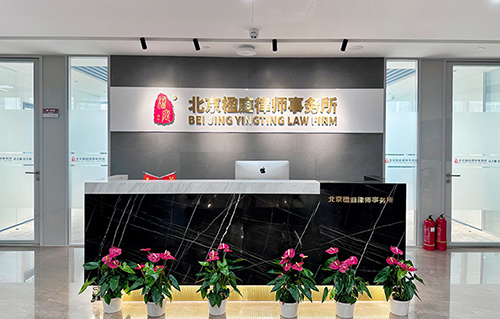
Beijing Yingtong Law Firm has focused on the protection of the rights and interests of private enterprises for many years. It has represented many corporate rights protection cases in the legal practice of rights protection in natural resources, mining, land, waters, territorial space, corporate equity, criminal defense, factory demolition, environmental protection shutdown, prohibition and vacation, etc., including large-scale real estate...








Housing demolition and resettlement compensation standards, house demolition and resettlement compensation fees (Housing Demolition and Resettlement Compensation Measures)
Home page >> Business areas >> land expropriation
Article author:Yingting Lawyers Group | Update time:2023-06-09 | Reading times:386
Residents want to demolish their houses, some are happy and some are worried. What is good is that they can get a considerable amount of compensation, which can improve their lives. Sadly, the demolition compensation is low in many places, and the lives of the people being demolished may not be as good as before. It is not easy to get reasonable and satisfactory compensation on your own. Today, we will learn how to compensate residents for their relocation and resettlement.
Under normal circumstances, urban house demolition is divided into residential and non-residential resettlement standards. Non-residential houses (such as commercial, office, hotel, industrial buildings, etc.) are demolished. The demolishers are resettled according to the building area of the demolished houses. The building area is based on the building area indicated on the property ownership certificate. If the demolished people really need to increase the housing area due to work needs in combination with the demolition, it should be settled through negotiation between the demolished and the demolished people in accordance with the principle of equal exchange. Generally, it will be handled according to the situation.
1. Public non-residential buildings with regional functions that are closely related to people’s daily lives or institutions, such as grain, coal, barber shops, restaurants, markets, culture, education and health, etc., should be relocated nearby according to planning requirements; enterprises that pollute the environment must be relocated in accordance with urban planning requirements.
2. Private non-residential property.
Beijing Legal Consulting Network uses solid legal knowledge and theoretical literacy to study a series of legal issues in administrative litigation, and has accumulated rich experience in handling cases in many aspects such as house demolition disputes, agricultural land expropriation and conversion disputes, illegal construction disputes, administrative agreements, administrative promises, land rights confirmation, land contract contracts, civil contracts, etc. We always practice the concepts of rigorous, realistic, civilized and just rule of law and strive to safeguard the legitimate rights and interests of our clients.
If the original owner of the demolished person operates in accordance with the law and uses this as the main source of income, the original owner shall be resettled with a house with the original building area and suitable for operation; if the private house is converted into a non-residential house with approval, the resettlement method shall be determined by the people's government at or above the county level; private non-residential houses rented to others shall be handled in accordance with the specific provisions of local demolition regulations.
3. If the original user changes the public housing to non-residential with the approval of the real estate management authority, it will be resettled as a residential house during demolition; if the public housing is changed to non-residential or subleased to others without authorization, the area of the housing changed to non-residential or subleased shall be deducted from the total leased area and shall not be used as the basis for resettlement. (4) Users who use temporary buildings and illegal buildings to engage in business shall dismantle them themselves within the published period. Those who illegally rent public non-residential houses will not be resettled.
When a residential house is demolished, the resettlement area can be calculated based on the building area of the demolished house, or its use area or living area, depending on the specific circumstances [Legal Basis] 103010 Article 13, the demolisher and the person being demolished shall, in accordance with the provisions of these regulations, enter into a demolition compensation and resettlement agreement on the compensation method and amount, resettlement house area and location, relocation period, relocation transition method and transition period, etc.
National law stipulates that in order to solve residents' housing difficulties and improve living conditions, the resettlement area can be appropriately increased if conditions permit. In order to encourage the relocated people to relocate, the resettlement area can also be appropriately increased. Therefore, after seeing the actual situation clearly, the relocated people should consider their own compensation as appropriate. Blindly pursuing high compensation is not something worth advocating.
The legal knowledge in this article does not represent legal advice. If you encounter similar problems, you should analyze them in detail. If you want to know more about this, you can consult a lawyer on this site for one-on-one online consultation.
Previous article:Do illegal buildings have to be demolished? Do illegal buildings have to be demolished? (Legal procedures for demolition of illegal buildings)
Recommended reading
- Mineral rights mortgage financing: a new financing path for private mining companies
- Should the government’s investment promotion agreement be scrapped at the drop of a hat? The law has your back!
- Mining in the name of land leveling? The Central Inspection Team is exposed! Mine bosses, please don’t step into this trap.
- Mining license renewal delayed? The new regulations stipulate that a reply must be made within 15 days
- New opportunities for administrative reconsideration: increased litigation winning rate, smoother rights protection channels
- Mineral rights mortgage financing: a new financing path for private mining companies
- Should the government’s investment promotion agreement be scrapped at the drop of a hat? The law has your back!
- Mining in the name of land leveling? The Central Inspection Team is exposed! Mine bosses, please don’t step into this trap.
- Are companies being fined too much for small things? Court: The punishment is inappropriate and must be corrected!
- New opportunities for administrative reconsideration: increased litigation winning rate, smoother rights protection channels