Law firm introduction More》

Beijing Yingtong Law Firm has focused on the protection of the rights and interests of private enterprises for many years. It has represented many corporate rights protection cases in the legal practice of rights protection in natural resources, mining, land, waters, territorial space, corporate equity, criminal defense, factory demolition, environmental protection shutdown, prohibition and vacation, etc., including large-scale real estate...
Law firm services
Law firm personnel More》








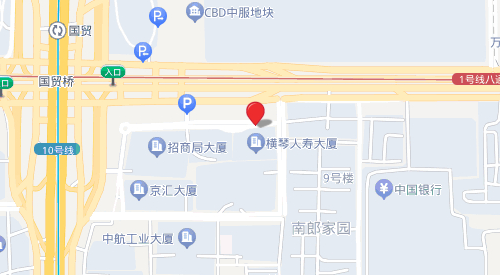
Visiting address More》
What exactly does land acquisition compensation include, and how is it allocated? The number of married women whose household registration has not moved out is
Home page >> Business areas >> land expropriation
Article author:Yingting Lawyers Group | Update time:2022-11-10 | Reading times:1548
Land is the basis for farmers' survival. The expropriation of rural land is related to the vital interests of the peasant masses, social stability and steady economic development. Therefore, compensation for rural land expropriation is related to farmers’ future lives. So what exactly does the land acquisition compensation fee include, and how is it distributed? Do married women whose household registration has not moved out have the right to participate?

What exactly does land acquisition compensation include?
According to the provisions of the "Land Management Law of the People's Republic of China" and other laws and regulations, land acquisition compensation fees include:
1. Land compensation, resettlement subsidy and compensation for ground attachments and young crops.
2. Land compensation fee is compensation for the land owner’s investment and income losses on the land due to the state’s requisition of land.
3. The object of compensation is the land owner.
4. Resettlement subsidy is a subsidy provided after the state requisitions farmers' collective land for construction in order to solve the living difficulties caused by the loss of land to the agricultural population who rely on land as their main means of production and source of livelihood.
5. Young crops compensation fee refers to the one-time economic compensation fee for losses caused to crops grown on the acquired land, such as rice, wheat, corn, potatoes, vegetables, etc. when the land is acquired.
6. Compensation fees for ground attachments include the demolition and restoration fees for various above-ground buildings and structures on the acquired land, such as houses, wells, roads, pipelines, water canals, etc., as well as compensation or felling fees for trees on the acquired land.

How are land acquisition compensation fees distributed?
According to Article 26 of the "Implementation Regulations of the Land Management Law of the People's Republic of China":
1. Land compensation fees belong to rural collective economic organizations;
2. Compensation fees for ground attachments and young crops belong to the owners of ground attachments and young crops.
3. The resettlement subsidy for land acquisition must be earmarked and cannot be used for other purposes. If the persons who need to be resettled are resettled by rural collective economic organizations, the resettlement subsidy will be paid to the rural collective economic organizations and managed and used by the rural collective economic organizations;
4. If resettled by other units, the resettlement subsidy will be paid to the resettlement unit; if unified resettlement is not required, the resettlement subsidy will be paid to the individual resettled persons or used to pay the insurance premiums of the resettled persons with the consent of the resettled persons.

Do married women whose household registration remains in their place of origin but have not moved out have the right to participate in the distribution of land compensation funds from the collective economic organization of their original village?
This will be determined on a case-by-case basis:
1. If a married woman has married out of the collective economic organization of the village and her household registration has not yet moved out, if the collective economic organization of the village where she married has contracted the land, or has already enjoyed the distribution of the income of the collective economic organization of the village where she later joined from other aspects, she cannot participate in the distribution of land acquisition compensation fees of the original collective economic organization, because she cannot benefit from double benefits.
2. If a married woman has married out of the village collective economic organization, but her household registration has not yet moved out, and the village collective economic organization she married into does not contract land, and does not enjoy the distribution of income from the subsequent village collective economic organization, it can be determined that she is still a member of the original collective economic organization and should enjoy the same treatment as a member of the original collective economic organization. In this case, the village collective economic organization where the household registration is located cannot arbitrarily deprive a married woman of her right to participate in the distribution of land acquisition compensation.
Recommended reading
- Mineral rights mortgage financing: a new financing path for private mining companies
- Should the government’s investment promotion agreement be scrapped at the drop of a hat? The law has your back!
- Mining in the name of land leveling? The Central Inspection Team is exposed! Mine bosses, please don’t step into this trap.
- Mining license renewal delayed? The new regulations stipulate that a reply must be made within 15 days
- New opportunities for administrative reconsideration: increased litigation winning rate, smoother rights protection channels
- Mineral rights mortgage financing: a new financing path for private mining companies
- Should the government’s investment promotion agreement be scrapped at the drop of a hat? The law has your back!
- Mining in the name of land leveling? The Central Inspection Team is exposed! Mine bosses, please don’t step into this trap.
- Are companies being fined too much for small things? Court: The punishment is inappropriate and must be corrected!
- New opportunities for administrative reconsideration: increased litigation winning rate, smoother rights protection channels