Law firm introduction More》

Beijing Yingtong Law Firm has focused on the protection of the rights and interests of private enterprises for many years. It has represented many corporate rights protection cases in the legal practice of rights protection in natural resources, mining, land, waters, territorial space, corporate equity, criminal defense, factory demolition, environmental protection shutdown, prohibition and vacation, etc., including large-scale real estate...
Law firm services
Law firm personnel More》








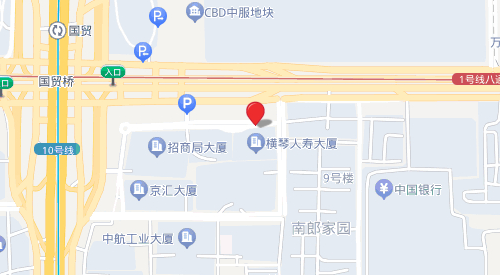
Visiting address More》
Compensation for house site demolition, whether it can be transferred and inherited, and whether it will be taken back, is explained in detail in this article!
Home page >> Business areas >> land expropriation
Article author:Yingting Lawyers Group | Update time:2022-11-10 | Reading times:672
Due to many historical issues in rural areas, many disputes will arise during the house demolition process. Lawyer Shengyun summarized this article as a pure and practical sharing of important content that farmer friends should be concerned about, hoping it can serve as a reminder and reference for everyone in the process of safeguarding their rights.

Detailed explanation one: Can rural homesteads be inherited?
The homestead is not an inheritance and cannot be inherited. The houses on the homestead can be inherited.
It should be pointed out in particular that after the houses inherited in the future are lost (one villager per household), the homestead land cannot be rebuilt or continued to be used in other ways. The village collective economic organization will take back the right to use the homestead land in accordance with legal procedures and make separate arrangements.
Detailed explanation 2: Can the homestead be transferred?
Generally speaking, homesteads cannot be transferred individually. The transfer of homesteads is based on the transfer of house ownership. According to the provisions of the "Land Management Law", villagers who own more than two homesteads can transfer the homesteads, but they must also be transferred to people within the village's collective economic organization. After the transfer, both parties must comply with the principle of one household, one home. It should be noted that after the homesteads are transferred or leased, the transferor cannot apply for homesteads.
Detailed explanation three: What are the legal situations of multiple dwellings in one household!
1. Inheritance. We all know that the right to use homestead land cannot be inherited, but the house on the ground can be inherited as the private property of the farmer. In addition to the principle of "the land follows the house", the rights of multiple houses formed by inheriting the farm house and occupying the homestead can be confirmed.
2. Buy and sell. Homesteads can be bought and sold, but only if they belong to the same village collective.
3. Policy reasons. To move your household registration back to rural areas, the household registration department needs to apply for a homestead, and the land department needs to divide households. Different policy requirements may lead to the situation of multiple houses in one household.
4. The total area meets the homestead area standards. If a villager has two or more homesteads in the village, but the total area does not exceed the area standard for homesteads stipulated by the local government, the ownership can be confirmed as one house.
5. If the local house building conditions are met but the house is not divided, a separate house will be built. If the homestead occupied by the new house complies with the relevant planning, and is agreed by the farmers' collective and announced without objection, the relevant land use procedures can be completed in accordance with regulations, and the rights can be confirmed and registered in accordance with the law.
Detailed explanation 4: Under these circumstances, the homestead will be taken back!
1. People from the village enter the city. Village members leave their homesteads idle after moving to the city. If the idle houses on the original homesteads collapse and are not repaired for more than two years and the homesteads are not restored to use, the homesteads will be taken back.
2. City people enter the village. After urbanites buy homesteads, their houses cannot be renovated or rebuilt. Once the house is discovered and demolished, it will be considered an illegal construction and will not be compensated. In addition, even if there is no renovation or reconstruction, once the house collapses, the homestead will be taken back!
3. Homestead resumption due to house inheritance
(1) No one inherits the house.
(2) Urban residents inherit houses. Some villagers have moved into the city, or some children have inherited the houses of the older generation. Although the right to use the homestead at this time is still yours, it is based on the ownership of the house. Once the house collapses, the homestead will be taken back.
Detailed explanation five: How to deal with illegal multi-family residences?
When confirming and registering the right to use rural homestead land, "one household, one house" must be adhered to. Except for "one household, one house", the rights of multiple homestead sites will not be confirmed and registered. Excessive homestead land shall be treated as illegal occupation of land in accordance with the relevant provisions of the Land Management Law.
Detailed explanation 6: What benefits does the registration and certification of rural collective land rights bring to farmers?
The Land Management Law also emphasizes the land ownership certificate, which also shows the status of land ownership confirmation in land acquisition and demolition, which will be related to how much compensation the expropriated and demolished people receive! In the cases represented by Shengyun Lawyers, many demolished people lacked ownership certificates because their rights were not confirmed, so they were in danger of being identified as illegally constructed. The demolition compensation for legal construction and illegal construction can be said to be very different.
Lawyer Shengyun reminds everyone that once the land rights are confirmed, farmers are the owners of the land contract management rights. No matter who wants to move the contracted land again, they must obtain the consent of the household. Even if the government requisitions land, it must "negotiate" with farmers and strictly follow national requisition regulations.
Detailed explanation 7: Can I get compensation for my homestead without a certificate?
When rural residents build residences, as long as they are reviewed by the township government and approved by the county-level government, even if they do not have a homestead certificate or a house building certificate, they cannot be considered illegal construction.
Lawyer Shengyun reminds everyone that although no license does not mean illegal construction, we still need to step up the process of obtaining ownership certificates. Forced land acquisition and forced demolition have happened in many rural areas, but many farmers are passive because they have no definite evidence to claim their rights. Once the land rights are confirmed and the ownership certificate is obtained, the possibility of this happening again will be greatly reduced, because farmers have evidence in their hands.
Detailed explanation 8: How to compensate for rural homesteads
1. Generally, there are three ways to compensate for self-built houses in rural areas:
(1) If conditions permit, priority will be given to housing site relocation and resettlement, and the cost of house reconstruction will be compensated.
(2) Pure monetary compensation, house reconstruction cost price + homestead land price (there are location compensation prices in various places, which can be checked and understood on the local government website or the land department website).
(3) For house replacement, the same lot will be compensated according to the area according to the demolition amount.
2. Compensation standards for houses in urban planning areas:
When rural collective land is expropriated, no resettlement compensation is provided for the houses and other real estate on the expropriated land. At the time of compensation and resettlement, the location of the houses has been included in the urban planning area. If the land rights holder requests that the compensation standards for house expropriation on state-owned land be implemented by reference, the People's Court shall generally support it, but shall deduct the land compensation fee that has been acquired.
Recommended reading
- Mineral rights mortgage financing: a new financing path for private mining companies
- Should the government’s investment promotion agreement be scrapped at the drop of a hat? The law has your back!
- Mining in the name of land leveling? The Central Inspection Team is exposed! Mine bosses, please don’t step into this trap.
- Mining license renewal delayed? The new regulations stipulate that a reply must be made within 15 days
- New opportunities for administrative reconsideration: increased litigation winning rate, smoother rights protection channels
- Mineral rights mortgage financing: a new financing path for private mining companies
- Should the government’s investment promotion agreement be scrapped at the drop of a hat? The law has your back!
- Mining in the name of land leveling? The Central Inspection Team is exposed! Mine bosses, please don’t step into this trap.
- Are companies being fined too much for small things? Court: The punishment is inappropriate and must be corrected!
- New opportunities for administrative reconsideration: increased litigation winning rate, smoother rights protection channels